Burger boom reshapes China’s fast-food market
Burgers are booming in China, as budget-conscious consumers and the growing number of single-person households turn the humble sandwich into an increasingly competitive battleground attracting everyone from global restaurant chains to coffee shop operators, Reuters reports.
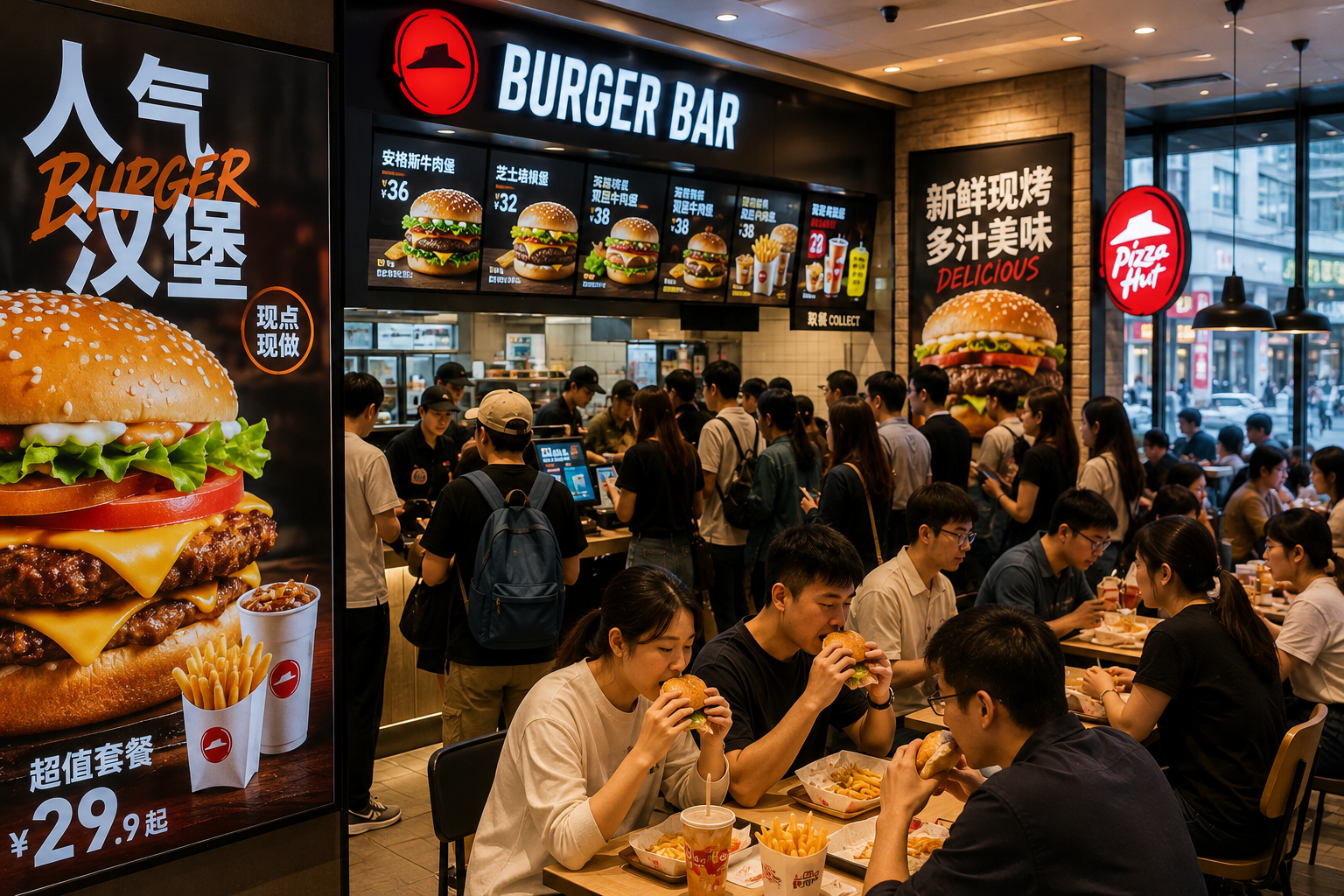
Yum China’s Pizza Hut Burger Bar format, where a burger counter operates alongside an existing Pizza Hut restaurant, expanded to more than 200 locations within six months, the company said last month. It plans to expand the concept to 500–600 locations by the end of 2026, equivalent to around 10% of its total Pizza Hut network, CE Report quotes AGERPRES.
The growing appetite for burgers reflects broader changes in Chinese consumer habits. As households become smaller and economic uncertainty keeps spending in check, customers are increasingly opting for affordable, portable meals that offer convenience without compromising value.
The shift is transforming burgers from a niche within China’s Western-style fast-food market, traditionally dominated by McDonald’s, KFC and Burger King, into one of the country’s most fiercely contested restaurant segments, as new brands race to capitalize on the trend.
Last month, restaurant chain Haidilao entered the segment with Huanxianbao, or “Fresh Burger,” a chain selling burgers alongside pizza, pasta and fried chicken. Coffee chain M Stand has also opened burger-focused outlets in several cities.
China’s Western-style fast-food market was valued at 499.65 billion yuan ($74.1 billion) in 2025 and is expected to reach 587.09 billion yuan by 2027, according to research firm iiMedia Research, despite recent challenges facing many global brands.
Data shows burgers leading consumer preferences, with 55% of respondents choosing them. Although burgers still represent a relatively small segment of China’s overall fast-food market, the category was valued at $18.4 billion in 2025 and is projected to grow by 8.7% annually through 2035, according to Emergen Research.
Part of their appeal comes down to price.
With consumers remaining cautious about spending, burgers provide a cheaper alternative to full restaurant meals while still offering a substantial meal, said Zhu Danpeng, an analyst specializing in China’s food industry.
“It is a good value-for-money choice,” Zhu said.
The burger boom is also linked to demographic changes. The growing number of single-person households, smaller families and young urban workers in China has fueled demand for convenient individual meals—a trend that Yum China says will create opportunities across its brands.
Growing demand is attracting competitors from across the restaurant industry. Domestic chains such as Tasiting are competing with McDonald’s, KFC and Shake Shack, while international brands are also seeking a share of the expanding market.
When U.S. burger chain Five Guys opened restaurants in Beijing this month, customers waited more than two hours to be served. Rival Wendy’s announced in May that it plans to enter China and open as many as 1,000 franchised restaurants over the next decade.
Liu Tao, a 48-year-old musician from Beijing, regularly takes his 11-year-old son to McDonald’s on Sundays between the boy’s mathematics and English lessons.
“We only have an hour and we’re rushing from one place to another. When you want food that’s clean, quick and that children don’t get bored of, nothing beats a burger. My son eats it in the car while we’re on our way to his English class,” Liu said.
Photo: Chat GPT