‘Zero screen time’: Consumers turn to simpler technology
As more users question their relationship with technology, companies are beginning to change their product and marketing strategies. In the digital age, technologies that promise less screen time and greater control are emerging as a new consumer trend.
For years, competition in the technology sector centered on larger screens, more features, and applications designed to keep users online for as long as possible. But as digital fatigue increases, technology companies are now promoting an approach in the opposite direction.
New products marketed with messages such as “zero screen time,” “no notifications,” and “single purpose” are responding to users’ desire for greater control and simpler digital experiences.
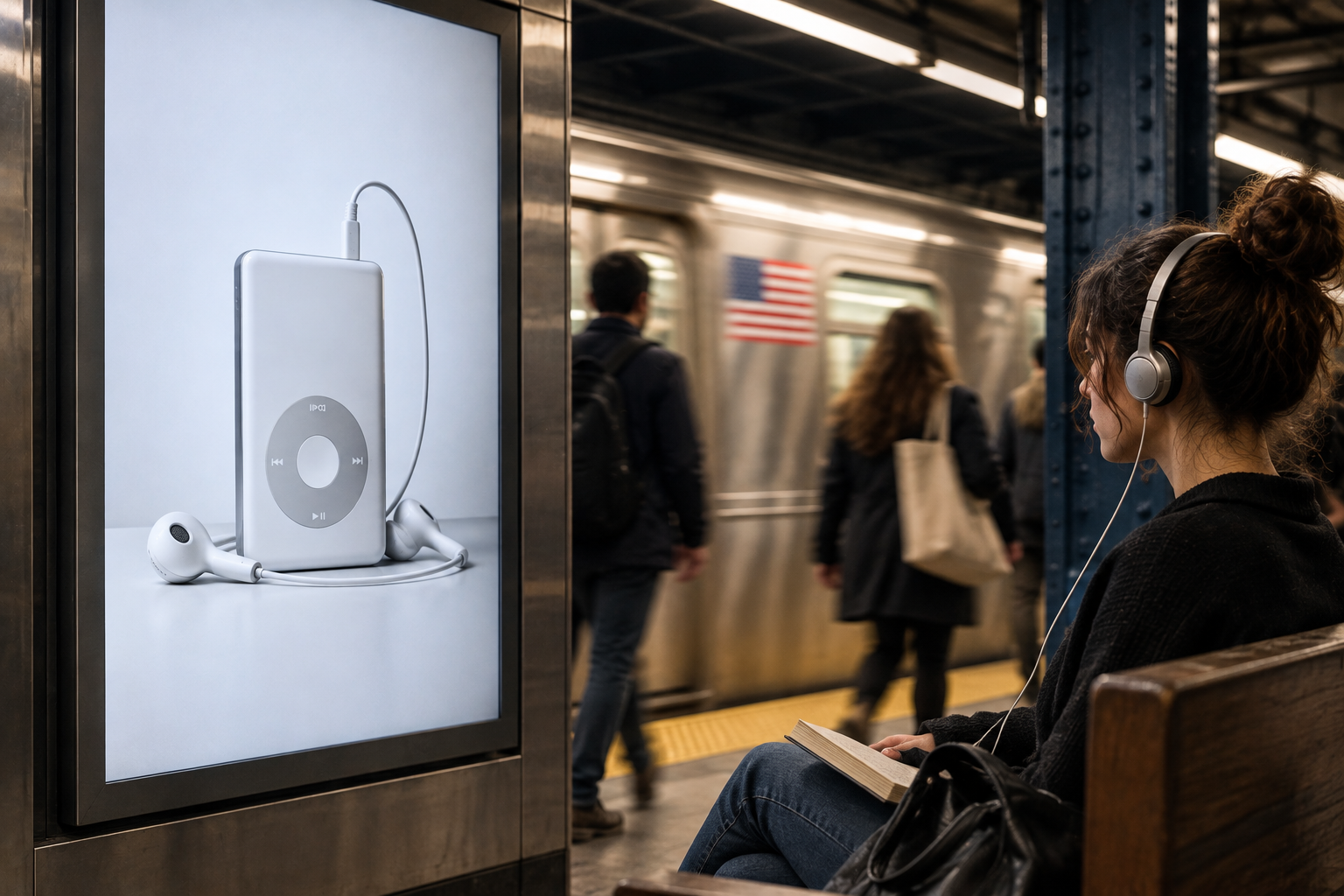
An advertising campaign in the New York subway promoting a product that functions solely as a music player under the slogan “Zero Screen Time,” along with the growing popularity of devices designed to serve only a specific purpose, signals the emergence of a new trend toward single-function products in the smartphone era.
Anadolu Agency examined the growing “less technology” trend in the technology sector through assessments from experts at Princeton and Oxford universities, as well as psychologists. According to experts, the trend is transforming not only preferences for new products but also consumers’ relationship with technology and companies’ marketing strategies.
“Less technology” becomes a new sales strategy
Since the early 2000s, with the widespread adoption of smartphones and the development of mobile internet, competition has been built around larger screens, more applications, and more powerful processors.
Social media companies seeking to keep users online for longer also developed algorithms that trapped users in an endless cycle of notifications.
Today, some of those same companies are presenting their products in the opposite way, highlighting features that are less distracting, send fewer notifications, and make users less dependent on screens.
An iPod music player advertisement in the New York subway became one of the most striking examples of this shift. The product’s single function and lack of a screen were presented not as shortcomings but as its main advantages.
The campaign has revived discussions about “slow tech” in the technology world. Tony Fadell, one of the former developers of the iPod, also emphasized that the purpose of technology should not be to constantly occupy people’s attention, but to be able to stay in the background when necessary.
Single-function devices make a comeback
The renewed popularity of products focused solely on specific needs is considered one of the clearest signs of this shift in the technology sector.
Devices that limit the smartphone experience and offer only basic functions such as calling, messaging, note-taking, and navigation, as well as e-readers, are being marketed as forms of “less distracting technology.”
What these products have in common is their aim of keeping users as far away as possible from social media, notifications, and the constant pressure to remain online.
A similar trend is also emerging in music. According to data from international market research company Circana, wired headphones, which had been overshadowed by wireless earbuds for years, are showing signs of a global resurgence. Sales of wired headphones, which had been declining for years, are once again increasing.
The renewed visibility of wired headphones has also been influenced by celebrities such as Bella Hadid, Lily-Rose Depp, and Paul Mescal choosing to use them in their daily lives, as well as fashion brands featuring wired models in their runway shows.
people are looking for technology that protects their attention
D. Graham Burnett, Henry Charles Lea Professor of History and the History of Science at Princeton University, told Anadolu Agency that people are increasingly recognizing the harmful effects of the attention economy.
“People are realizing that they are being harmed by the exploitative nature of the attention economy and are looking for ways to protect their attention,” he said.
Burnett said technology companies have also begun responding to this demand.
“Large and small companies have started offering new tools to help people protect their attention and escape the trap of its exploitative commodification,” he said.
Emphasizing that interest in single-function devices cannot be explained solely by nostalgia, Burnett said, “This trend is not simply about nostalgia. It is also part of a more forward-looking search for ways to protect human attention.”
Burnett said that in recent years, business models based on AI-powered algorithms and extensive data collection have sought to constantly direct people’s attention.
“The problem is not phones. The problem is the social, technological, and economic system that exploits our attention, minds, time, and senses,” he said.
Consumers are choosing only the technology they actually want
Matthew Sharpe, a researcher at the Oxford Internet Institute, said that as people’s daily lives become increasingly digital, a natural reaction against this development is emerging.
“I see the rise of simpler, less technology-dependent devices as a way for people to benefit from some of the conveniences offered by modern technology without some of the disadvantages those conveniences bring,” he said.
Sharpe said single-function products allow consumers to choose only the features they actually need and predicted that this trend would accelerate.
He emphasized that the desire to move away from constant notifications and endless streams of content is a conscious choice. When people reflect on how they spend their time at the end of the day, they are often dissatisfied with the amount of time they have spent in front of screens.
“The desire to get away from notifications, algorithms, and constantly scrolling on our phones is a healthy response to these reflections,” he said.
However, Sharpe said he does not agree with the view that technology companies will focus on protecting users’ attention in the near future.
“For technology companies, holding users’ attention for as long as possible is still more valuable than protecting it,” he said.
Sharpe added that this approach could change if consumers began abandoning these platforms on a mass scale or regulators forced companies to protect users’ attention.
People mentally and emotionally exhausted by technology are seeking control and simplicity
Research shows that adults spend a significant portion of their day in front of screens.
According to various studies published in the United States, adults spend an average of six to seven hours per day on screens. The figure is even higher among Generation Z.
Industrial and organizational psychologist Nil Madi pointed out that digital fatigue cannot be explained simply by the amount of time spent in front of screens.
“Digital fatigue is actually a condition that is independent of screen time; it is related to attention. It is the mental and emotional exhaustion that emerges in connection with the time we spend in digital environments and the interactions we experience there,” she said.
Madi noted that constant notifications and interruptions negatively affect attention. She said that after a notification disrupts a person’s concentration, it can take approximately 20 minutes to fully refocus on the task.
“Technology has advanced very quickly, but our attention and our brains have not developed at the same pace,” she said.
Madi said some users are therefore turning toward simpler technologies.
“People who recognize that attention has become the most valuable asset may turn to single-function products to manage screen fatigue and their relationship with technology. The desire for a sense of control and simplicity can play an important role here,” she said.
Madi also pointed out that constantly being online increases stress, anxiety, and mental fatigue.
“This negatively affects performance, motivation, and overall well-being,” she said.
Quality technology could gain a larger role in marketing and corporate strategies
According to experts, as digital life becomes increasingly intensive, the criteria for competition in the technology sector are also changing.
Instead of more features and longer screen time, products designed to protect users’ attention and reduce their digital burden could become increasingly prominent in the coming period.
This new approach, promoted through messages such as “zero screen time,” “no notifications,” and “single purpose,” is not simply a temporary marketing message. It reflects a trend that could reshape consumer habits and is among the clearest signs that technology companies are seeking to respond to changing consumer expectations.
Photo: Chat GPT