Europe’s aging wind farms spur surge in repowering investments
As the first generation of wind farms across Europe begins reaching the end of its economic lifespan, investments in repowering—replacing existing facilities with higher-capacity and more efficient turbines—are gaining momentum.
According to information compiled by Anadolu Agency from data provided by WindEurope, the umbrella organization representing Europe's wind energy sector, repowering involves replacing outdated or technologically obsolete equipment at wind and solar power plants with new systems offering higher efficiency and greater capacity, CE Report quotes Anadolu Agency.
Europe must significantly expand its wind energy capacity by 2030 to achieve its climate targets and strengthen energy security. While modernizing existing wind farms plays a critical role in meeting these objectives, technical, administrative, and regulatory barriers continue to slow the pace of repowering projects.
More than 13 gigawatts of existing wind power capacity are expected to be decommissioned across Europe by 2030, while only 9 gigawatts of repowered capacity are projected to come online during the same period. This indicates that not all retired capacity will be replaced with modern turbines.
The large number of onshore wind farms built in the early 2000s is now approaching the end of their typical 20- to 25-year operational lifespan, making repowering one of the industry's top priorities.
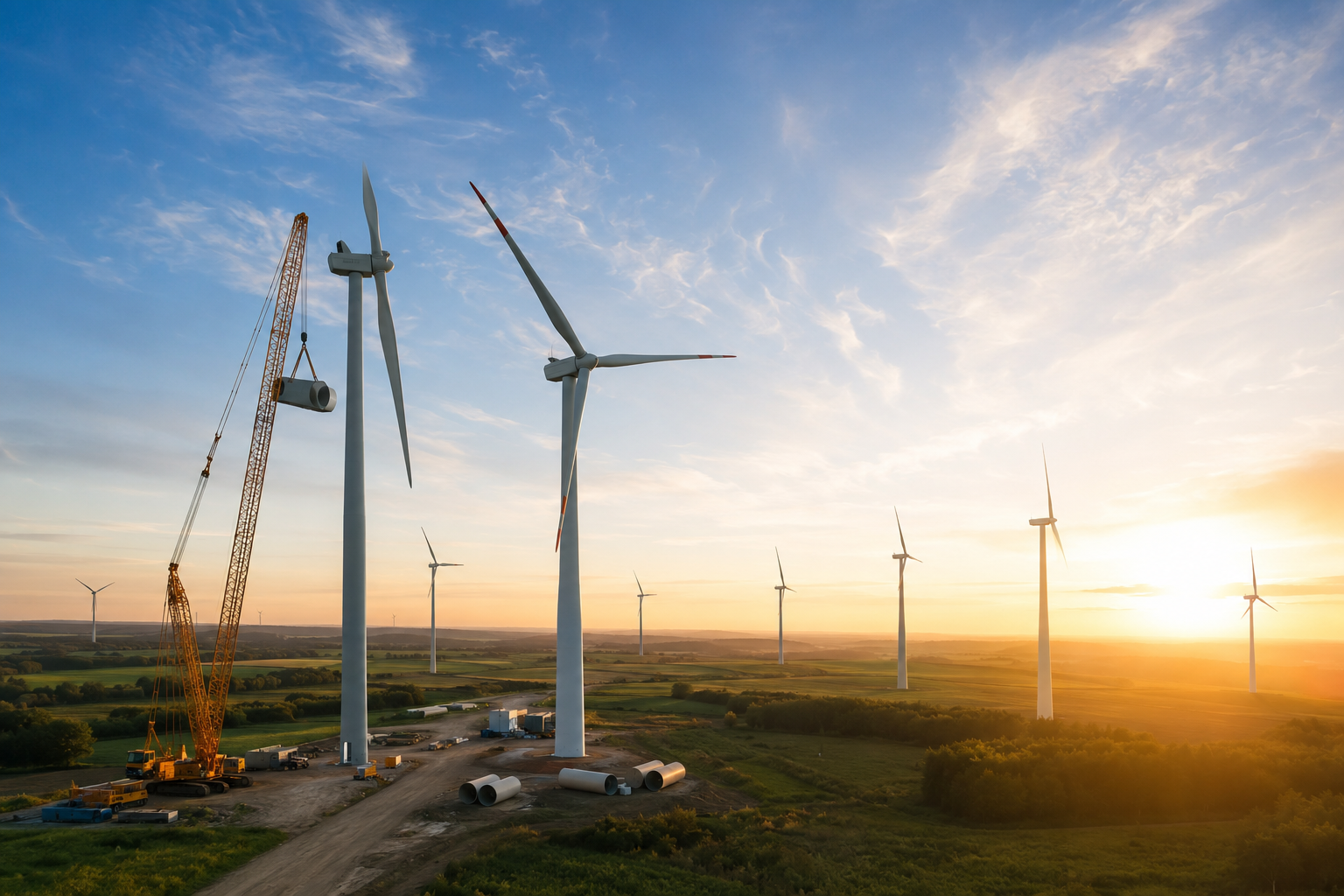
Under these projects, older, lower-capacity turbines are dismantled and replaced with next-generation models featuring taller towers, larger rotor diameters, and more advanced technology. This enables operators to retain existing grid connections and permitting infrastructure while generating two to three times more electricity from the same site.
A significant share of Europe's operating onshore wind farms still consists of first-generation turbines with capacities below 2 megawatts. In contrast, modern turbines can individually deliver between 6 and 8 megawatts of capacity. Improved blade designs also allow for more efficient electricity generation at lower wind speeds, significantly increasing plant capacity factors.
Germany and Denmark lead the transition
Germany, Spain, Denmark, and the Netherlands are among Europe's leading countries in repowering investments.
WindEurope stresses that, alongside building new wind farms, accelerating the modernization of existing sites is essential for the European Union to achieve its 2030 renewable energy targets.
Reusing existing transmission infrastructure and grid connections reduces the need for new land, shortens permitting procedures, and lowers investment costs. These advantages make repowering projects more attractive than developing entirely new wind farms.
Over the next decade, tens of thousands of megawatts of wind capacity are expected to be repowered across Europe, creating substantial growth opportunities for turbine manufacturers and the equipment supply chain.
Repowering investments are expected to remain a cornerstone of Europe's energy transition by helping reduce carbon emissions, strengthen energy security, and make more efficient use of existing infrastructure.
Photo: Chat GPT