Climate change opens new waters for whales in Greenland
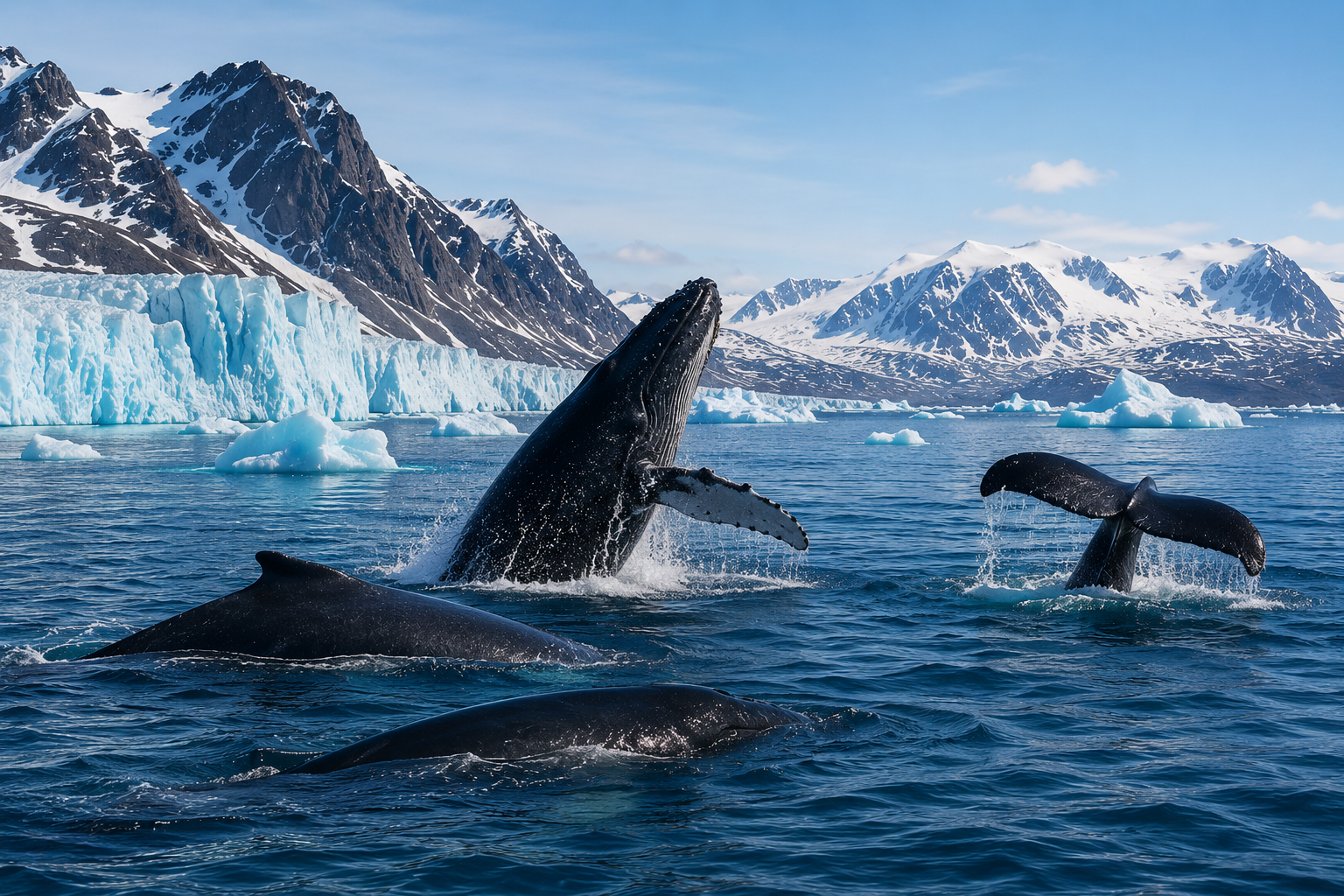
The warming of the seas and the decline in ice cover caused by climate change in Greenland have opened up new habitats for large whale species that previously rarely reached the region, leading to major changes in the marine ecosystem.
An international team of researchers examined changes in sea temperatures and glacial conditions in Greenland over the past 20 years, CE Report quotes Anadolu Agency.
The scientists found that humpback, fin and minke whales, whose access to eastern Greenland’s waters had previously been limited by extensive ice cover, are now being seen more frequently in the region as water temperatures rise and glaciers melt.
Researchers said the area has become a new habitat for these whale species, adding that their intensive feeding in the waters is one of the indicators of the large-scale transformation taking place in Greenland’s marine ecosystem.
Warming seas are changing the ecosystem
Scientists noted that environmental changes driven by climate change are rapidly transforming Greenland’s marine ecosystem, significantly altering the food chain and predator-prey relationships.
Researchers also found that fish species targeted by the whales have been expanding toward Greenland’s eastern coast, creating new food sources in the region.
Prof. Mads Peter Heide-Jorgensen of the Greenland Institute of Natural Resources, the study’s lead author, described the increased presence of these whale species in the region as a “major ecological change.”
Heide-Jorgensen said the whale species are adapting to changing conditions, but stressed that the same is not true for all Arctic wildlife.
“Climate change can create new opportunities for some species while causing others to lose their habitats,” Heide-Jorgensen said.
The findings were published in the journal Frontiers in Marine Science.
Photo: Chat GPT