Vienna shares urban waterway management experience with Sarajevo
Opportunities to improve the ecological function of the Miljacka River, reduce flood risks and address sewerage infrastructure problems were the focus of a professional workshop where representatives of Sarajevo and Vienna exchanged experiences on the management and renaturation of urban waterways.
The workshop, titled “From a Regulated to a More Natural Watercourse – Vienna’s Experience for the Miljacka,” builds on Sarajevo’s interest in Vienna’s experience in managing rivers in urban areas, CE Report quotes FENA.
The “Clean Miljacka River” project was presented in April during a meeting between Vienna Deputy Mayor Barbara Novak, Sarajevo Mayor Samir Avdić and Sarajevo City Council Chair Alen Girt, when interest was expressed in exchanging knowledge and experience.
Following that interest, the City of Vienna’s International Office in Sarajevo organised the professional exchange, which brought together five experts from MA 45 – Wiener Gewässer, Vienna’s municipal water management department, as well as three experts from Wien Kanal, the city service responsible for sewerage infrastructure and wastewater management.
Ten members of the “Clean Miljacka River” working group participated from Sarajevo.
The Sarajevo side was represented by Senada Dizdar from the City of Sarajevo’s Department for Urban Planning, Investment, Housing and Communal Affairs, who also coordinates the working group. She presented the current state of the Miljacka and its tributaries, sewerage infrastructure challenges, and the insufficient separation of wastewater and rainwater.
She also presented activities under the “Clean Miljacka River” project, which plans 47 projects in 2026 in the areas of sewerage infrastructure, waste management and flood-risk reduction. It was noted that the Miljacka itself did not leave its riverbed even during major flooding events, including in 2014. A greater problem is posed by smaller culverted tributaries whose capacity is insufficient to accommodate large volumes of water during periods of intense rainfall.
Vienna experts Thomas Ofenböck, Head of the MA 45 Water Ecology Centre, Karin Weichselberger from the field of hydraulic engineering, and Isabella Schild from landscape planning, together with Thilo Lehmann from Wien Kanal’s hydrodynamics department, presented Vienna’s experience through the example of the Liesingbach. They discussed its transformation from a heavily regulated watercourse into a more natural one, as well as the integration of flood protection, ecological revitalisation, biodiversity and sewerage infrastructure.
Sarajevo experts were particularly interested in Vienna’s experience with separating wastewater and rainwater, as well as how flood protection is incorporated into renaturation planning. Vienna’s experts, meanwhile, were interested in Sarajevo’s flood-protection plans and the challenges of coordinating different levels of government. Experts from the Institute for Water Management explained that, under the new planning cycle, measures will be defined in greater detail for individual water bodies of the Miljacka and its tributaries.
Climate change further underlines the need for such an integrated approach. Vienna experts stressed that watercourse planning today cannot focus solely on flood protection.
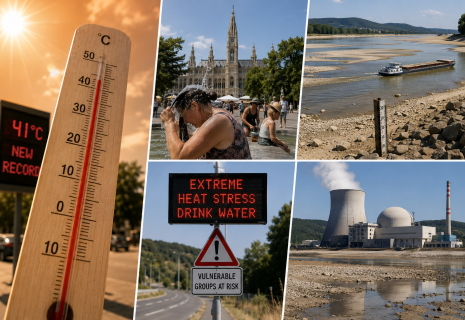
The summer of 2026 and the pronounced drought demonstrated, as one of the experts noted, that planning must also take increasingly frequent periods of water scarcity and high temperatures into account. Renaturation can therefore form part of a broader approach to adapting cities to climate change.
The role of citizens in planning was also discussed. While the Vienna side presented its experience with public participation, Sarajevo participants spoke about public consultations and innovative participatory models tested through international programmes.
One challenge identified was incorporating the results of such processes into planning documents due to the division of responsibilities among different levels of government.
Representatives of Sarajevo assessed that renaturation along certain sections of the Miljacka could contribute to improving water quality. At the same time, it was stressed that Vienna’s solutions cannot simply be transferred to Sarajevo, but must be adapted to local conditions.
The possibility of Vienna and Sarajevo jointly participating in future EU projects in the field of water management was also raised, according to the City of Vienna’s International Office in Sarajevo.
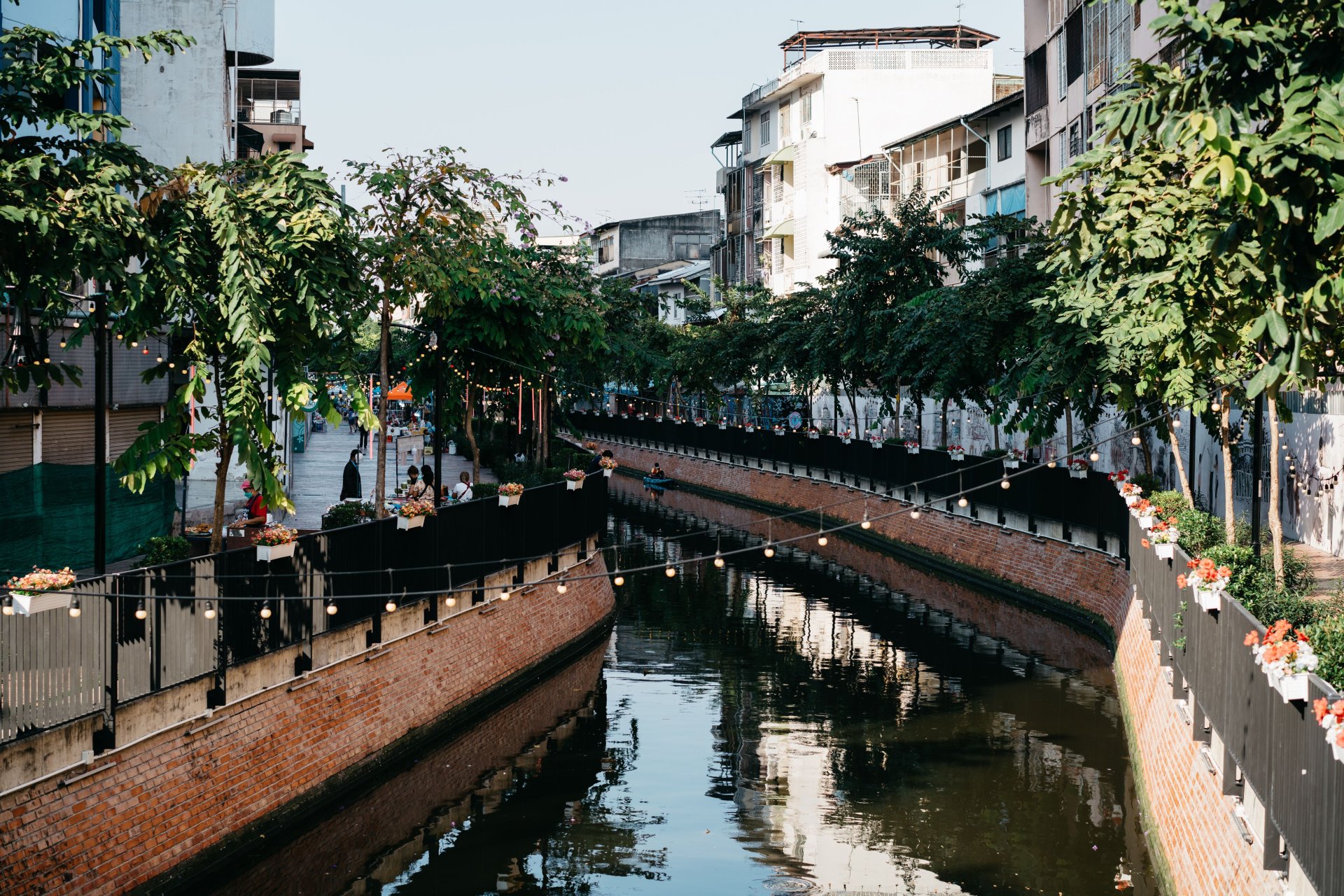
Photo: Pexels (Free Stock Photos)