London museums battle rising heat
While visitors admire the animal skeletons on display at a natural history museum in London, staff members keep a close eye on a computer screen where temperature indicators are constantly flashing, AFP reported on Wednesday.
Sensors placed inside display cases provide real-time alerts whenever an exhibit is exposed to excessive heat, CE Report quotes AGERPRES.
Last year, during a period of high temperatures, staff at the Grant Museum of Zoology discovered that a jar containing the body of a nearly 200-year-old tabby cat had exploded because of heat-related pressure.
By closely monitoring the museum's display cases, the staff hope to prevent further damage by identifying exhibits that need to be moved before they are affected.
"These specimens are incredibly valuable to us," said Tannis Davidson, director of a collection of 100,000 specimens representing the major groups of the animal kingdom.
The goal is to preserve them for at least another 200 years. However, Davidson warned that this task is becoming more difficult because of "new challenges linked to climate change and prolonged periods of high indoor temperatures."
Emma Howard Boyd, chair of the National Heat Resilience Commission, said the cultural sector is experiencing the "direct effects" of this reality.
Extreme weather
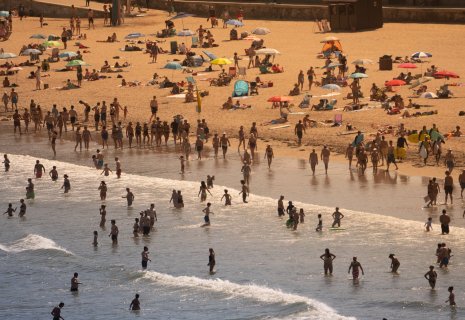
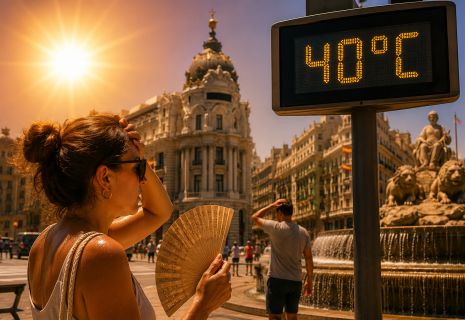
The heatwave that struck the United Kingdom at the end of June forced several museums and tourist attractions in London to temporarily close.
The UK has been experiencing its third heatwave since Monday, according to the Met Office, although no record-breaking temperatures are expected.
Works of art require strict temperature and humidity control, said Claire Teasdale of the National Trust, the organization responsible for protecting Britain's heritage.
"We have a wetter climate and more extreme weather events, which are affecting all of our heritage," said Teasdale, who manages the collections at Cragside, a 19th-century mansion in northeast England.
The estate houses works by British painters William Turner and John Everett Millais, among others.
According to the Met Office, the UK has recorded six of its ten wettest years since 1998.
The problem, Teasdale explained, is that like many historic buildings, the mansion was designed to withstand "Victorian-era rainfall levels, not those of the 21st century."
In October 2023, the Museum of Making in Derby suffered severe flooding during Storm Babet. Although its collections were spared, damage to the building exceeded £100,000 (about €118,000), forcing the museum to close for three months.
Wind catchers
"Heatwaves are often followed by flash flooding caused by intense rainfall," Emma Howard Boyd said. She led the preparation of a report on London's readiness for extreme weather, commissioned by Mayor Sadiq Khan.
According to John Calautit, a professor of sustainable development at University College London, the solution is not simply installing air conditioning but making buildings more adaptable.
He recommends using "wind catchers," a technique inspired by traditional badgir (wind towers) commonly found in the Middle East.
These systems are installed on rooftops, where they capture cooler air from higher elevations and naturally channel it into buildings while expelling warm air.
Emma Howard Boyd believes museums should explore every possible solution to adapt to climate change and serve as cooling refuges during heatwaves.
Photo: London museum