World Bank lowers Bosnia's growth forecast for 2026-2028
The World Bank forecasts that Bosnia and Herzegovina's economy will grow by 2.4 percent in 2026, below the expected Western Balkans average of 3.1 percent.
In its new Regular Economic Report for the Western Balkans, published today, the World Bank warns that high trade costs and complex regulatory procedures are among the key obstacles to stronger economic development, business competitiveness, and the creation of quality jobs in the region, CE Report quotes FENA.
According to the World Bank's projections, economic growth in Bosnia and Herzegovina is expected to accelerate from an estimated 2.1 percent in 2025 to 2.4 percent in 2026, followed by 2.9 percent in 2027 and 3.1 percent in 2028.
However, the outlook for Bosnia and Herzegovina is slightly less favorable than in the World Bank's spring report. Growth forecasts for all three years, from 2026 to 2028, have been lowered by 0.1 percentage points each.
According to the report, Bosnia and Herzegovina's economy grew by 2 percent in 2023, accelerating to 3.2 percent in 2024 before slowing in 2025.
Across the six Western Balkan economies — Albania, Bosnia and Herzegovina, Montenegro, Kosovo, North Macedonia, and Serbia — the World Bank expects average economic growth to accelerate from 2.6 percent in 2025 to 3.1 percent in 2026, primarily driven by consumption and investment.
Further economic strengthening is expected in 2027, when regional growth is projected to reach 3.4 percent, with the same rate forecast for 2028.
According to the report, these developments demonstrate the resilience of Western Balkan economies to external shocks and their continued economic convergence with the European Union, despite geopolitical uncertainties and weaker economic activity among key trading partners.
World Bank Director for the Western Balkans Xiaoqing Yu emphasized that the region has once again demonstrated its ability to adapt to unfavorable international conditions, while warning that resilience alone is insufficient to achieve long-term development goals.
"At a time of heightened geopolitical uncertainty and weak growth among key trading partners, the Western Balkans has once again demonstrated its economic resilience," Yu said.
She stressed that further improvements in the business environment are essential to narrowing the income gap with the European Union and creating quality jobs.
"Resilience alone is not enough to help this region converge with the European Union's average income or create the quality jobs its citizens need. Jobs are created by dynamic private sectors, and the next phase of growth requires efficient, predictable regulations and the removal of trade barriers, not only at borders but also behind them," Yu said.
According to individual country projections, Kosovo is expected to record the highest economic growth in 2026 at 3.6 percent, followed by Albania at 3.4 percent and Montenegro at 3.3 percent. North Macedonia is projected to grow by 3.2 percent, Serbia by 3.1 percent, while Bosnia and Herzegovina ranks last among the six regional economies at 2.4 percent.
In 2027, Kosovo is again expected to lead with growth of 3.8 percent, followed by Serbia at 3.7 percent and Albania at 3.6 percent. Montenegro and North Macedonia are each projected to grow by 3 percent, while Bosnia and Herzegovina's economy is expected to expand by 2.9 percent.
Projections for 2028 indicate growth of 3.9 percent in Kosovo, 3.7 percent in Albania, 3.5 percent in Serbia, 3.1 percent each in Bosnia and Herzegovina and Montenegro, and 3 percent in North Macedonia.
Compared with its spring forecasts, the World Bank has raised its 2026 growth expectations for Serbia and Montenegro by 0.4 percentage points each, and for North Macedonia by 0.3 percentage points. Projections for Albania remain unchanged, while those for Bosnia and Herzegovina and Kosovo have been reduced by 0.1 percentage points each.
Although Western Balkan economies have made significant progress in international trade integration over recent decades, the World Bank warns that existing administrative and regulatory barriers continue to limit their full development potential.
Following multiple rounds of tariff liberalization, trade in goods and services reached 107 percent of regional gross domestic product in 2025, exceeding the European Union average of 90 percent. Meanwhile, the region's services exports quadrupled between 2010 and 2025.
However, the report notes that access to international markets alone is insufficient to ensure long-term business competitiveness, particularly when companies face high operating costs and complex procedures within their own economies.
The average import tariff in the Western Balkans stands at approximately 6 percent, while non-tariff measures generate additional costs equivalent to around 10 percent of import value.
In certain agricultural and food industry sectors, these additional costs exceed 20 percent, while restrictions on cross-border services are even more significant, with estimated costs of 29 percent.
The World Bank particularly highlights the consequences of unnecessary licensing and authorization requirements, multiple inspections, complex certification procedures, and business establishment regulations, which increase operating costs and make it more difficult for regional companies to integrate into international value chains.
According to simulations presented in the report, removing just half of the existing import barriers could increase the region's gross domestic product by as much as 12.5 percent over the medium term.
The report emphasizes that this potential economic impact demonstrates how reducing regulatory and administrative burdens could significantly stimulate investment, productivity, and employment.
High import costs also negatively affect companies' export potential by increasing the prices of raw materials, equipment, and other inputs required to manufacture goods for foreign markets.
World Bank data show that only approximately one-third of new export ventures by Western Balkan companies survive their first year in foreign markets, while just 1 to 4 percent remain active after five years.
This instability in exports has direct consequences for employment and job quality, as export-oriented companies employ the vast majority of workers in the region's manufacturing sector.
Moreover, companies operating in international markets are generally larger and pay higher wages than comparable businesses primarily focused on domestic markets.
The World Bank therefore believes that reducing trade barriers could enable more companies to enter export markets, maintain a long-term presence abroad, and create better-paying jobs.
Priority measures include simplifying and digitalizing administrative procedures, introducing risk-based inspections, mutually recognizing harmonized standards and qualifications, and removing unnecessary regulatory restrictions.
The World Bank concludes that the next phase of economic development in the Western Balkans requires transforming the region's existing trade openness into stronger productivity growth, more competitive private sectors, and more stable employment, thereby accelerating the convergence of living standards with the European Union average.
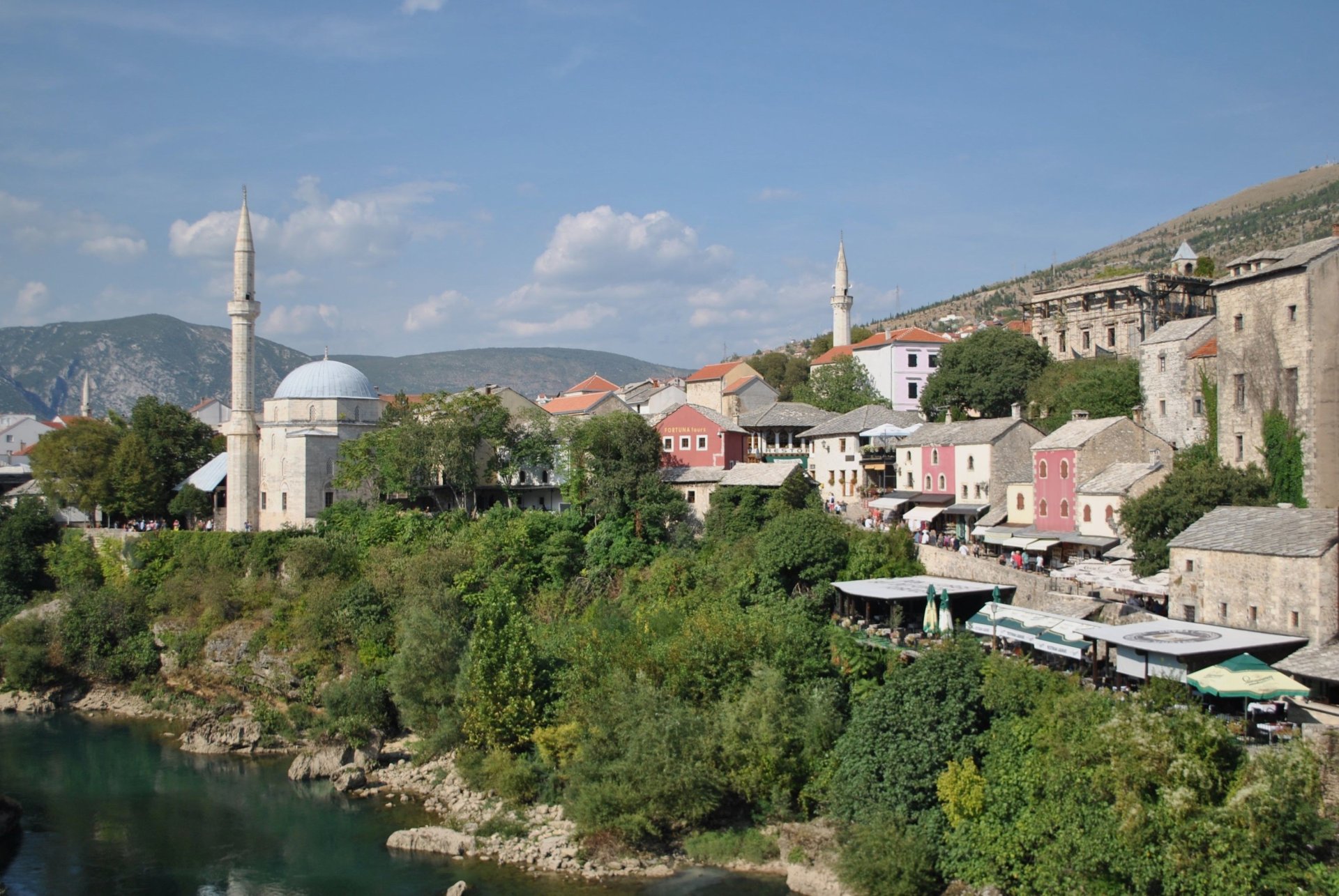
Photo: Pexels (Free Stock Photos)