Huawei unveils new chip strategy amid US sanctions
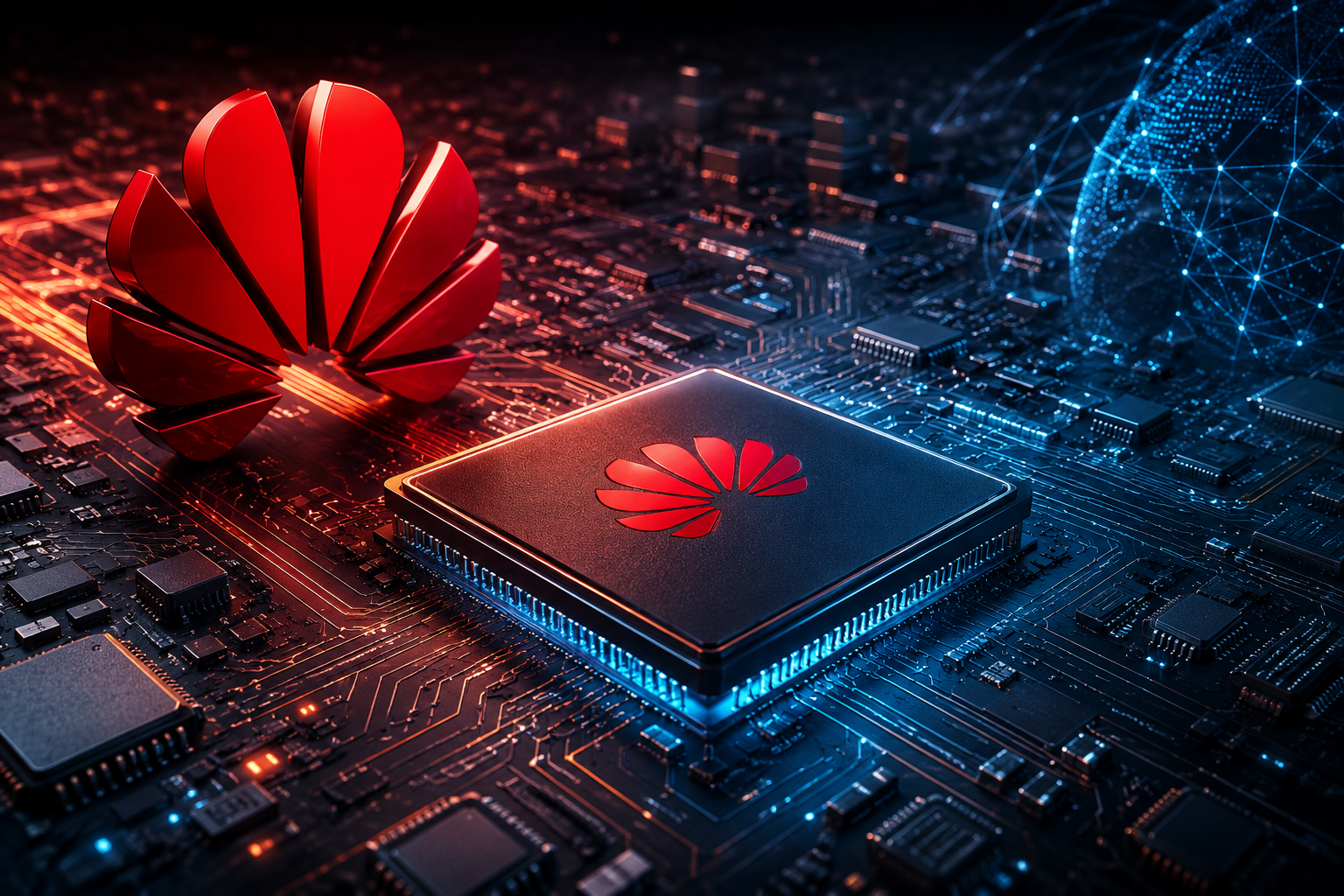
Chinese technology company Huawei has unveiled a new chip design strategy focused on “advanced packaging” and increasing in-system data speed instead of shrinking transistors, aiming to overcome restrictions caused by U.S. sanctions, CE Report quotes Anadolu Agency.
The remarks were made by He Tingbo, head of Huawei’s Semiconductor Unit, during the 2026 IEEE International Symposium on Circuits and Systems (ISCAS), and were later published on the company’s website.
He stated that Moore’s Law, which has guided the semiconductor industry for the past 50 years, is reaching physical limitations. Instead of relying on transistor miniaturization, Huawei is now focusing on advanced chip packaging and improving internal data transfer speeds.
He emphasized that the company has introduced “time scaling” instead of traditional geometric scaling and explained that Huawei’s newly developed “LogicFolding” engineering approach increases chip layout structures from a single layer to two layers.
According to He, this structure will increase interaction points between transistors and improve power efficiency. Despite ongoing restrictions, he said Huawei aims to remain globally competitive over the next decade.
With its new strategy, Huawei plans to design high-performance chips with transistor density equivalent to a 1.4-nanometer process by 2031.
The new technology is considered critical for China’s artificial intelligence ambitions and smartphone market. Huawei said its “Ascend” series, which powers domestic AI models such as DeepSeek V4, as well as the new “Kirin” processors expected to be used in the flagship Mate 90 smartphones scheduled for release in autumn 2026, will adopt this architecture.
The company added that it has produced 381 chips for different industries over the past six years using this method.
Market analysts say Huawei’s move is expected to increase competitive pressure on Apple and Nvidia in the Chinese market.
Photo: Chat GPT