Embassy outlines Romania-Moldova cooperation agenda - EXCLUSIVE
Romania and the Republic of Moldova currently enjoy the highest level of bilateral cooperation in recent memory, underpinned by close political dialogue, expanding economic ties, and deep cultural and educational connections.
This was said to CE Report by the Embassy of Romania in Moldova in an exclusive interview.
According to the Embassy, Romania considers its relationship with the Republic of Moldova a strategic priority, rooted in shared history, language, culture, and common European aspirations. Romania remains the Republic of Moldova’s main supporter in its European Union integration process, its leading trade partner, and one of the most important sources of foreign direct investment. The Embassy emphasized that bilateral cooperation spans political, economic, infrastructural, cultural, and people-to-people dimensions, making it one of the most comprehensive partnerships in the region.
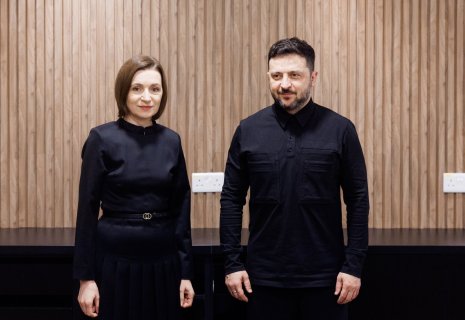
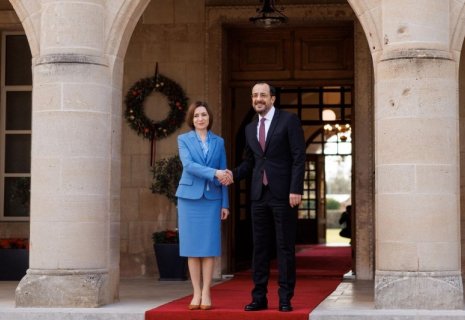
The Embassy highlighted the intensification of high-level political dialogue in recent years, noting frequent exchanges at presidential and prime-ministerial level. Since the most recent presidential elections in Romania, the Romanian President has paid three visits to the Republic of Moldova, while both governments have maintained regular consultations aimed at advancing shared strategic objectives. These political contacts are mirrored by continuous cooperation between central institutions in both countries.
A key pillar of bilateral cooperation is infrastructure connectivity. The Embassy pointed to the start of construction works on the Ungheni–Ungheni bridge over the Prut River, the first new bridge built between the two countries in six decades. The project is expected to significantly boost trade flows, economic activity, and mobility between the Republic of Moldova and the European Union. In parallel, Romania and the Republic of Moldova are advancing major energy interconnection projects, including two new 400 kV overhead power lines linking Suceava–Bălți and Gutinaș–Strășeni, aimed at strengthening energy security and market integration.
Border management cooperation is also progressing, with coordinated border control procedures already operational at the Albița–Leușeni and Galați–Giurgiulești crossings, and preparations underway for implementation at the Fălciu–Cantemir railway crossing. According to the Embassy, these measures are designed to facilitate trade, reduce waiting times, and support economic growth.
From an economic perspective, the Embassy reported steady growth in bilateral trade, which surpassed 3.6 billion dollars in 2024, marking a 7.47 percent increase year-on-year. This upward trend has continued in 2025, with trade volumes rising by over 19 percent in the first five months compared to the same period last year. Romanian companies are firmly established in the Republic of Moldova, with investments totaling more than 746 million dollars, generating over 12,000 jobs and an annual turnover approaching 1.2 billion dollars. Currently, more than 1,700 companies with Romanian capital operate in the Moldovan market.
The Embassy also underscored the growing role of Romanian financial institutions and capital markets, highlighting the involvement of the Bucharest Stock Exchange as a major shareholder in the planned Chișinău Stock Exchange, following the signing of a Memorandum of Understanding in September.
In the cultural and educational sphere, cooperation is driven by a shared linguistic and historical heritage. The Embassy noted that Romania provides sustained support for cultural projects, educational infrastructure, and academic exchanges through dedicated government programs. These include funding for cultural events, donations of books in the Romanian language, scholarships, IT equipment for schools, and large-scale support for educational institutions across the Republic of Moldova.
Special attention is given to youth and education, with projects ranging from renovated kindergartens and schools to the construction of a new study block at the “Mihai Eminescu” High School in Comrat. In recent years, hundreds of school buses have been donated, over 180,000 books distributed, and thousands of students have participated in summer camps in Romania. The Embassy also highlighted ongoing investments in higher education infrastructure, including the €2.3 million reconstruction of a student dormitory at B.P. Hașdeu State University in Cahul.
Promoting people-to-people contacts remains a central priority. The Embassy emphasized that family ties, educational exchanges, and business relationships across the Prut River have intensified naturally over time. Programs such as intensive Romanian language courses for teachers from minority regions and summer language camps for children from Găgăuzia and Taraclia are designed to foster social cohesion and inclusion, while strengthening cultural bridges between communities.
Regarding European integration, the Embassy reaffirmed Romania’s role as the Republic of Moldova’s strongest advocate within the European Union. Current efforts focus on supporting Moldovan authorities in implementing reforms required by the European Commission and preparing for the opening of accession negotiations across all clusters. The Embassy plays an active role by providing logistical and technical assistance, maintaining close coordination with Moldovan institutions, EU Member State missions, and the EU Delegation in Chișinău.
Finally, the Embassy stressed the importance of close regional cooperation in the context of ongoing security and economic challenges caused by Russia’s aggression against Ukraine. Romania remains committed to supporting the Republic of Moldova’s resilience, stability, and European future through sustained diplomatic, economic, and societal engagement.
This interview was prepared by Laura Hoffman