Armenia elevates relations with Türkiye to its foremost strategic priority - OPINION
By Aytan Aliyeva
Relations between Türkiye and Armenia were suspended after Armenia’s occupation of Azerbaijani territories during the First Karabakh War, prompting Türkiye to close its border in 1993 in solidarity with Azerbaijan, despite having recognized Armenia’s independence in 1991. Although several normalization attempts were made from the 1990s onward, including the Turkish-Armenian Reconciliation Commission and the 2008-2009 “football diplomacy” that led to the signing of the Zurich Protocols, none produced lasting results due to domestic opposition, diaspora pressure, and Türkiye’s insistence on linking normalization to progress in the Armenia-Azerbaijan conflict. Only after the liberation of Azerbaijan’s territories did a new opportunity emerge for reconsidering the normalization of Turkish-Armenian relations.
The post-2020 normalization process
The post-2020 normalization process between Türkiye and Armenia is unlikely to be coincidental, as Azerbaijan's victory in the Second Karabakh War fundamentally altered the regional power balance and weakened one of the principal obstacles to normalization, a shift acknowledged by Türkiye as a "conducive political landscape after the Second Karabakh War." Despite Türkiye’s support for Azerbaijan during the conflict, Armenia initiated diplomatic engagement with Türkiye within a year, reflecting Yerevan’s recognition of its increased vulnerability. Russia’s evolving role further explains this shift: although Moscow brokered the 2020 ceasefire and increased its influence by deploying peacekeepers, Armenia’s reliance on Russia was weakened by Moscow’s failure to respond to its 2022 CSTO appeal, and by the subsequent withdrawal of Russian peacekeepers from Karabakh in 2024. This significantly reduced Armenia's trust in Russia as a security guarantor. Against this context, Armenia’s cost-benefit analysis of foreign policy has changed. The long-standing economic incentives of normalizing relations with Türkiye are coupled with an urgent need to diversify security partnerships, reduce dependence on Russia and avoid regional isolation. This has resulted in Prime Minister Nikol Pashinyan designating normalization with both Azerbaijan and Türkiye as Armenia’s foremost strategic priority.
Although both sides officially endorse normalization without preconditions, their stated positions reveal distinct national priorities: Armenia emphasizes unconditional normalization, the separation of Armenian-Turkish relations from the Armenia-Azerbaijan conflict, investment in dormant transport infrastructure, and the preservation of sovereignty over transit routes, whereas Türkiye stresses mutual recognition of sovereignty and territorial integrity, the conclusion of a peace agreement between Armenia and Azerbaijan, and the establishment of a transit corridor linking Türkiye and Azerbaijan through southern Armenia. Political statements from both governments indicate a degree of convergence, with Turkish leadership underscoring peace through good-neighbourly relations based on trust, and Armenian officials expressing readiness for high-level dialogue and the removal of obstacles to regional connectivity. Azerbaijan has likewise adopted a supportive stance toward normalization, viewing it as a means to advance regional development, cooperation, and long-term stability in the South Caucasus.
2022: Initial confidence-building measures
With a new geopolitical environment, the normalization of relations between the two countries has a better chance of succeeding than the one in 2009. Armenia and Türkiye have also taken certain steps to demonstrate their determination toward the normalization process. In December 2021, Türkiye’s Foreign Minister Mevlut Cavusoglu announced the appointment of special representatives by Türkiye and Armenia on a reciprocal basis to discuss the mechanisms of the normalization of relations. This statement was also confirmed by Armenia’s Foreign Ministry, and Foreign Minister of Armenia, Ararat Mirzoyan said that “We have heard positive signals from Türkiye to reopen the dialogue” and “we are ready to normalize our relations without preconditions”.
Shortly after, Türkiye appointed Serdar Kilic, a former ambassador of this country to the US, as a special envoy for the normalization talks. Meanwhile, Deputy Chairman of the National Assembly of Armenia, Ruben Rubinyan, a young politician with little diplomatic experience, who had worked before as a researcher in Türkiye, has been appointed from the Armenian side in the same capacity. The first round of their talks held in Moscow in January 2022, and the second round in Vienna in February 2022. Both parties expressed their interests in normalization that would pave the way for regional integration with transport links expected to bring economic dividends and more stability. In both meetings, the special envoys of Türkiye and Armenia declared the goal of achieving full normalization between their respective countries and stressed the importance of continuing the process without preconditions.
Furthermore, Armenia opened its airspace to flights to/from Azerbaijan in October 2021, allowing Turkish Airlines to use shorter and cheaper routes for flights to Azerbaijan and other Central Asian republics. In December 2021, Türkiye issued a license for charter flights between Türkiye and Armenia and restored aerial services between the two countries. According to this decision, Turkish private carrier Pegasus held its first flight from Istanbul to Yerevan on February 2, 2022. Despite ongoing disagreements concerning the normalization of Armenian-Turkish relations discussions were maintained at ambassadorial level throughout 2022, with meetings continuing on an intermittent basis.
2023: Symbolic high-level engagement
A significant shift in the Armenia-Türkiye normalization process took place in 2023, where humanitarian needs and political discourse converged. This shift was caused by the devastating earthquakes of 6 February 2023 in southeastern Türkiye, following which humanitarian aid and rescue teams were sent to Türkiye by Armenia. For the first time in more than 30 years, the border between Türkiye and Armenia was opened for a short time to allow Armenian trucks to enter Türkiye. Although the parties initially framed this step as a humanitarian measure, it demonstrates that operational cooperation was possible even in the absence of diplomatic relations. This humanitarian opening was later extended in a different context, with the Armenian government announcing that the Margara–Alican border gate would be opened from 21 to 31 March 2023 for a period of ten days to facilitate the transportation of humanitarian aid from Armenia to Syria via Turkish territory. Despite their limited duration and scope, these openings established a new precedent: the closed border could be reopened in special circumstances.
In addition to the humanitarian aspect, 2023 was also marked by the use of symbolic diplomacy. On 3 June 2023 in Ankara, Armenian Prime Minister Nikol Pashinyan attended the inauguration ceremony of Turkish President Recep Tayyip Erdoğan. This marked the first time an Armenian leader had participated in an official ceremony in Türkiye, and it was interpreted as a confidence-building gesture at the highest political level, signalling Armenia's willingness to pursue normalization. However, Pashinyan's attendance was met with a range of reactions. The decision was met with criticism from former Armenian Foreign Minister Vartan Oskanian, who argued that Armenia had "nothing to lose" by not taking part in the ceremony. Meanwhile, Türkiye's former foreign minister, Mevlüt Çavuşoğlu, stated that Armenia’s humanitarian assistance and high-level engagement could positively influence negotiations on restoring diplomatic ties and opening the shared border. Çavuşoğlu and the Armenian Foreign Minister Ararat Mirzoyan have announced plans to work together on repairing the historic Ani bridge and rebuilding other infrastructure along the border between Armenia and Türkiye.
Normalization efforts became more politicized and contested, particularly in Azerbaijani and Turkish media discourse. Commentaries highlighted unresolved structural issues, notably territorial references perceived as claims toward Türkiye and Azerbaijan, and the depiction of Mount Ararat on Armenia's state coat of arms. The Zangezur Corridor was a key focus in this framework, with its strategic importance for Azerbaijan being stressed repeatedly by high-level political figures in Ankara. These concerns reflect broader issues regarding the order of events, trust and conditions in the process of normalization. Despite these disputes, non-official and informal diplomatic contacts continued throughout the year. The 2023 developments demonstrate the dual nature of the process: on one hand, humanitarian cooperation and leadership diplomacy lowered barriers, and on the other, political contestation highlighted the fragility of rapprochement.
2024: Renewed technical talks
The Armenia-Türkiye normalization process regained momentum in 2024, primarily through renewed envoy-level engagement and technical discussions. The fifth official meeting between the Special Representatives, Turkish Ambassador Serdar Kılıç and Armenian Deputy Speaker of Parliament Ruben Rubinyan, took place on 30 July 2024 at the Alican-Margara border crossing. All agreements reached in previous rounds were reconfirmed by the parties during the meeting, and their commitment to continuing the normalization process without preconditions was reaffirmed.
An agreement was reached on a number of concrete steps to be taken, including an assessment of the technical requirements for reopening the Akyaka/Akhurik railway border gate, with this decision to be informed by broader developments in the region. Simplification of visa procedures for holders of diplomatic and official passports was also agreed by the envoys, representing one of the few tangible facilitation measures that have been reached since the process was launched. The Armenian Ministry of Foreign Affairs reported that the sides agreed to implement the July 2022 decision to open border crossings for third-country nationals and diplomats, but the land border remained closed to general traffic. Despite these commitments, progress on border opening was still being linked to political developments, with Türkiye linking further steps to the Armenia-Azerbaijan peace process. As a result, while the parties reaffirmed the agreements, they did not announce a timeline for the opening of the border. The scope of normalization was also broadened in the July 2024 meeting to include cultural, academic, and social cooperation. The parties agreed to strengthen collaboration in culture and higher education, including the creation of scholarship opportunities for university students.
In 2024, informal diplomatic exchanges took place at international conferences, reinforcing the perception that normalization was advancing through technical progress, rather than political breakthroughs.
2025: Leader-level breakthrough
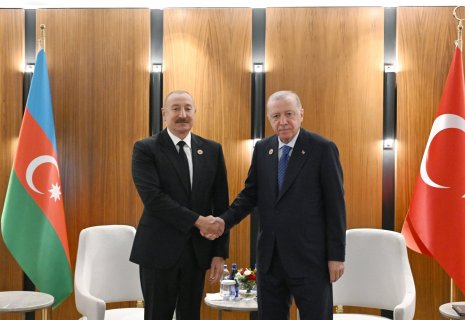
The most significant escalation of the Armenia-Türkiye normalization process occurred in 2025, when dialogue moved to the leader level and was reinforced by renewed envoy engagement. A historic event took place on 20 June 2025, when Prime Minister Nikol Pashinyan visited Istanbul on the invitation of Turkish President Recep Tayyip Erdogan. The meeting, which took place at Dolmabahce Palace, represented the first bilateral negotiations between the leaders on Turkish territory in a non-ceremonial context and is regarded as a significant step in bilateral relations. During the meetings, the two leaders discussed the normalization of Armenia-Türkiye relations and emphasized the importance of continuing constructive dialogue. They also exchanged views on regional developments, including the Armenia-Azerbaijan peace process, transport connectivity and broader security dynamics. Armenia's commitment to peace and stability in the region was reiterated by Prime Minister Pashinyan, who also highlighted his government's resolve to maintain the policy of normalizing relations with neighbouring states. President Erdogan expressing Türkiye's support for Armenia's peace efforts with Azerbaijan; the meeting therefore took place one day after Azerbaijani President Ilham Aliyev held talks with Erdogan in Türkiye, which highlights the triangular regional context in which Armenia-Türkiye normalization continues to evolve.
The Istanbul meeting marked the third meeting between Pashinyan and Erdogan, following earlier encounters held abroad - during the European Political Community summit in Prague in October 2022 and the 79th session of the UN General Assembly in New York in September 2024. However, unlike those occasions, the 2025 meeting was their first official bilateral.
The Special Representatives, Armenian Deputy Speaker Ruben Rubinyan and Turkish Ambassador Serdar Kılıc, held their sixth official meeting in Yerevan on 12 September 2025. All previously agreed principles and decisions were reaffirmed at this meeting, and the envoys shared their commitment to advancing the normalization process without preconditions. They reached a consensus on several key points. Firstly, they agreed to speed up the process of implementing the agreement on border crossings that was reached in July 2022. Secondly, they discussed the technical steps required for the rehabilitation and operationalization of the railway between Gyumri and Kars, as well as the electricity interconnector. Thirdly, they confirmed their intention to deepen cooperation in the fields of culture and academia. They also reaffirmed their commitment to enabling additional airlines to begin operating new routes from summer 2026, thereby increasing air connectivity between the two countries.
A concrete facilitation measure in the field of mobility was the most important outcome of the 2025 process. According to a statement by the Armenian Ministry of Foreign Affairs, the visa application process between Armenia and Türkiye will be simplified starting January 2026, in line with agreements previously reached by the special representatives. Under this arrangement, holders of diplomatic, special and service passports from both countries will be able to obtain free electronic visas starting on 1 January 2026. This decision is one of the most tangible outcomes of the normalization process to date, despite being limited in scope. Concurrently, the developments that occurred in 2025 represented a dual consolidation of the normalization process: politically, through unprecedented leader-level engagement on Turkish land, and institutionally, through ongoing envoy dialogue, expanding technical cooperation, and concrete facilitation procedures.
Between 2021 and 2025, the normalization process between Armenia and Türkiye evolved through various stages, including political signalling, institutionalization, confidence-building and leader-level engagement. Although borders have not yet been fully opened, this period marked a clear break from decades of stagnation, combining official diplomacy with non-official and informal interactions. Armenia-Türkiye relations have entered a new phase in which dialogue has become institutionalized, reducing the likelihood of complete isolation and paving the way for future progress.