Montenegro's ex-PM on EU enlargement and Western Balkans prospects - EXCLUSIVE
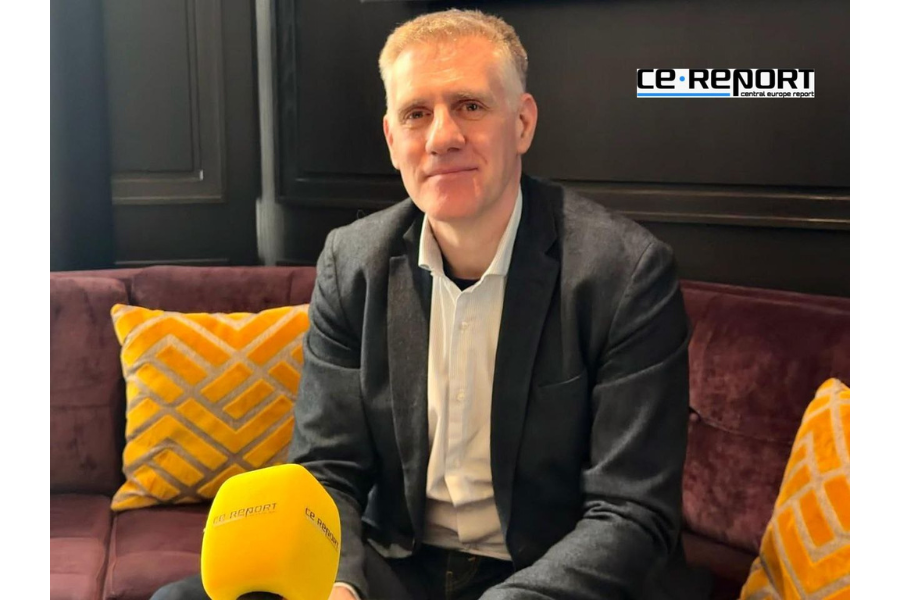
CE Report presents an exclusive interview with Igor Lukšić on EU enlargement and the Western Balkans prospects.
Prof. Igor Lukšić is a Montenegrin economist and former statesman who served as Minister of Finance (2004–2010), Prime Minister of Montenegro (2010–2012), and Minister of Foreign Affairs and European Integration (2012–2016). As Finance Minister, he managed fiscal policy during Montenegro’s independence period and the global financial crisis. As Prime Minister, he led the government through a critical phase of institutional consolidation, focusing on reforms to the rule of law, modernization of public administration, and economic stabilization. Under his leadership, Montenegro intensified its European integration process, achieving milestones that paved the way for the opening of EU accession negotiations in 2012. As Foreign Minister, he continued to advance the EU accession agenda, strengthening Montenegro’s diplomatic engagement with European and transatlantic partners.
In this interview, Prof. Lukšić discusses the European Union’s internal preparations for enlargement, the geopolitical implications of Russia’s war in Ukraine, and Montenegro’s path to accession in the context of a shifting European security landscape.
To what extent is the European Union internally prepared- politically, economically, and institutionally, to integrate new member states?
This question touches on a process that has been ongoing for a long time. In the Western Balkans, including Montenegro, European integration began in 2003 with the Thessaloniki agenda. Now, in 2026, it seems we are close. In the next few years, accession negotiations may conclude, and the treaty could be signed and ratified relatively quickly, so that within three to four years we become an EU member state. Other countries are also in the process, which raises the legitimate question of whether the EU itself is ready for enlargement.
Over the past 20 years, much of the focus has been on candidate countries. We had to do substantial homework, and there is still more to complete. Even after membership, alignment continues, because it is unrealistic to expect all benchmarks and standards to be fully met. The process therefore continues on both sides. Given the new reality of the conflict in Ukraine and global changes, it is appropriate to discuss how the EU prepares for enlargement in a way that consolidates Europe, strengthens competitiveness, and improves integration so it can meet global demands.
The debate continues as to whether the EU is manageable with more than 30 member states, since crucial internal alignment requires consensus. From the outside, this may not appear efficient, but in the long run consensus-building is necessary to determine how to move forward.
How has Russia’s war against Ukraine reshaped the EU’s enlargement policy and its perception as a geopolitical instrument?
It has changed significantly. The vision of enlarging to include the Western Balkans back in 2003 was driven by a different idea - a Europe at peace, united and free. Today, enlargement is closely tied to security threats, urgent challenges, and the EU’s global position. For many in the Western Balkans, it may seem that only the invasion of Ukraine made EU membership appear realistic. But it should not be like that, because the original vision still stands.
The real question is whether enough has been done over the past 20 years to understand Western Balkan societies and prepare them for membership. It is not only about political and economic standards, but also about whether societies become truly Europeanized. Results are mixed, but what matters now is that we recognize the realities and make strategic decisions. The same arguments for enlargement were valid ten years ago, but circumstances were different and support was lacking. Today, quicker enlargement and absorption of the Western Balkans clearly serve the EU’s interests. The time has come for decisions to be taken and for the Western Balkans- or at least some countries - to be included in the EU.
The Western Balkans remain strategically vital for Europe’s stability. How would you assess the region’s overall readiness for membership?
Some Western Balkan countries are already NATO members, and the entire Adriatic coast is part of NATO’s structure. But the EU has its own security interests and policies. For example, migration management is a key priority. Countries such as Montenegro and Albania could contribute to activities related to the EU’s external frontier. That adds another dimension to security.
The Western Balkans has always been a crossroads of cultures and geopolitical interests. Support for EU membership has declined in some countries, largely because the process has lasted too long. If people saw that the goal was tangible, support would likely rebound. The length and complexity of the process have led some to doubt whether membership will ever happen. But if accession becomes real, public support will increase.
External actors such as Russia, China, and Türkiye are increasingly active in the region. What geopolitical risks arise if the EU fails to maintain a credible enlargement perspective?
All of this should push the EU toward major decisions—and the sooner, the better. Regardless of the approach taken in Ukraine, Moldova, or other Western Balkan countries, what matters is that we become EU member states and work toward meeting all standards. People expect to travel freely, find employment, and benefit from opportunities, because there is still a visible gap between EU benchmarks and the situation in the Western Balkans. That gap must be addressed through a tangible process of catching up.
External actors play different roles. China is active in infrastructure, though its overall investment share in the Western Balkans makes for small part of their European investments, only 1%. Serbia is the main case of two-way trade, while elsewhere Chinese involvement is mostly in infrastructure and energy. In Montenegro, for example, the recent extension of the highway project was won by a Chinese company under an EU-supported tender. Russia and Türkiye have long-standing cultural and religious ties in the region, which shape their influence. In some cases, attempts are more aggressive; in others, softer and focused on cultural links. Whatever the motives, a stronger EU approach and greater integration efforts remain the most sustainable way to strengthen resilience against external meddling.
Montenegro is often described as the frontrunner among Western Balkan candidates. What distinguishes its accession trajectory from that of its regional neighbors?
We began accession negotiations in 2012, after completing the necessary preparatory steps. The process is complex, with many chapters to open and close, but Montenegro has been relatively successful. Compared to others, Montenegro has consistently maintained strong public support for European integration - generally between 60% and 70% - and political actors have backed EU membership. Relations with neighbors have remained stable overall, and commitment to reforms has been strong. This distinguishes Montenegro from others and makes it an example for countries seeking to catch up.
The case of North Macedonia is particularly unfortunate. At one point, it was paired with Croatia in terms of progress. But political obstacles blocked its path, despite difficult measures such as constitutional changes and even changing the country’s name. Enlargement should not be shaped by bilateral disputes. There are ways to address such issues during the process. This context further differentiates Montenegro from others in the region.
Political continuity has supported Montenegro’s European path, yet governance challenges persist. How sustainable is the current reform momentum?
Aligning with European standards is not only about passing laws or creating institutions. There must be a credible track record. Montenegro has adopted legislation, set up institutions, and introduced by-laws. But as a small country, we face capacity challenges. Institutional demands are significant, and addressing this mismatch is essential. One way forward is to insist on a professional civil administration- not only as a European standard but as a structural necessity. Civil administration is often subject to political pressures, which is especially difficult in a small country. The sustainability of reform will depend on the resilience of civil administration to political influence.
In your assessment, what would be a realistic timeframe for Montenegro’s accession, assuming reform progress continues?
I am cautious about offering dates. In 2012, I suggested 2021 as realistic, based on eight years of negotiations and ratifications. That did not materialize, partly due to the EU’s own preparedness. Accession requires commitment on both sides. Today, there seems to be alignment between Brussels, the member states, and Montenegro. If the remaining chapters are closed this year or next, followed by treaty preparation and ratification which usually takes around two years - then 2029 may be a realistic date for entry into force. Once the treaty is signed, Montenegro would already assume a status close to membership, which would substantially change the overall context.
This interview was prepared by Aytan Aliyeva