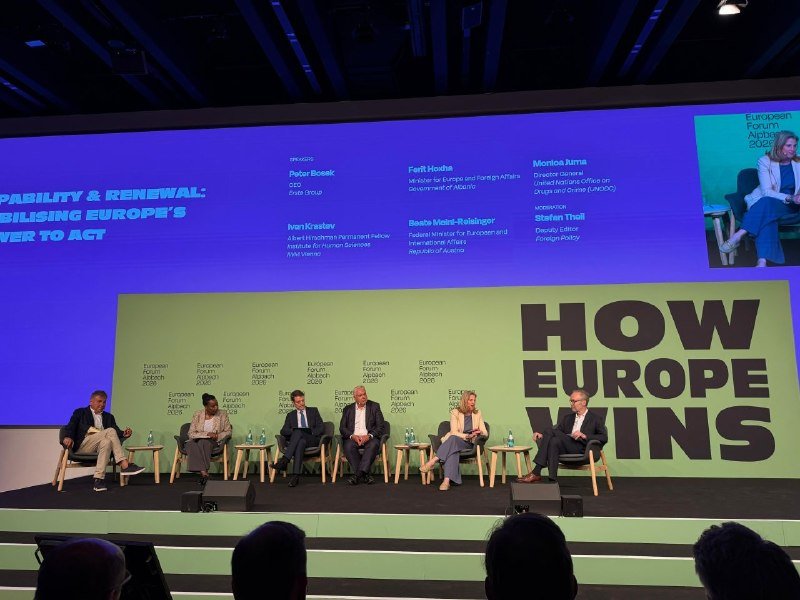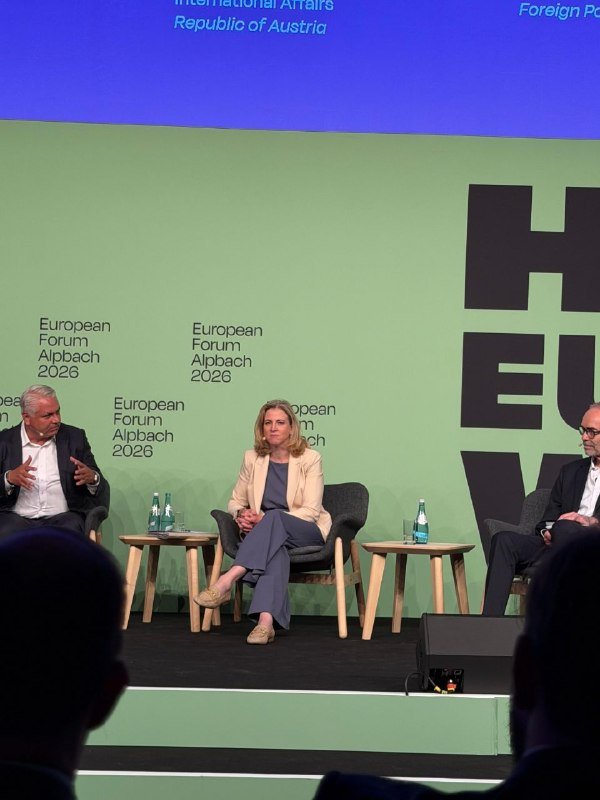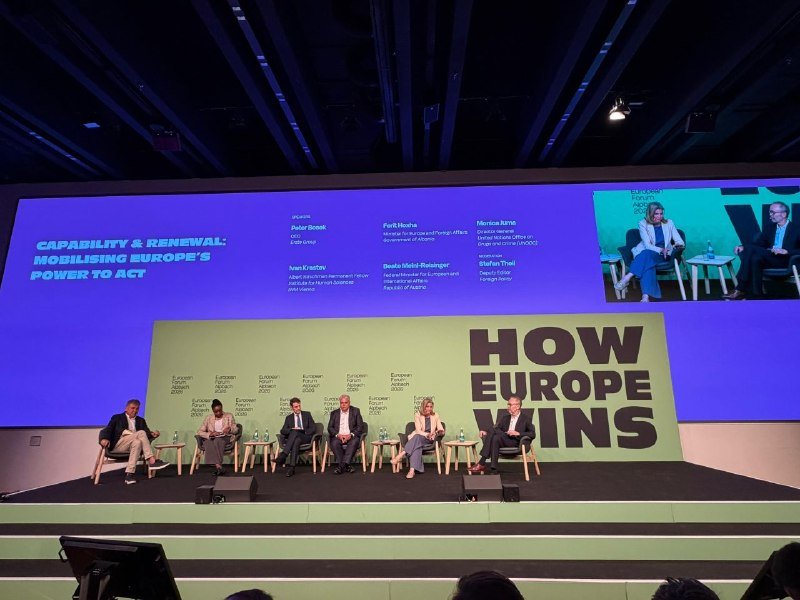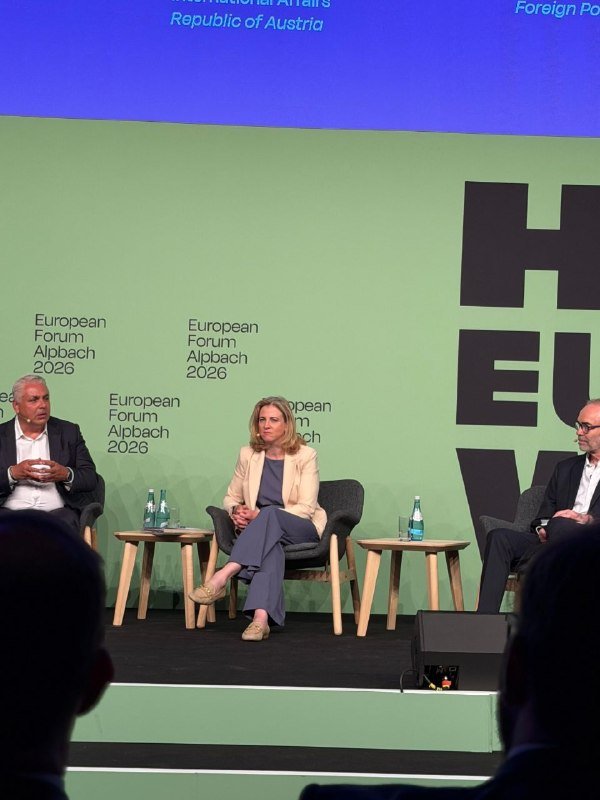
Minister Beate Meinl-Reisinger calls for more capable Europe - EXCLUSIVE (PHOTO/VIDEO)
By Aytan Aliyeva
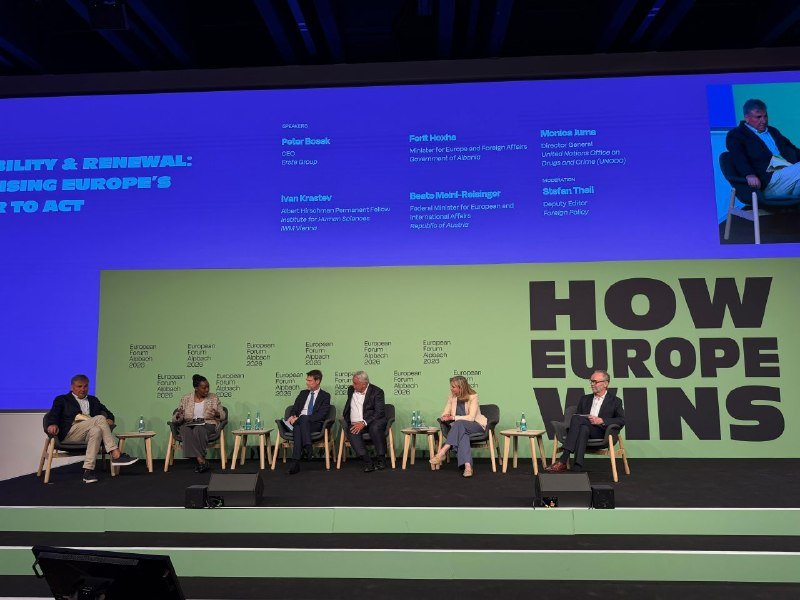
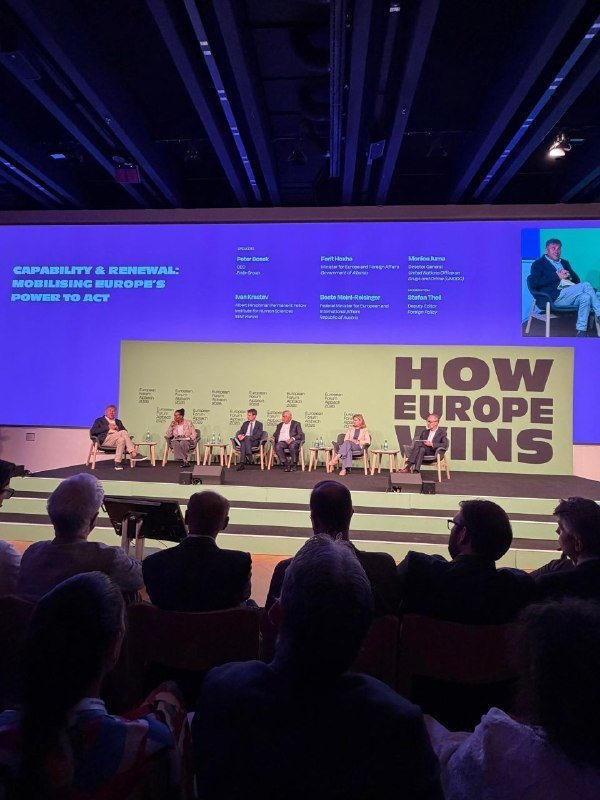
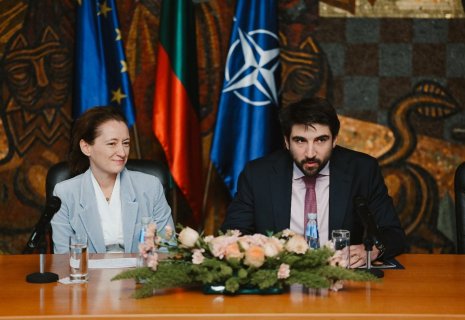
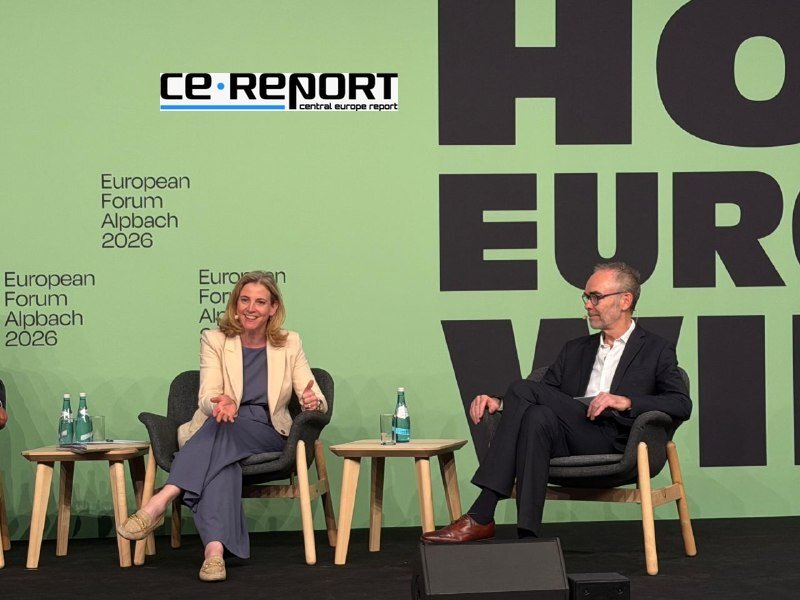
Alpbach, Austria — Europe largely knows what it needs to do to become a stronger geopolitical actor. Its real challenge is finding the political will to act and securing public support for difficult decisions, Austrian Federal Minister for European and International Affairs Beate Meinl-Reisinger argued at the European Forum Alpbach.
Across her interventions in the discussion “Capability & Renewal: Mobilising Europe’s Power to Act,” Meinl-Reisinger presented a vision of Austrian foreign policy anchored in a stronger and more capable Europe. Defence and support for Ukraine formed an important part of that vision, but her argument went considerably further: European power, she said, ultimately depends on economic competitiveness, energy security, enlargement, functioning capital markets and reliable international partnerships. Her central message was straightforward: Europe wins through unity and loses through inertia.
Europe does not need to become the United States or China
Meinl-Reisinger acknowledged that the European Union’s complex structure makes rapid geopolitical decision-making difficult. With different governments, political traditions and national interests, Europe is unlikely to achieve the decision-making speed of China or the concentrated authority of the United States. But she rejected the idea that Europe must reproduce either model.
The objective should instead be to make better decisions and implement the decisions that are necessary.
Recalling discussions she attended at Alpbach around two decades ago, Meinl-Reisinger said she had once been frustrated by the slow pace of European integration. Her experience in political office has given her a different perspective: governments frequently understand what needs to be done, but must convince citizens to support it. That makes public trust and democratic legitimacy essential components of European foreign policy. Meinl-Reisinger described trust as perhaps the most important currency of the 21st century. At a moment of geopolitical uncertainty, she sees an opportunity for Europe to position itself internationally as a predictable and reliable partner.
Europe must assume greater responsibility for its defence
According to Meinl-Reisinger, the changing transatlantic relationship makes greater European responsibility for security unavoidable. Rather than reacting defensively to American demands that Europe shoulder more of its own security burden, she argued that European governments should invest in their own capacity to defend the continent. A European Defence Union can form part of that process, but Meinl-Reisinger cautioned against assuming that a new institution alone would solve Europe's strategic disagreements. Europe needs stronger military capabilities, closer cooperation between national armed forces, a more capable European defence industry and a clearer European security strategy. Her approach is therefore pragmatic: Europe should not wait for a perfect defence architecture before strengthening the capabilities it can build today.
Russia’s war against Ukraine has made this shift particularly urgent. Meinl-Reisinger described the invasion as a fundamental rupture in Europe’s security environment and said Europeans, including Austrians must recognize that there can be no simple return to previous security assumptions. At the same time, Ukraine demonstrates that Europe can act when confronted with a sufficiently serious challenge. Despite initial constraints, including dependence on Russian energy, European governments adopted major sanctions and sustained significant support for Kyiv. The danger now, she warned, is indifference and fatigue. Maintaining public support requires governments to explain why Ukraine is not an abstract foreign-policy issue but one connected to Europeans’ own security and freedom.
Coalitions of the willing can complement European unity
Meinl-Reisinger also dismissed the idea that coalitions of the willing necessarily weaken the European Union. Where individual countries are prepared to move faster, flexible cooperation can strengthen European action rather than weaken it.
She placed such arrangements within a wider vision of a European “family” encompassing different forms of economic, political and security cooperation. The European Political Community and other flexible formats could contribute to that architecture, but she drew a clear distinction between flexible partnerships and EU enlargement. Nevertheless, she drew a clear distinction between flexible partnerships and EU enlargement.
For countries already pursuing membership, alternative arrangements must not become substitutes for full accession.
Enlargement is a strategic European interest
Meinl-Reisinger was particularly enthusiastic about the Western Balkans, describing enlargement as Europe’s most important geostrategic instrument. Her reasoning was direct: geopolitics does not tolerate a vacuum.
If the EU is absent or fails to offer a credible path forward, other powers, including Russia and China will increase their influence. That makes enlargement more than a gesture of solidarity with countries such as Albania and Montenegro. In Meinl-Reisinger’s view, it is clearly in Europe's own interest.
Austria has a particular stake in the region. Austrian businesses are significant investors in Western Balkan economies, while political instability there can have direct consequences for Austria and the wider EU.
The security dimension has also evolved. Alongside traditional concerns about instability, Meinl-Reisinger pointed to disinformation, information manipulation, foreign interference and other hybrid threats. Candidate countries can become targets for actors seeking to exploit frustration and weaken support for European integration. Threats to European cohesion do not come only from abroad, she added. Nationalist forces within EU member states can also undermine European unity. For Meinl-Reisinger, enlargement therefore combines economic interest, regional security and geopolitical strategy.
Europe’s experience since 1989 illustrates the potential power of this approach. European integration expanded not through military conquest, she argued, but through attractiveness: countries actively wanted to become part of the European project. Preserving that attractiveness, and the credibility of the membership perspective is itself a form of European power.
Competitiveness is the foundation of European security
Despite the emphasis on defence, Meinl-Reisinger argued that Europe's most important underlying priority is competitiveness. A stronger defence ultimately has to be financed by a stronger economy.
She therefore called for further development of the Single Market and implementation of proposals associated with Enrico Letta's work on European competitiveness and integration. The same logic informed her support for international trade agreements. Recent movement on agreements with India and Mercosur showed, in her view, that Europe can overcome long-standing blockages when political urgency increases. Meinl-Reisinger was notably critical of Austria’s previous reluctance toward Mercosur, arguing that the country stands to benefit from the agreement.
Europe should now deepen not only trade relationships but also security and defence partnerships around the world.
Defence spending cannot come at the expense of energy
Meinl-Reisinger nevertheless cautioned against defining European security solely through higher military budgets. Europe also needs to invest heavily in energy infrastructure.
She questioned whether it makes strategic sense to devote enormous new resources to defence while failing to make comparable progress on European electricity grids and an integrated Energy Union.
Europe’s future industrial competitiveness will depend on having sufficient energy available at affordable prices. That requires cross-border infrastructure and greater integration rather than purely national solutions.
She placed the Energy Union, the Capital Markets Union, and the Single Market alongside defence as fundamental elements of Europe's future strategic capacity. The Capital Markets Union is particularly important because Europe needs to mobilise more European capital for European investment. In this sense, Meinl-Reisinger’s foreign-policy argument links economics and security closely: Europe cannot sustain geopolitical ambition without the productive capacity, energy and financing required to pay for it.
By 2030: turn European potential into capability
Asked what Europe should be able to achieve by 2030, Meinl-Reisinger returned to two concrete priorities.
First, Europe should have made decisive progress toward completing the Single Market and establishing a Capital Markets Union.
Second, it should have developed the wider European “family” of partners she described throughout the discussion.
Demand for stronger European engagement already exists beyond the continent, she suggested, including among countries in the Gulf, where the message to Europe is effectively: Where are you? We are waiting for you.
For Austria, the implications of Meinl-Reisinger’s position are significant. Her approach places Austrian foreign policy within a strategy of strengthening Europe's collective capacity rather than attempting to navigate geopolitical competition primarily at the national level.
It combines a traditional Austrian interest in the Western Balkans with a more ambitious agenda for European defence, economic integration, energy infrastructure and global partnerships.
The underlying principle is that economic policy, security policy and foreign policy can no longer be treated as separate domains. A competitive Single Market finances security. Energy infrastructure supports industrial strength. Enlargement stabilises Europe’s neighbourhood. Defence capability reduces dependency. International partnerships turn Europe's economic weight and reputation for reliability into geopolitical influence.
Therefore, Meinl-Reisinger's perspective is primarily a call for action rather than another round of European institutional redesign.
Europe already has considerable economic weight, international attractiveness and political influence. The question is whether it can mobilize those assets quickly enough
Her definition of European success is pragmatic: a Europe that is less resistant to change, more accountable, and able to work together when it is necessary.
Gallery