Moldova rejects linking EU accession to Transnistria settlement - EXCLUSIVE
The Republic of Moldova remains committed to advancing European integration and the reintegration of the country through two parallel but distinct processes, emphasizing that progress toward European Union membership should not be dependent on resolving the Transnistrian issue.
This was said by the Government of the Republic of Moldova, in an exclusive interview with CE Report.
According to the government, European integration follows a structured and clearly defined process based on reforms, legal harmonization, and established benchmarks, while reintegration is a more complex and gradual undertaking that requires flexibility, persistence, and long-term engagement.
Moldovan authorities stressed that international partners, including EU member states and European institutions, understand this distinction and have consistently supported Moldova’s European aspirations without attaching conditions related to the settlement of the Transnistrian conflict.
"The European integration and reintegration of Moldova are strategic objectives pursued simultaneously through separate tracks," the government said, adding that its reintegration policy prioritizes the interests of citizens living on both banks of the Nistru River through confidence-building measures and economic and social convergence.
The government highlighted that nearly 360,000 Moldovan citizens reside in the Transnistrian region and are increasingly benefiting from opportunities created through Moldova’s European integration process. Officials noted that thousands commute daily to the Right Bank for work, businesses from the region export goods to EU markets, students enroll in Moldovan universities, and residents benefit from Moldova’s healthcare and social protection systems.
Authorities argued that as Moldova advances in its EU accession negotiations, residents of the Transnistrian region are becoming more aware of the practical advantages associated with closer integration with the rest of the country and the European Union.
Economic integration between the two banks is already significant, according to government data. More than 2,400 companies from the Transnistrian region are registered with Moldovan authorities and conduct import-export operations in accordance with national legislation. The European Union has become the primary destination for exports from the region, accounting for more than 71 percent of total exports, while around half of all imports originate from EU member states.
The government noted that this economic shift has been taking place for more than a decade, driven largely by the implementation of the EU-Moldova Association Agreement and the Deep and Comprehensive Free Trade Area (DCFTA).
Officials also pointed to growing social integration. More than 95 percent of Transnistrian residents hold Moldovan citizenship, approximately 30,000 people cross the river daily for work, more than 14,000 are formally employed and contribute taxes to the national budget, while over 10,000 receive pensions and social payments through Moldova’s social insurance system.
To further strengthen social cohesion, Parliament recently adopted legislation simplifying access to Moldovan citizenship for residents of the region born after 1991.
As part of its reintegration strategy, the government is preparing to launch a dedicated Convergence Fund designed to accelerate socio-economic development and reduce disparities between the two banks of the Nistru. The fund is expected to finance targeted social and infrastructure projects, with a particular focus on vulnerable groups and improving access to public services.
Authorities said the fund will serve as an important instrument for expanding opportunities for residents of the Transnistrian region and increasing the attractiveness of Moldova’s constitutional territory through tangible improvements in living standards and public services.
At the same time, Moldova continues to engage representatives from both banks through existing dialogue mechanisms, including sectoral working groups and meetings of political representatives, in an effort to identify sustainable solutions for deeper convergence and the eventual restoration of the country's territorial unity within its internationally recognized borders.
The government also noted that institutional experts in Tiraspol are being informed about upcoming reforms linked to Moldova’s EU accession process, helping prepare the region for future changes associated with European integration.
Moldovan authorities stressed that transparency and regular communication with international partners remain essential elements of both the European integration and reintegration processes.
"We are committed to keeping our partners informed about progress on both tracks and rely on their continued support as Moldova advances toward EU membership and greater internal convergence," the government said.
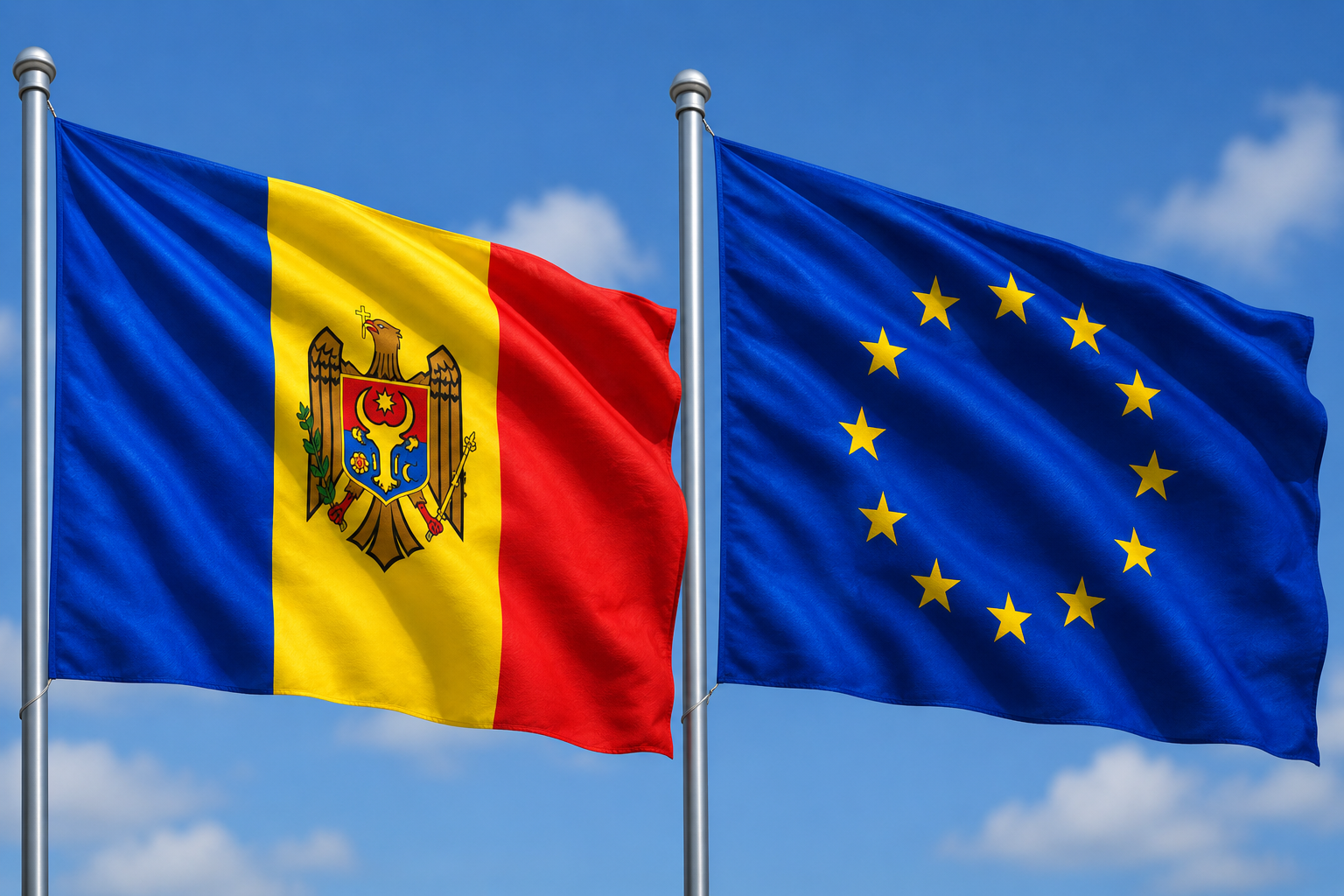
Photo: AI
This interview was prepared by Laura Hoffman