UNESCO grants World Heritage Status to Modernist Centre of Gdynia
The Modernist Centre of Gdynia has been inscribed on the UNESCO World Heritage List as Poland's 18th World Heritage Site, coinciding with the centenary of the city's municipal rights.
The decision was made during the 48th session of the UNESCO World Heritage Committee in Busan, South Korea, CE Report informs via the Ministry of Foreign Affairs of Poland's official website.
UNESCO recognized Gdynia as an outstanding example of modernist urban planning and architecture that shaped the city during the interwar period.
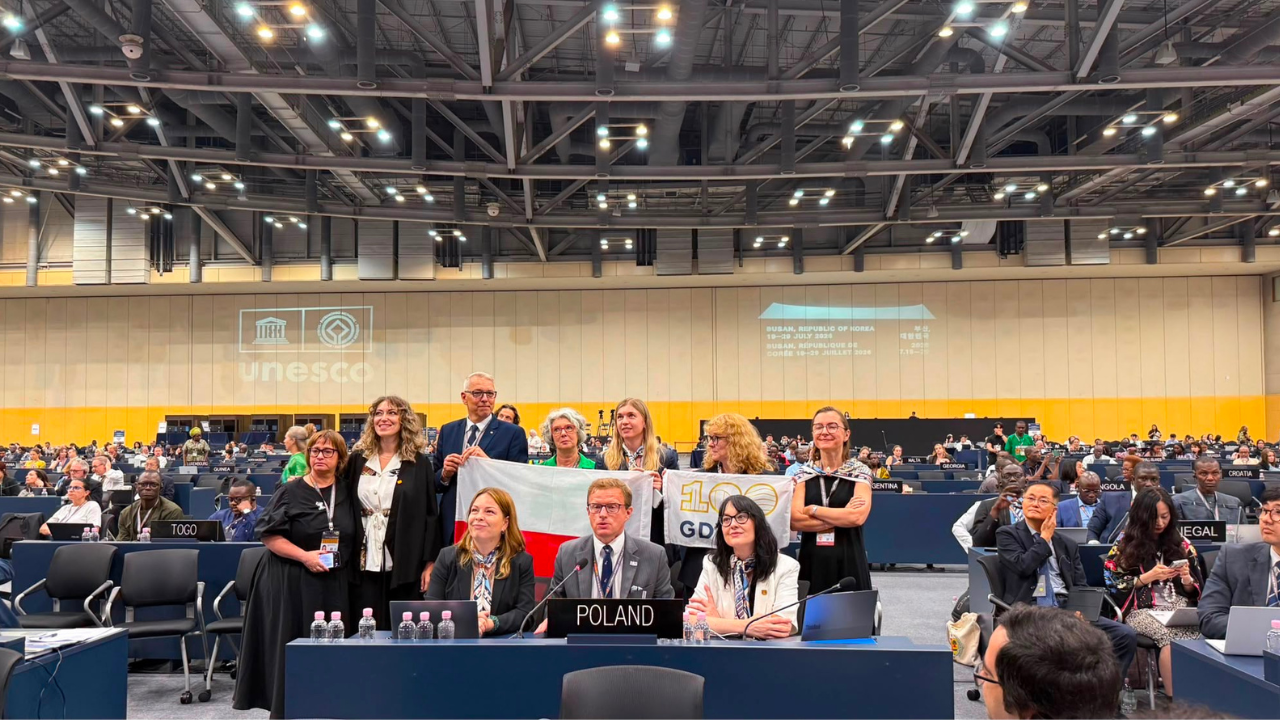
The official photograph from the session shows 12 people standing in front of a brown backdrop bearing the inscription "UNESCO 48th Session of the World Heritage Committee." The United Nations and South Korean flags are displayed on the right side.
The World Heritage Committee recognized Downtown Gdynia as an exceptional example of an urban ensemble that reflects the comprehensive application of modernist architectural principles in city planning and development. The inscription was supported by 18 Committee members: Armenia, Azerbaijan, Bangladesh, Grenada, Jamaica, Kazakhstan, Kenya, South Korea, Kuwait, Lebanon, Mongolia, Peru, Senegal, Ukraine, Tanzania, Togo, Türkiye, and Vietnam. The listing marks the culmination of many years of work by the city authorities, heritage conservation services, state institutions, and coordinated diplomatic efforts.
The Modernist Centre of Gdynia was inscribed on the World Heritage List as a site of Outstanding Universal Value to humanity. UNESCO recognized the transformation of a small Baltic fishing village into a modern port city between 1926 and 1939 as an impressive example of urban development. Designed to support the rapid expansion of Poland's strategic seaport, Gdynia became a symbol of modernity, progress, and the ambitions of the reborn Polish state. Its urban layout and interwar architecture demonstrate the consistent application of modernist principles and the cooperation of public authorities, private investors, and architects.
The history of Gdynia's creation and development illustrates how the ideas of the international modernist movement were successfully adapted to the local conditions of a port city. Its well-preserved urban layout and numerous modernist buildings remain exceptional testimony to the geopolitical and social transformations that took place in Central and Eastern Europe after the First World War.
During the discussion preceding the decision, Committee members also highlighted the strong commitment of Gdynia's residents to preserving their local heritage. They noted that numerous grassroots initiatives and the active involvement of the local community in preparing the nomination reflected a strong sense of identity linked to the city's modernist character.
Poland is serving on the UNESCO World Heritage Committee for the third time in its history during the 2025–2029 term. The membership reflects the country's strong standing within the international heritage protection system and recognizes the longstanding achievements of Polish experts in the field.
The inscription of the Modernist Centre of Gdynia on the UNESCO World Heritage List is the result of years of efforts by city authorities, heritage conservation services, national institutions, state administration, and Polish diplomacy. With this decision, Gdynia joins the ranks of the world's most valuable cultural sites recognized as the shared heritage of humanity.
Photo: MFA Poland