Transatlantic relations at structural turning point - OPINION
By Aytan Aliyeva
As 2026 begins, transatlantic relations are no longer experiencing a temporary period of political turbulence. They are entering a phase of structural transformation. What only months ago looked like rhetorical pressure, electoral signaling, or ideological posturing from Washington has now taken the form of concrete policy signals, strategic repositioning, and actions that European capitals increasingly interpret as a fundamental reassessment of the alliance itself.
The 2025 U.S. National Security Strategy marked a formal break with the post-Cold War logic of American global leadership. Its emphasis on sovereignty, narrowly defined national interests, and transactional alliances was initially received in Europe as an ideological document rather than an operational blueprint. Recent developments, however, suggest that this reading was overly optimistic. The strategy is now being implemented not only through defense planning and alliance management, but also through political messaging, crisis behavior, and selective engagement with European partners.
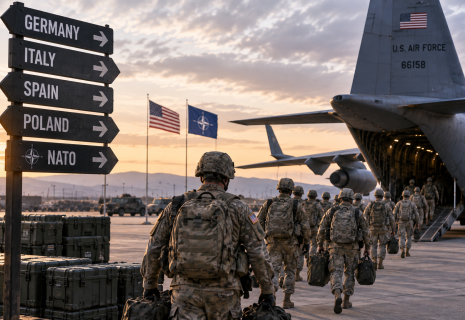
At the core of the shift lies a redefinition of what the United States now considers an alliance. NATO and the European Union are no longer treated as strategic communities bound by shared destiny, but as frameworks within which Washington reserves the right to disengage, recalibrate, or bypass collective mechanisms when they no longer align with U.S. priorities. This approach does not seek a dramatic rupture with Europe. Instead, it normalizes uncertainty as a tool of leverage and replaces predictability with conditionality.
Nowhere has this change been felt more acutely than in the reaction to recent U.S. rhetoric and actions concerning Greenland. The renewed insistence from Donald Trump and figures close to him that Greenland represents a vital U.S. strategic asset, coupled with remarks suggesting that military options cannot be excluded, crossed a psychological red line for European leaders. For the first time in decades, senior officials openly discussed a scenario in which the United States could threaten the sovereignty of a NATO ally. The speed and clarity of Europe’s response, particularly from Denmark and other Northern European states, reflected not panic but a dawning realization that alliance guarantees can no longer be taken for granted simply because they existed in the past.
This episode was not about Greenland alone. It symbolized a deeper collision between two strategic cultures. From Washington’s perspective, geography, resources, and military positioning justify unilateral action if national security is at stake. From Europe’s perspective, even discussing such logic inside an alliance undermines the very premise on which NATO was built. The fact that European leaders publicly framed the Greenland issue as an existential challenge to NATO reveals how fragile trust has become.
In parallel, Europe has accelerated efforts to translate long-standing debates about strategic autonomy into concrete policy. Initiatives aimed at strengthening European defense capacity, improving joint procurement, and reducing reliance on U.S. military infrastructure have moved from abstract planning into the realm of budgetary and political commitment. While these efforts remain uneven and contested within the EU, their political significance lies in the recognition that American security guarantees are no longer unconditional.
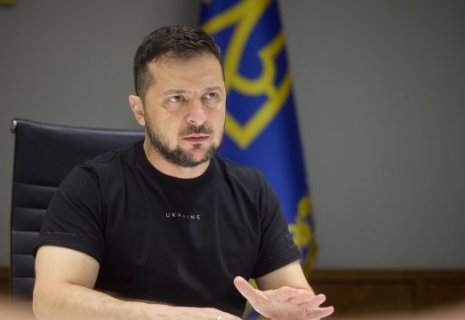
This shift is also evident in how responsibility for Ukraine’s security is being redistributed. The January 2026 summit in Paris illustrated a new model of transatlantic cooperation. European states, particularly France and the United Kingdom, signaled readiness to assume direct responsibility for post-conflict security arrangements, including the possible deployment of forces under specific conditions. The United States, while endorsing the framework, limited its role to monitoring, intelligence, and technological support.
This arrangement was presented as burden-sharing, but in reality it reflects a strategic distancing. Washington remains involved, but deliberately avoids commitments that could limit its freedom of action elsewhere.
What makes this model significant is not its immediate effectiveness, but its symbolic meaning. It suggests that Europe is being encouraged, and in some ways compelled, to internalize the costs and risks of regional security, while the United States positions itself as an external balancer rather than a guarantor. This represents a fundamental departure from the logic that shaped European security since 1945.
The transformation of transatlantic relations is not confined to military and institutional dimensions. It is increasingly shaped by ideological and cultural confrontation. Elements of U.S. domestic politics have become an external factor in European political life, particularly through open support for sovereignty-based, nationalist, or culturally conservative movements. For many European governments, this is perceived not as benign ideological affinity, but as an attempt to weaken institutional cohesion from within. The result is a paradoxical situation in which Europe feels strategically pressured by both American disengagement and American political activism.
Public opinion across much of Europe reflects this ambivalence. The United States is no longer viewed as an unquestioned security provider, but neither is it seen as a rival. Instead, it occupies an unstable middle ground as a powerful actor whose interests increasingly diverge from those of the European project. This perception is reinforcing calls for autonomy not only in defense, but also in industrial policy, technology regulation, and strategic communications.
Despite these tensions, the transatlantic relationship has not collapsed. Channels of cooperation remain open, and shared interests still exist, particularly in managing relations with Russia and China. What has changed is the underlying logic of cooperation. Alignment is no longer assumed. It must be negotiated, justified, and constantly reassessed. The alliance is evolving from a rules-based structure into a fluid arrangement shaped by short-term convergence rather than long-term commitment.
The strategic landscape that is emerging is therefore neither one of outright rupture nor of continuity. It is a landscape defined by fragmentation, flexibility, and competing expectations. NATO is gradually being reinterpreted as a coalition of varying commitments rather than a unified security guarantee. The European Union is being pushed, both by external pressure and internal necessity, toward greater strategic self-reliance. The United States is asserting its freedom to disengage while retaining influence through selective involvement.
The central question facing Europe is no longer whether it can rely on the United States in every scenario. That question has already been answered by events. The real challenge is whether Europe can maintain internal cohesion and strategic clarity in an environment where its primary ally no longer provides a stable framework for long-term security planning. The choices European leaders make in the coming years will shape not only the future of transatlantic relations, but the broader architecture of international order in an era defined less by alliances and more by shifting balances of power.