Senior Israeli source says war with Iran may last months as oil tops $100 - EXCLUSIVE
By Julian Müller
The Middle East is entering one of its most volatile periods in decades. Israeli and U.S. strikes on Iranian military and nuclear infrastructure have triggered a sharp escalation with Tehran, sending global oil prices soaring above $100 per barrel and raising questions about how long the confrontation could last.
Brent crude surged past the symbolic $100 mark for the first time in years after reports of attacks on energy infrastructure in and around Tehran. Markets reacted immediately, reflecting fears that a prolonged conflict with one of the world’s largest oil producers could disrupt global supply and destabilize the region.
Behind the scenes, Israeli officials insist the military campaign is not aimed merely at damaging facilities or targeting individuals within Iran’s leadership. They describe the operation as a long-term effort to dismantle what they see as a strategic and ideological threat that has defined Iran’s foreign policy since the 1979 Islamic Revolution.
“We are not dealing here only with persons and individuals,” a senior source in Israel told me in an interview conducted on condition of anonymity because of the sensitivity of the situation. “We are dealing here with an ideology.”
According to the source, the central problem for Israel is not simply the identity of Iran’s leadership but the ideological foundations of the Islamic Republic itself.
“The new leadership is no different from the old leadership,” the source said. “The change should come in the ideology — in the understanding that the way Iran has acted over the last 47 years needs to come to an end.”
For decades, Israeli officials have argued that Iran’s military and nuclear programs were designed not merely for deterrence but for confrontation with Israel and the United States. Tehran has repeatedly denied those accusations, insisting its nuclear program is peaceful.
But the Israeli source dismissed those claims, pointing to uranium enrichment levels that far exceed what is typically needed for civilian purposes.
“You don’t need to enrich uranium to 60% or 90% if you want to conduct research,” the source said. “You can do that with 3.5%. There is no other reason but turning it into a weapon.”
The current campaign comes after months of mounting tensions, including missile exchanges across the region and attacks linked to Iran-backed groups. Israel argues that Tehran’s network of allied militias — including Hezbollah in Lebanon, Shiite militias in Iraq and the Houthi movement in Yemen — has effectively created a ring of pressure around the country.
Those groups, Israeli officials say, continue to receive weapons and funding despite Iran’s own severe economic crisis. Even after suffering military setbacks in recent months, Tehran has maintained financial support to its allies across the region.
“First take care of your own people,” the diplomat said. “Make sure they have water to drink before sending billions to proxies abroad.”
The latest escalation also follows a string of attacks and covert operations across the region that Israeli officials attribute to Tehran or its allies.Iran has often denied involvement in such incidents, a pattern that the Israeli source said has repeated itself for decades.
“First they say it was not them,” the source said. “They deny it, they blame someone else. But later — sometimes years later — the information comes out and it becomes clear that they were responsible.”
The senior source also pointed to recent attacks across the broader region, including incidents involving civilian infrastructure and security targets.
“The threat is not only towards Israel and the United States,” the source said. “It is also towards neighboring countries and Europe. We have been warning about this for many years.”
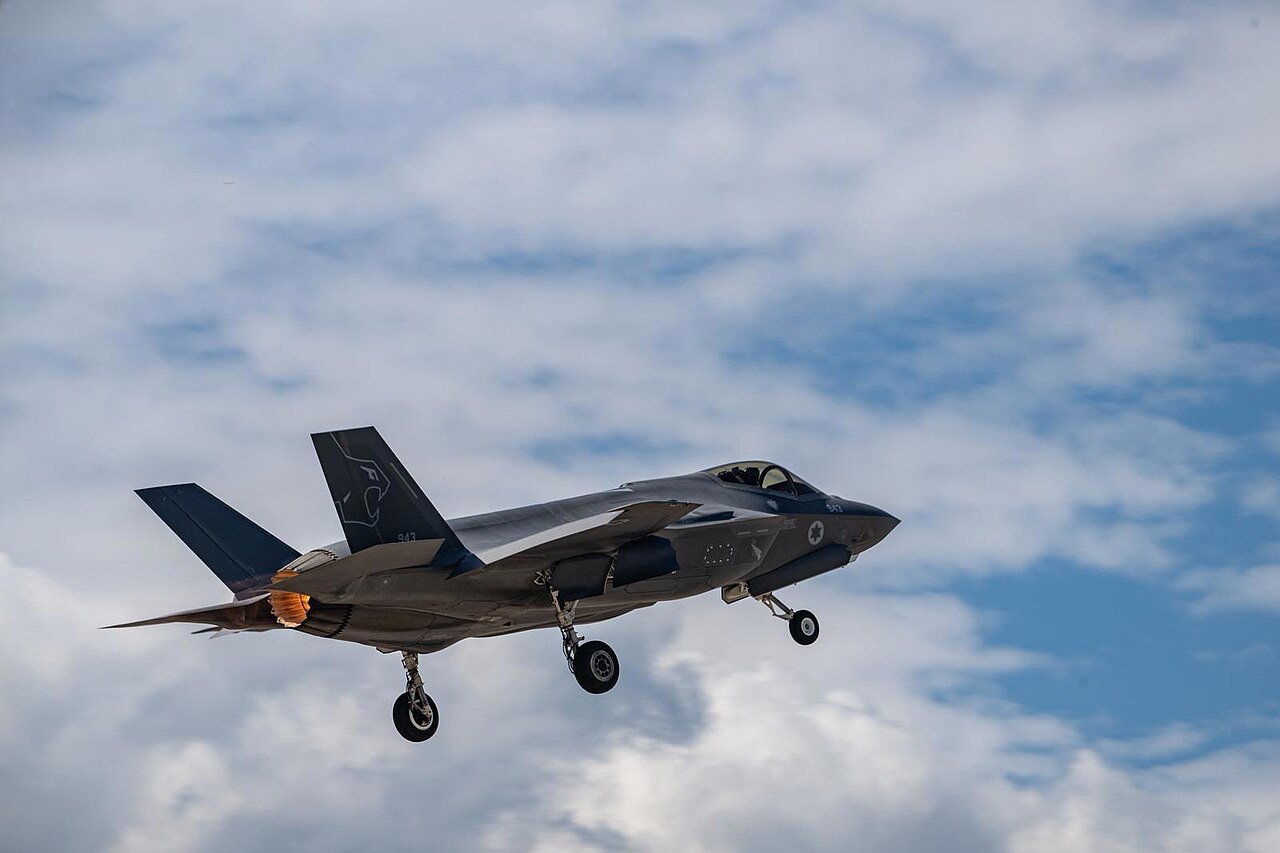
The military campaign is already reshaping the geopolitical landscape. Airstrikes have targeted ballistic missile facilities, military bases and elements of Iran’s internal security apparatus, including units associated with the Basij militia — a force often used to suppress domestic protests.
Israeli officials argue that weakening those structures could eventually open space for internal political change within Iran. But they also acknowledge that such change cannot be imposed from outside.
“These are the forces that would be used immediately if people go out to the streets,” the source said. “When the population sees that these forces are not as strong as they used to be, they may feel more confident to protest.”
Still, Israeli officials acknowledge that any political transformation inside Iran would have to come from within.
“The people of Iran are eligible for a normal life,” the source said. “At the end of the day, they will have to take responsibility for their own future.”
The question of how long the conflict will continue remains unanswered. Israeli military leaders have publicly suggested the operation could last months, possibly longer, depending on developments inside Iran and the effectiveness of ongoing strikes.
“It will last as long as it takes,” the diplomat said, echoing remarks from Israel’s defense establishment.
Despite speculation in Western media about disagreements between the US and Israel — particularly after reports that Israeli strikes may have hit oil storage facilities in Tehran — Israeli officials deny any serious rift with the United States. “The level of cooperation between Israel and the United States is extraordinary,” the source said. “The coordination between the armies is something unique. It will be studied for years.”
Still, the economic consequences of the conflict are already being felt worldwide. Oil markets have reacted nervously to every development, pushing prices higher as traders price in the risk of disruptions in the Persian Gulf.
US President Donald Trump acknowledged the price surge but predicted it would eventually stabilize. For now, however, uncertainty dominates both the battlefield and the markets.
Yet the Israeli source suggested market volatility may prove temporary. “Yes, prices have gone up,” the source said. “But we will need to wait and see what happens next.”
One of the biggest unknowns is whether the conflict could eventually expand beyond airstrikes. Some analysts believe that destroying deeply buried nuclear facilities might ultimately require ground operations — a scenario that Israeli officials have not ruled out.
“You know how you start,” the source said. “But you never know how you end.”
Still, the official indicated that Israel’s main concern would be preventing Iran from accessing stockpiles of highly enriched uranium.
“If we see indications that they are trying to reach those stockpiles — 300 or 400 kilograms — that would be a game changer,” the source said.
For Israel, the logic behind the operation remains straightforward. “The main target is the system itself — the ideology that has dominated Iran for 47 years,” the source said. “Just imagine if Iran had nuclear weapons and these capabilities. What kind of threat that would impose not only on us, but on the rest of the world.”
As the conflict intensifies and oil prices climb, that question is increasingly shaping calculations far beyond the Middle East. For now, the operation continues — with no clear end in sight and global markets watching every strike.
Photo: Wikipedia