UNDP on combating gender-based and digital violence in North Macedonia - EXCLUSIVE
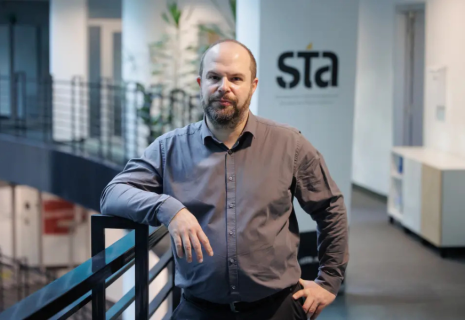
CE Report presents an exclusive interview with Kristina Plecic, Gender Specialist at the United Nations Development Programme (UNDP), focusing on innovative initiatives to prevent gender-based and digital violence in North Macedonia. In the interview, she highlights the role of local institutions, protection networks, and data-driven approaches in supporting survivors and improving national policies.
Could you provide more details on how the Municipality of Strumica and UNDP evaluate the effectiveness of events like the theatrical play Convicted in raising awareness and promoting social change?
"Convicted" is not a typical Forum Theatre performance. Instead of actors stopping the play and inviting the audience to re-enact scenes, as is standard in Forum Theatre, our approach uses a full theatrical play followed by a structured discussion with the audience. This method was first piloted by UNDP in 2023 and proved to be highly effective in creating a safe and engaging environment for young people to reflect on issues such as gender-based violence and technology-facilitated abuse.
The power of the model lies in its combination of emotional storytelling and guided dialogue. The play presents realistic situations of domestic violence and digital coercion, after which professional facilitators lead an open conversation with the audience. Young participants are encouraged to express how the scenes relate to their own experiences, identify harmful behaviors, and collectively explore solutions.
To evaluate impact, UNDP use several complementary methods:
-
Observation of audience engagement and shifts in attitudes, including willingness to speak openly about sensitive issues that are usually silenced.
-
Feedback from schools, police, social workers, and women’s organizations, who report increased awareness, improved understanding of reporting mechanisms, and more conversations among youth.
-
Analysis of discussions during the event, which offer insights into misconceptions, gaps in knowledge, and opportunities for strengthening prevention efforts.
-
Follow-up reflections from facilitators and institutional partners, many of whom noted that the 2023 performances helped break stigma and prompted young people to seek advice or support afterward.
The strong results from 2023 were the reason UNDP and partner municipalities decided to re-stage the same plays in Strumica and Kavadarci this year. The method continues to demonstrate significant potential for raising awareness, deepening understanding of systemic gaps and the complex barriers survivors face when trying to leave violent environments, while also reducing stigma and encouraging early reporting of both offline and digital forms of violence.
What specific institutional mechanisms or protection networks have been established in Strumica to support victims of gender-based and digital violence?
Strumica is considered one of the leading municipalities in North Macedonia when it comes to local support for women survivors of violence. It was the first municipality in the country to allocate its own budget for a Shelter Center for women and children survivors of domestic violence. The center officially opened in 2020, is run by a civil society organization, has a capacity of 13 people, and operates in a facility owned by the Municipality of Strumica.
In 2021, the municipality expanded its support network by opening a Counseling Center for psychosocial support, offering psychological assistance, legal guidance, and help with recovery and reintegration for women who do not require immediate shelter accommodation.
Strumica is now preparing to open a House for Open Housing, a supported-living model for women who have left violent environments but face risks such as homelessness, unemployment, or lack of family support. The municipality plans to follow the same transparent licensing and commissioning process used for the Shelter Center, ensuring that qualified civil society organizations can apply to run the service.
Together, these mechanisms (funded shelter, counseling services, and the upcoming open housing program) form a strong protection network that supports survivors’ safety, recovery, and long-term reintegration, including in cases that involve technology-facilitated violence.
How does the UNDP project work with local police and authorities to prevent and respond to cybercrime and gender-based harassment?
UNDP’s work in this area focuses on capacity strengthening, prevention, and institutional coordination. With support from the Government of the Republic of Korea, UNDP is implementing a programme that enhances national responses to technology-facilitated gender-based violence (TFGBV). This includes:
-
Training and capacity building for police officers, including cybercrime units, on detecting, documenting, and responding to online harassment, threats, and non-consensual image sharing.
-
Developing victim-centered approaches, ensuring that survivors—especially women and girls—feel safe reporting digital violence.
-
Improving coordination between police, social services, and municipal protection mechanisms, so that cases identified online are linked with in-person services such as shelters and counseling centers.
-
Public awareness and youth engagement, including forum theatre performances, digital safety campaigns, and school-based sensitization activities.
-
Support to national legislation and policy development, helping ensure that TFGBV is recognized as a serious form of violence requiring dedicated institutional mechanisms.
Starting in late 2025, UNDP scaling up these efforts through a new initiative with the Ministry of Interior. The next phase will:
-
Upgrade police digital forensic capacities with new equipment and training to investigate online harassment, stalking, and image-based abuse more effectively.
-
Expand survivor-centred TFGBV training for police, prosecutors, and social workers across all regions.
-
Establish specialized TFGBV support services in counseling centers in five regions, ensuring survivors receive tailored legal and psychosocial assistance.
Together, these measures will create a more coordinated, professional, and survivor-focused response to cybercrime and digital violence in North Macedonia.
Are there plans to expand similar interactive awareness programs to other municipalities in North Macedonia or neighboring regions?
Yes. Given the strong interest from youth, local authorities, and civil society, UNDP plans to expand Forum Theatre and other participatory awareness models to additional municipalities.
This approach complements the national efforts to address both offline and digital forms of violence. Discussions are already underway to bring the performances to more communities in 2026, particularly municipalities that have expressed interest in strengthening local prevention systems or that are part of broader UNDP governance, youth, and safety initiatives.
At a regional level, UNDP offices in the Western Balkans frequently exchange good practices, and the interest in digital safety and TFGBV prevention is growing. The model used in Strumica and Kavadarci could be replicated or adapted in neighbouring Western Balkan economies where youth engagement is a priority.
How are data on femicide, domestic violence, and digital harassment collected, monitored, and used to improve preventive and protective measures at the national level?
North Macedonia gathers data on violence against women through several institutions, including the police, Centers for Social Work, the Public Prosecutor’s Office, health institutions, and civil society organizations. While the system is improving, it is still fragmented, and digital violence remains the least documented area.
When it comes to domestic and gender-based violence, the Centers for Social Work record all reported cases. Their data show a clear upward trend: cases increased from 1,543 in 2022 to 1,836 in 2024, with women making up more than 80% of victims. Most reports involve psychological and physical violence, while sexual violence continues to be significantly underreported, which is consistent with global patterns of stigma and fear.
The Public Prosecutor’s Office also tracks cases that reach the criminal justice system. Encouragingly, the dismissal rate for GBV-related criminal reports has dropped sharply — from 66% in 2022 to 22% in 2024 — and indictments for stalking and threats have risen following recent legal reforms. At the same time, the number of temporary protection measures issued by courts has decreased, pointing to capacity gaps and areas where further institutional strengthening is needed.
Police data add another important layer. Between 2022 and 2024, over 2,400 GBV-related criminal offenses were registered nationwide. The highest numbers come from Skopje, Tetovo, and Kumanovo, but significant cases are also recorded in cities like Strumica, Bitola, and Veles. Since stalking became a criminal offense in 2023, reports of this form of violence have increased, suggesting greater institutional awareness of newer patterns of abuse.
A major step forward in improving data collection is the recently established Femicide Observatory, developed by the Helsinki Committee for Human Rights and the National Network to End Violence Against Women, in cooperation with state institutions and with support from the OSCE. For the first time, North Macedonia will have standardized and publicly accessible monitoring of femicides and attempted femicides — a critical tool for understanding risks and preventing lethal violence.
Digital violence, however, remains the biggest blind spot. Institutions do not yet systematically track technology-facilitated GBV as a separate category, which means the scale, forms, and profiles of victims are not fully understood. UNDP is helping address this by supporting the Ministry of Interior to upgrade its police information system (IRDAM) with TFGBV-specific functionalities, which will allow for much more accurate monitoring in the future.
Despite the progress, national and GREVIO reports highlight ongoing challenges, underreporting, uneven availability of specialized services, gaps in issuing protection measures, and limited long-term funding for civil society organizations that provide essential support to survivors.
Still, the data that does exist plays a crucial role: it informs national strategies, guides legislative reforms, shapes training for police and social workers, and highlights where prevention efforts need to be strengthened. It is also guiding the development of the new National Strategy for Prevention of Violence Against Women, where digital violence is being recognized as a priority area for the first time.
Ultimately, improving protection and prevention requires a fully integrated, interoperable data system — one that captures all forms of violence, including those happening online. Developing such a system, alongside digital tools and ongoing training for frontline professionals, is one of the key priorities for ensuring that every survivor receives timely, effective, and consistent support.
Photo: UNDP
This interview was prepared by Julian Müller