Zadie Smith discusses inequality, multiculturalism with Dua Lipa
British novelist Zadie Smith has argued that growing economic inequality has made cultural divisions feel increasingly “existential,” warning that declining public services and worsening living conditions are deepening tensions within British society.
Speaking with singer Dua Lipa at the Southbank Centre’s London Literature Festival, Smith reflected on the erosion of Britain’s welfare system and its impact on multicultural communities, The Guardian reported, CE Report quotes Kosova Press.
The conversation focused on Smith’s debut novel, White Teeth, published in 2000 and set largely during the final three decades of the 20th century.
Asked by Lipa how attitudes toward multiculturalism had changed since the 1980s and 1990s, particularly amid growing political divisions over immigration in the United Kingdom, Smith pointed to rising inequality and unemployment.
Economic inequality deepens cultural divisions
Smith argued that cultural differences become more difficult to navigate when people face economic insecurity and declining access to essential public services.
“When you live in a reasonably good home, when you get hurt, you know you can go to hospital and receive the same treatment as a rich child. Then differences become interesting, sometimes annoying, but not existential,” she said.
“Now they are existential. When you can’t find work, when there’s no housing, when schools are falling apart, when hospitals are falling apart, it becomes existential.”
According to Smith, the deterioration of living conditions has contributed to growing frustration and division among communities that once coexisted more comfortably.
Her novel White Teeth follows three families — the Joneses, the Iqbals and the Chalfens — in the northwest London neighborhoods of Kilburn and Willesden, where Smith grew up.
The author praised her state education, saying it had served her exceptionally well throughout her life.
“I can talk to anybody. The rich kids up the hill? Not so much,” she remarked.
Reflecting on her childhood neighborhood, Smith said economic pressures had made everyday life significantly more difficult.
“When you look at my neighborhood now, the same schools, the same situations, everything is harder, everyone is poorer, everyone is suffering more,” she said.
She added that such conditions made it increasingly natural for people to look at others with suspicion, emphasizing that the problem was fundamentally economic and structural.
Smith calls for renewed appreciation of social democracy
Smith also encouraged audiences to reconsider the positive aspects of Britain’s political and social past.
While acknowledging that earlier decades were marked by racial prejudice and discriminatory attitudes toward LGBTQ+ people, she argued that public healthcare, education and social welfare were achievements worth preserving.
She suggested that people should distinguish between outdated social attitudes and the public institutions that once provided greater economic security.
For Smith, the most valuable element of that period was a functioning social democracy, which she believes could be rebuilt if people were willing to support and invest in it.
Author recalls writing White Teeth in her early twenties
During the discussion, Smith also reflected on the writing process behind White Teeth, which she began at the age of 21 and published when she was 24.
She recalled returning to live with her mother after a breakup and spending much of her time completing the manuscript while her friends went out.
“Everyone else was in clubs, and I was saying, ‘I’m stuck in this room finishing a novel,’” she recalled.
As Valentine’s Day approached, her friends encouraged her to go out and enjoy herself.
Smith said she finally completed the novel on February 14 before heading straight to a nightclub.
Looking back, she jokingly described the ending of the novel as chaotic, suggesting that her youthful impatience had influenced the final pages.
She humorously added that this was why young people should not write novels.
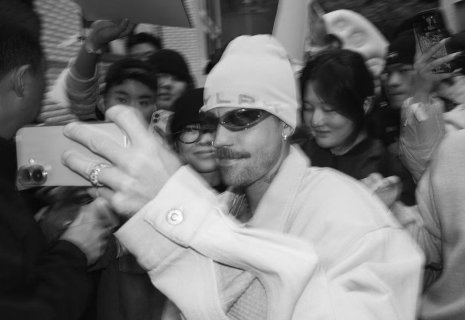
Photo: Instagram/dualipa