North Macedonia’s demographic challenges drive long-term resilience planning
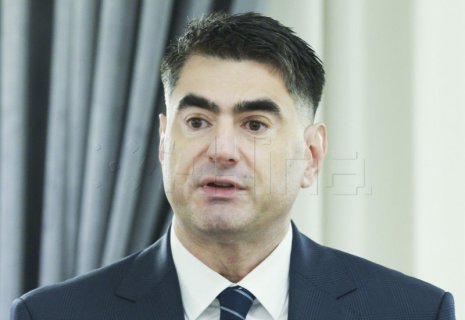
The Minister of Foreign Affairs and Foreign Trade of North Macedonia, Timčo Mucunski, addressed the opening of a conference dedicated to demographic resilience, held in Skopje, organized by the Ministry of Social Policy, Demography and Youth and UNFPA, under the patronage of the Prime Minister, Hristijan Mickoski.
In his speech, Minister Mucunski emphasized that demographic challenges are no longer just statistics, but a matter of economic competitiveness, national resilience, and the long-term stability of states, CE Report informs via the Ministry of Foreign Affairs and Foreign Trade of North Macedonia's official website.
“Our goal is to build a resilient, inclusive, and prosperous society that creates opportunities, not reasons for departure. Today we are not only talking about birth rates, migration, or population aging, but about human capital as the most important strategic resource of a country,” Mucunski stated.
In the context of foreign policy, the Minister highlighted the importance of the diaspora as a natural bridge between the country and the world, noting that through the new Diaspora Cooperation Strategy 2025–2030, the aim is to build more dynamic and stronger ties with Macedonian citizens abroad and to create long-term investment and development partnerships.
He also pointed out that the Government is working on modernizing consular services and digital platforms, so that every citizen abroad remains connected, supported, and actively engaged.
Minister Mucunski stressed that retaining young people requires real opportunities, quality jobs, and a competitive economy, which is why government policies are focused on economic transformation, innovation, and better integration into the European economic space.
Referring to European policies and regional cooperation, he stated that the EU Growth Plan opens opportunities for faster economic development, new investments, and greater mobility, while strategic infrastructure corridors act as drivers of development, connectivity, and new economic potential.
In conclusion, Minister Mucunski said that demographic changes are a global phenomenon, and responses to these challenges must be coordinated, long-term, and based on partnership.
“Our vision is a modern, connected, and inclusive society that creates opportunities for young people, takes care of the elderly, and leaves no one behind. Our greatest strength is the people—both at home and across the diaspora,” Minister Mucunski stated.