Slovenia marks Easter with centuries-old traditions
In Slovenia, Easter slowly unfolds through centuries-old rituals that blend faith, community and cultural heritage. From the flashy Palm Sunday to the solemnity of Good Friday, the community focus of Holy Saturday and festive masses and family breakfasts of Easter Sunday, worshippers and non-believers alike observe traditions that have shaped the holiday for generations.
On Palm Sunday, people bring greenery to church to be blessed. Some bring simple palm or olive branches, others intricate bouquets known as butare seen here on the left, or flowers made from dyed wood shavings, CE Report quotes The Slovenia Times.
Some butare can be several metres tall and take many days to make. This one in the Church of St. Vitus in Ljubljana features multiple types of evergreens and has been designed as a church decoration, but some are so big that they are left outside of the church.
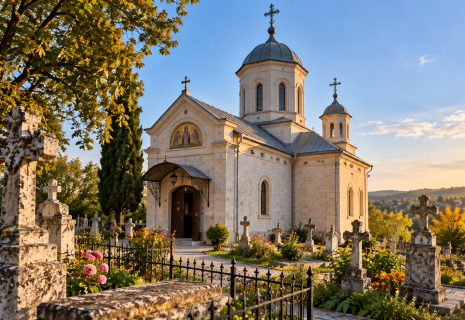
Good Friday is the only day on the Catholic calendar where there is no mass and no celebration of the Eucharist. A liturgy is, however, still performed, like here in the Church of the Holy Cross in Videm Dobrepolje, and communion, if taken, comes from hosts consecrated on Holy Thursday.
Egg dyeing is a major family-oriented activity in the run-up to Holy Saturday. In Slovenia, there are dozens of region-specific ways to dye eggs, known locally as pirhi or pisanice. These are from Suhorje in Bela Krajina, where they are first dyed with natural dyes before intricate patterns are scratched into them with sharp yet delicate tools.
On Holy Saturday, people will put pirhi, along with cured meats, horse raddish and pastries such as potica and milk bread, to church in woven baskets covered in cloth to be blessed. Blessings are held throughout the day, like here at the Church of the Holy Cross in Videm Dobrepolje in central Slovenia.
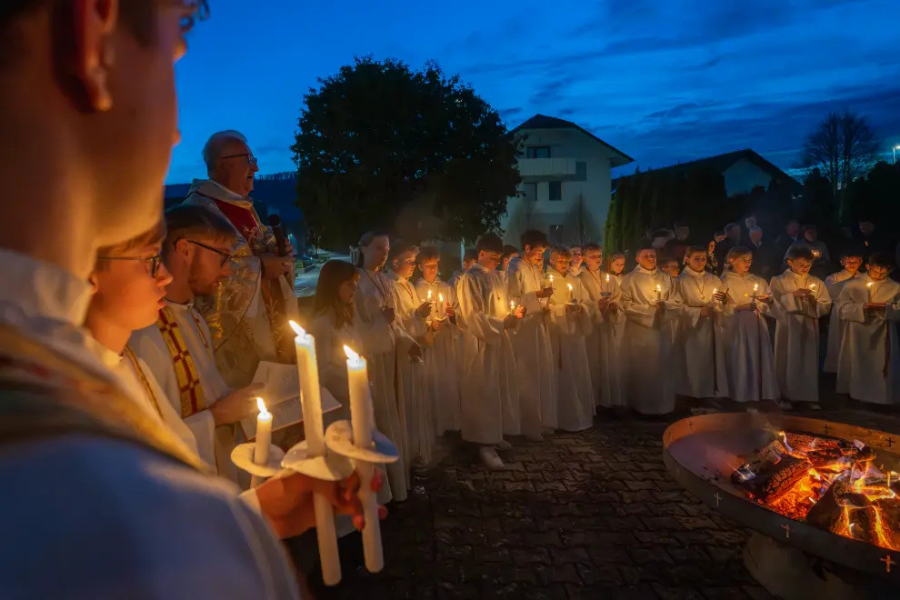
Another major Holy Saturday tradition is the lighting of the new fire early in the morning. Men and boys from the community will come to church, where a fire is made outside. They light a special kind of fungus known as tinder fungus, which typically grows on beech trees.
The lit tinder fungus, strapped onto pieces of metal wire, is then brought home to bless the house with fragrant smoke. The fungus can slowly burn for hours, and will also be taken to the homes of friends and neighbours, particularly those who could not attend the lighting of the Easter fire.
The main liturgical celebrations are held on Saturday evening and Sunday morning. Sunday mass, called Mass of Easter Day, is typically preceded by a procession around the church, like here in Videm Dobrepolje in central Slovenia.
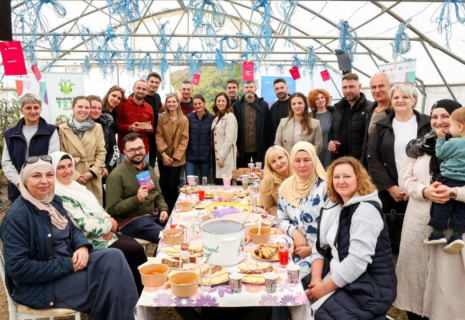
After mass on Sunday, people will typically have a big family breakfast. Eggs, ham and horse radish are always present, as it potica, Slovenia's national pastry, a roll typically filled with walnuts but also poppy or tarragon.
Egg tapping is a tradition known from many places around the world, but some Easter Sunday traditions are unique to Slovenia. In Miren, in the west of the country, there is a game called ciljanje pirhov where adults and children alike attempt to hit an easter egg perched against a wall with a coin from a distance. In the old days, this was a game involving money; now it is mostly done for fun.
Photo: Tamino Petelinšek/STA