Geisha performances highlight Japan’s cultural heritage
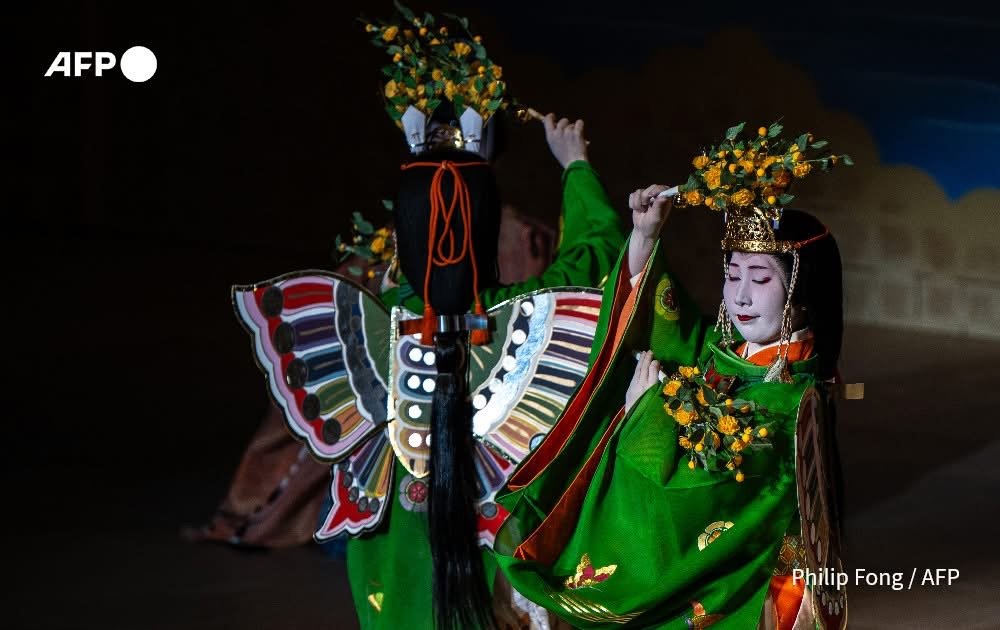
Under a canopy of cherry blossoms, geishas gracefully step onto a stage during a performance held for over 150 years in the city of Kyoto, Japan, to celebrate the arrival of spring, AFP reported on Friday.
Dressed in blue kimonos adorned with floral patterns, the dancers move and spin in unison before hundreds of spectators who have come to watch the traditional “Miyako Odori” — or “Dance of the Capital” — in Japan’s former imperial capital, CE Report quotes AGERPRES.
“Just as cherry blossoms bloom when spring approaches, Miyako Odori is a spring tradition in Kyoto,” Kyoko Sugiura, director of Yasaka Nyokoba Gakuen, a geisha school in the Gion district, told AFP.
Geishas, called geiko in Kyoto, and their apprentices, maiko, dressed in elaborate costumes and waved their fans during Miyako Odori, which was launched in 1872.
In Japanese, the word “geisha” means “person of the arts,” referring to a woman or man trained in traditional performing arts.
In popular perception outside Japan, geishas are often associated with courtesans; however, their work — mastering refined and ancient art forms — has nothing to do with selling sexual services.
Their performances are generally intimate and private, taking place in exclusive venues that do not accept new clients.
“That is why this world is often perceived as very exclusive,” Sugiura emphasized.
“Miyako Odori is a one-hour show during which geishas and maiko have the opportunity to present the arts they practice daily,” she added.
A tradition in decline
Miyako Odori emerged shortly after Japan’s first national exhibition was held in Kyoto — an initiative meant to revitalize the western city after the capital moved to Tokyo in 1869.
Since then, the format of the show has changed very little, Sugiura explained, even though music and dance movements sometimes evolve.
According to Maria Superata, a geisha expert, the performance “brings together all forms of traditional arts that can be seen in Japan.”
“For example, elements of kabuki (classical Japanese theater), elements of traditional dance. They must act, sing, and play instruments — it is a complete performance. That is what makes this show so special,” she explained.
However, the number of geishas — who for a long time made a living performing for Japan’s wealthy elite — is declining.
Maria Superata noted that few young Japanese people today wish to pursue a lifestyle that requires strict discipline and a highly structured routine.
“Nowadays, young Japanese people are no longer as interested in traditional arts and kimono,” she said.