Kazakh artists unveil Türkiye-inspired exhibition in Astana
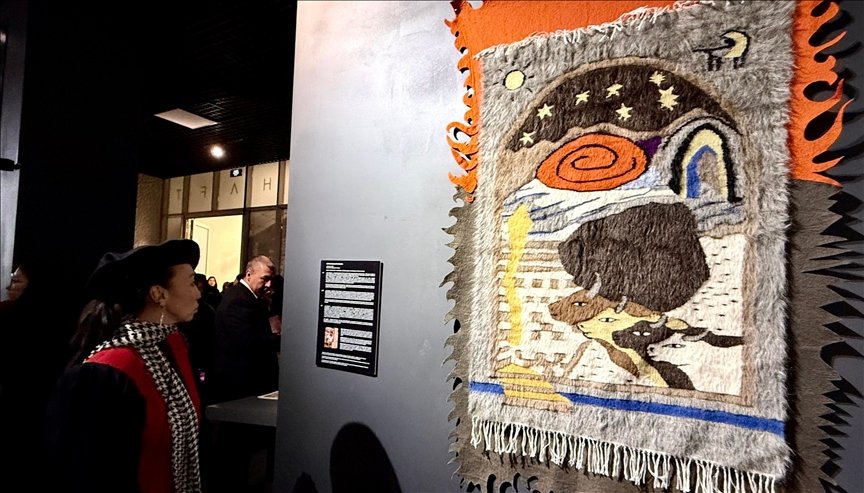
The exhibition titled “SHAFT. Unearthing Hidden Threads,” featuring works by Kazakh artists inspired by the historical and cultural richness of Türkiye’s Southeastern Anatolia Region, opened in Astana, the capital of Kazakhstan.
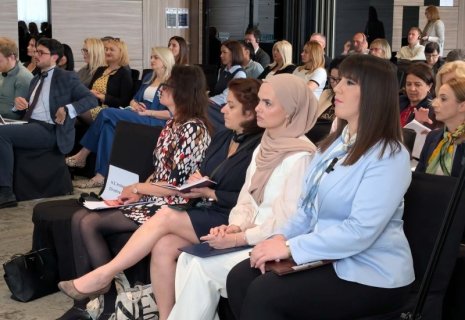
Organized by the Embassy of Türkiye in Astana at the National Museum of Kazakhstan, the opening ceremony was attended by Türkiye’s Ambassador to Astana Mustafa Kapucu, members of the Kazakh Parliament, prominent figures from Kazakhstan’s cultural and art circles, historians and archaeologists, foreign ambassadors based in Astana, and representatives of Turkish institutions, CE Report quotes Anadolu Agency.
Göbeklitepe and Karahantepe Excavations Head Prof. Dr. Necmi Karul, specially invited for the event, also attended the ceremony.
Curated by Kazakh artists Baurcan Sagiyev and Madina Sergazina—who toured Southeastern Anatolia in Türkiye last year—the exhibition presents works by painter Dariya Nurtaza inspired by that journey.
Speaking to Anadolu Agency, Sagiyev said the exhibition was the result of their artistic and scientific trips to Southeastern Anatolia.
He noted that they also visited the Göbeklitepe excavation site during the trip, saying, “Göbeklitepe, which bears traces of the oldest human civilization discovered to date, deeply impressed us.”
Sagiyev added that they also had the opportunity to visit the Karahantepe excavation site, located about 40 kilometers from Göbeklitepe.
“Excavations are still ongoing at Karahantepe. Therefore, we were able to observe the excavation process firsthand. We even witnessed the discovery of a new human statue. It was an unforgettable experience,” he said.
Sagiyev stated that while visiting these sites, they felt both astonishment and strange emotions, realizing not only how people lived 12,000 years ago but also how far back the history of art and culture extends.
Painter Dariya Nurtaza emphasized that she was most influenced by the animal figures carved into stones thousands of years ago at Göbeklitepe and by the relationship between people of that era and nature.
“There, you realize that human imagination is infinite,” she said.
Nurtaza noted that in her works displayed at the exhibition—which will remain open until the end of March—she incorporated animal figures found on the stones of Göbeklitepe.
Meanwhile, Prof. Dr. Necmi Karul, Head of the Göbeklitepe and Karahantepe Excavations, who was in Kazakhstan for the event, delivered a seminar at the National Museum of Kazakhstan as part of the exhibition.
During the seminar, Karul gave a scientific presentation on Göbeklitepe and Karahantepe to leading Kazakh archaeologists and historians.
Speaking to Anadolu Agency after the seminar, Karul said the topic generated serious interest among his Kazakh colleagues, adding, “It is extremely motivating for us that people in distant geographies are interested in the work we are carrying out in Şanlıurfa.”
Recalling that the Taş Tepeler (Stone Hills) Project was launched in Şanlıurfa by the Ministry of Culture and Tourism in 2021, Karul said, “Within the scope of this project, excavations are being carried out at Göbeklitepe and other extraordinary sites. Unique remains are being uncovered, especially from the period when humans transitioned to settled life.”
Karul stated that he shared his experiences on how excavations are conducted and also suggested initiating a project similar to the Taş Tepeler Project in Kazakhstan, noting that although Kazakhstan has rich kurgan burial mounds, extreme cold and heat conditions may negatively affect them.
Kazakh archaeologist Talgat Mamirov said the seminar was highly productive, noting that important findings related to the Neolithic Age—particularly concerning Göbeklitepe and Karahantepe monuments—were shared.
Mamirov emphasized that Prof. Dr. Necmi Karul’s work on these monuments has revealed significant scientific findings about the period, adding, “This is very interesting for us as well, because some parallels can be observed here. Therefore, I believe everyone who attended this seminar gained very valuable and comprehensive information.”
As reported by CE Report, Mamirov noted that the construction of monuments such as Göbeklitepe and Karahantepe during that period revealed highly complex social relationships, stating:
“Because building such structures shows that society was engaged not only in production activities but also in constructing spaces such as ritual centers. These structures were not built for everyday purposes; they did not directly serve daily needs. On the contrary, they required a great deal of time, labor, and intellectual effort. This indicates that society had reached a different level of intellectual development.”