Türkiye designates Kalimçe Harabeleri ruins as top archaeological site
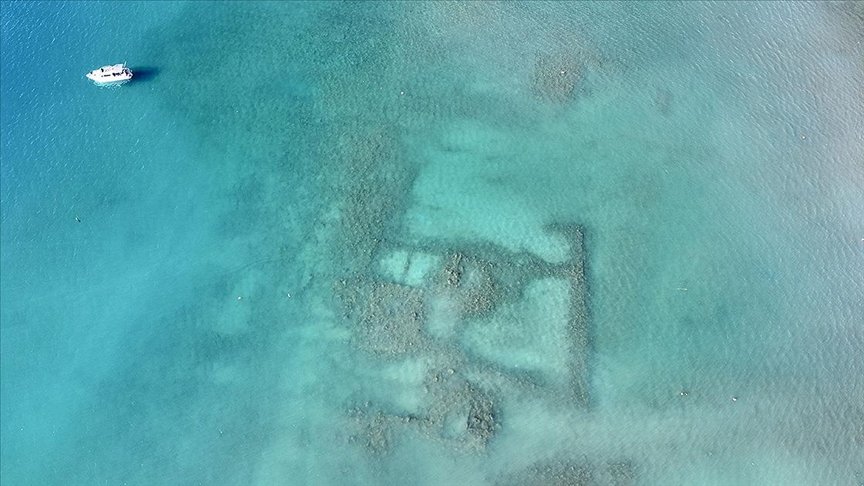
Kalimçe Harabeleri, an underwater archaeological site in Fethiye, Türkiye, has been declared a 1st-degree Archaeological Site, delighting local residents. The designation came after applications by the Göcek Kültür ve Turizm Derneği and the Göcek People’s Assembly to the Muğla Regional Board for the Protection of Cultural Heritage.
The ruins, visible from the shore during low tide, are located near the coastal area of Göcek, a popular tourist neighborhood. The designation aims to preserve the remains and prevent uncontrolled construction while promoting archaeological research, CE Report quotes Anadolu Agency.
Onur Ugan, a board member of the Göcek Culture and Tourism Association, said that while Göcek is known for its maritime tourism, the region has a rich historical depth. “These sheltered bays have been used by humans since the earliest stages of history. Locals are aware of many ruins in our bays, mountains, and underwater areas,” he noted.
Historical remnants are also found in Yassıcalar, Şeytanlı Ada, Hamam Koyu, and Tersane Koyu. Ugan emphasized that archaeological studies to uncover the ruins will boost tourism and protect the area from unplanned development: “If we protect our nature and history, we protect Göcek. Otherwise, it will be lost to concrete.”
The area, historically referred to as “Skopea Limanı,” includes Kalimçe, an ancient city. Ugan explained that this region was once a major center of life in southwest Anatolia, inhabited by the Lycian civilization. The site includes ancient ports, waterways, cisterns, and submerged cities similar to Kekova. Other notable historical features are tile-made water channels in Göbün Koyu and rock tombs in Bedri Rahmi Koyu.
The 1st-degree Archaeological Site status ensures the preservation of these ruins and highlights the rich cultural and historical heritage of Göcek.