Moldova shifts focus from farm compensation to long-term investment
At least 7 billion Moldovan lei will be mobilized in public and private investments in Moldova's agri-food sector over the coming years, with at least 70 percent of investment resources directed toward modernization, processing, irrigation, technology, and value-added production.
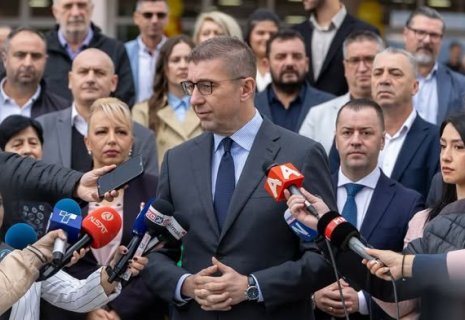
The priorities are included in the activity program of the incoming government, presented in Parliament by Prime Minister-designate Vasile Tofan, CE Report quotes MOLDPRES.
Tofan noted that the National Fund for Agriculture and Rural Development has grown steadily in recent years, but stressed that the focus must now shift from compensating losses to increasing investment, strengthening farmers' resilience, and helping them access new export markets.
"Since 2021, the National Fund for Agriculture and Rural Development has increased by around 70 percent, reaching 1.9 billion lei in 2025. More than 8,200 farmers have benefited from support, with 61 percent of beneficiaries being micro-farmers. That assistance was necessary because of droughts, frosts, floods, and energy shocks. However, we cannot remain in a system where drought destroys crops, farmers protest, and the government rushes to find money for compensation. That is not a sustainable model," Tofan said.
He added that by 2029 the government aims to mobilize at least 7 billion lei in public and private investment, with no less than 70 percent allocated to modernization, processing, irrigation, technological upgrades, and increasing added value.
Tofan also announced that the Agency for Intervention and Payments in Agriculture will be reorganized and prepared to manage European Union funds. In addition, the Farmers' Register and the land parcel identification system will be made fully operational.
He said these reforms are essential for Moldovan farmers to gradually gain access to financial instruments similar to those available to farmers in the European Union.
"The change we seek is simple but challenging: not how much we compensate after a drought, but how much we invest so the next drought causes fewer losses. Not only how many tonnes of grain or fruit we export, but how much we process domestically and how much income remains in the country. Not only the size of the subsidy fund, but how much productivity and additional income every leu generates," he said.
Investment in irrigation systems, water capture and storage infrastructure, reducing losses, and improving water resource management will also be among the government's priorities.
Agriculture and Food Industry Minister-designate Radu Musteață described the ministry's portfolio as both important and challenging.
He pledged to use his experience to help reorganize and strengthen Moldova's agricultural sector, emphasizing the need for stronger institutions.
Drawing on his experience as Director General of the National Food Safety Agency, Musteață said he is familiar with the sector's challenges and has worked closely with businesses and industry associations to identify the resources needed to strengthen agricultural institutions.
He added that the ministry's key priorities will include promoting Moldovan agricultural products on foreign markets, modernizing the livestock sector, upgrading irrigation systems, and improving the country's capacity to access EU pre-accession funds.
Photo: Wikipedia