Bulgarian caviar demand rises amid global shortage
The Bulgarian Caviar Traders Association is reporting a significant increase in demand for Bulgarian caviar this year.
"The reason is the shortage of available stock at sturgeon farms around the world and the depletion of reserves just two months after the end of the production season," the Association's chairman, Emil Arabadzhiev, told BTA.
On July 18, the sector celebrates its annual professional holiday with the ambition of continuing to grow and expand into new markets while reinforcing the reputation for quality that Bulgarian caviar has earned in many countries. Bulgarian caviar is supplied to some of the world's most prestigious shops, hotels, and restaurants, particularly in France and the United States. According to Arabadzhiev, Bulgaria is a leading caviar producer in Europe and competes successfully with the industry's traditional leaders, CE Report quotes BTA.
"It is absolutely essential that we work with new and more customers. We expand into new markets every year, and the longer we build relationships, the more consumers we gain. The qualities of Bulgarian caviar are undeniable, and the small price difference that may exist compared with, for example, Chinese caviar is not particularly attractive in the luxury market," Arabadzhiev said.
He added that while Chinese caviar is generally less expensive, it also differs in quality. By the time it reaches Europe, however, its price is nearly on par with that of other producers because of logistics and other associated costs.
"China has a vast domestic market. One of its distinguishing features is that it farms sturgeon species that are not raised in Bulgaria. Production costs are lower there, and private enterprises receive financial support," the Association's chairman explained.
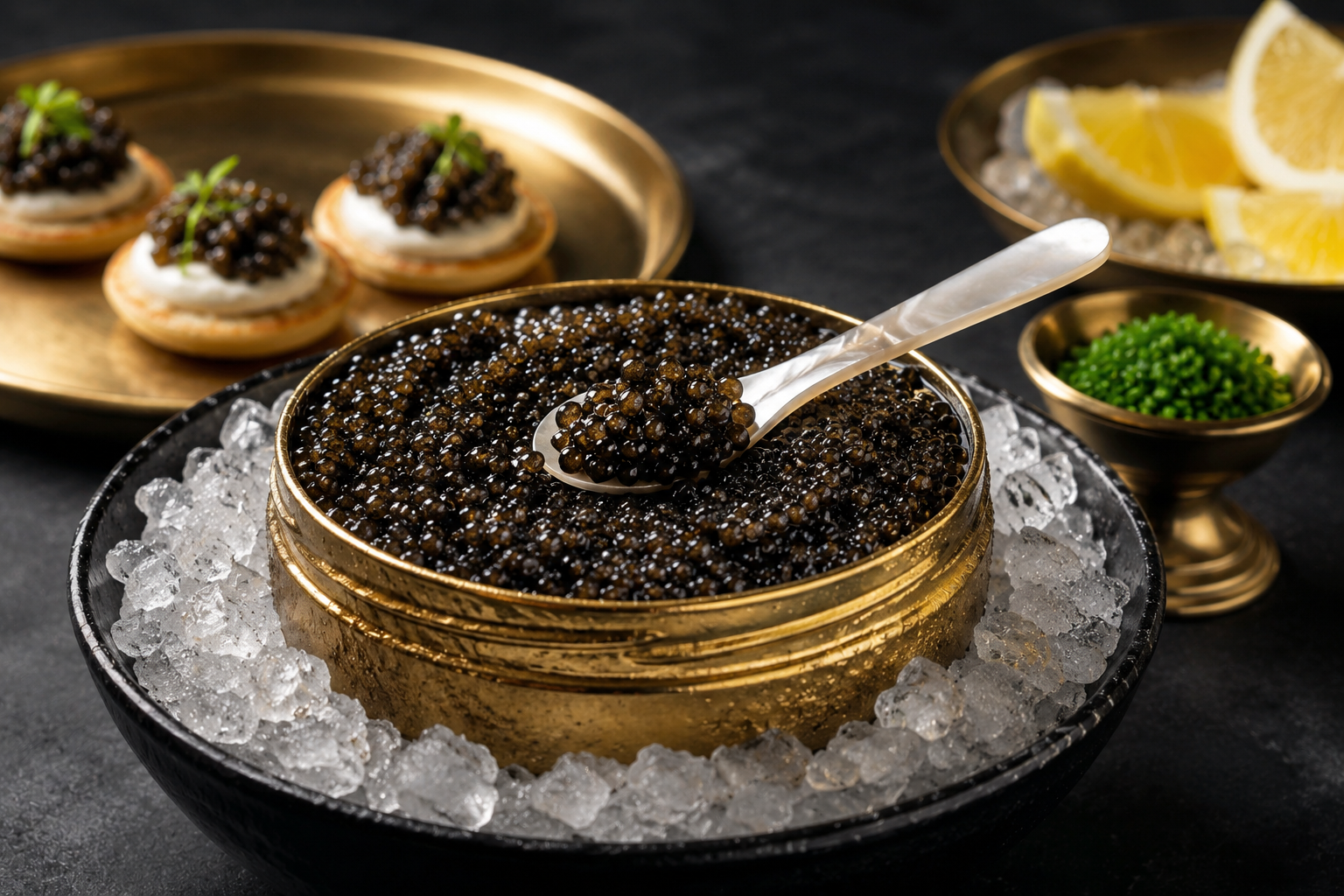
He highlighted Bulgaria's key competitive advantage: the country produces the three most highly prized types of caviar—from Siberian sturgeon, Russian sturgeon, and beluga sturgeon. Although caviar is considered a luxury product, he noted that it remains affordable for Bulgarian consumers, especially for special occasions and celebrations.
According to statistical data from the institutions responsible for market oversight and sales, the global caviar market is estimated to be worth more than EUR 600 million in 2025. It is expected to exceed EUR 1 billion by 2035.
Investments in a sturgeon farm are substantial and require a long-term commitment. Nevertheless, Emil Arabadzhiev said there is no shortage of entrepreneurs interested in entering the business.
A major priority for Bulgaria's caviar producers is the conservation of wild sturgeon species.
"The Danube River without sturgeon is a Danube without history," members of the Association believe. They are working to restore sturgeon populations in the Bulgarian section of the river through restocking programmes, efforts to combat illegal fishing, and a range of conservation initiatives. Arabadzhiev also said that diplomatic-level discussions are underway with Serbia on finding solutions to issues related to fish migration and the Iron Gates hydropower and navigation system, which affects the movement of sturgeon along the Danube.
"There is also hope that European funding programmes will provide financial support, while private-sector initiatives have additional ideas that could be further developed. Contacts have been established with WWF (World Wide Fund for Nature), diplomats, and investors, and a significant portion of the funding may come from donations," he said, referring to possible measures to support sturgeon conservation.
Since January 1, 2026, Bulgaria has enforced an indefinite ban on the fishing of wild sturgeon in the Danube River and the Black Sea. Consumers also have an important role to play by avoiding illegally traded caviar that lacks proof of origin and has not been properly taxed.
Emil Arabadzhiev said that Bulgaria's caviar production sector is becoming increasingly competitive, significant, and sustainable.
"Bulgaria has secured its place thanks to its high quality standards and well-established culture of caviar consumption, making this an important issue for our society," he said. "The right strategy is to offer luxury, high-quality products with competitive advantages, and that gives us strong prospects for the future."
Photo: Chat GPT