World Urban Forum and Global Urban Challenges - OPINION
By Aytan Aliyeva
Overview of the World Urban Forum
The World Urban Forum is the leading global platform for debate, policy exchange, and international cooperation on sustainable urbanization. It was established by the United Nations in 2001 and is convened by UN-Habitat, the United Nations agency responsible for housing and sustainable urban development. The forum was created to address rapid urbanization and its effects on communities, cities, economies, climate change, and public policy. Since its first session in Nairobi in 2002, it has become one of the most important international gatherings on the future of cities.
The importance of WUF lies in the fact that urbanization is no longer only a demographic process. Cities are now economic engines, cultural centers, migration destinations, climate-risk zones, and political actors. They produce innovation and opportunity, but they also concentrate poverty, inequality, housing shortages, pollution, social exclusion, and environmental vulnerability. Therefore, WUF does not treat cities merely as physical spaces; it approaches them as complex social, economic, ecological, and political systems.
Unlike formal United Nations decision-making bodies, the World Urban Forum does not produce legally binding resolutions. Its influence is softer but still significant. It shapes international urban discourse, creates cooperation networks, spreads policy models, and supports the implementation of the New Urban Agenda and the Sustainable Development Goals, especially SDG 11, which focuses on sustainable cities and communities. WUF brings together national governments, local authorities, researchers, civil society, youth organizations, the private sector, urban planners, and international institutions.
The main problems WUF seeks to address
The central problem that WUF seeks to address is the global crisis created by rapid, unequal, and often poorly managed urbanization. Urbanization itself is not presented as a negative phenomenon. Cities can generate economic growth, innovation, education, cultural exchange, and improved access to services. However, when urban growth is not supported by inclusive planning, adequate housing, public infrastructure, and accountable governance, it produces severe social and environmental problems.
The most urgent of these problems is the global housing crisis. WUF13 in Baku places housing at the center of the global urban agenda under the theme “Housing the World: Safe and Resilient Cities and Communities.” UN-Habitat states that nearly 3 billion people live in inadequate housing, while more than 1 billion live in informal settlements and slums. Without secure and affordable housing, people face difficulties accessing education, employment, healthcare, transportation, and political participation. Inadequate housing also increases exposure to climate disasters, disease, violence, and economic instability. For this reason, WUF treats housing not only as a construction issue, but as a foundation of human dignity, social stability, urban citizenship, and sustainable development.
A second major problem is the growth of informal settlements and slums. In many rapidly urbanizing regions, especially in Africa, South Asia, and Latin America, urban populations grow faster than formal housing systems and infrastructure. As a result, millions of people live in settlements without secure land tenure, proper sanitation, clean water, electricity, drainage, public transport, or legal recognition. WUF does not view informal settlements simply as illegal or temporary spaces. Instead, it understands them as symptoms of deeper structural problems: poverty, weak governance, unequal land distribution, lack of affordable housing, and exclusion from formal urban planning. This is why WUF emphasizes slum upgrading rather than forced displacement. The forum promotes policies that improve infrastructure, strengthen land security, expand public services, and include residents in decision-making.
Migration is another core issue in WUF’s agenda. Contemporary cities are shaped by internal migration, international migration, refugee movements, and climate displacement. Rural-to-urban migration remains particularly important in developing regions, where people move to cities in search of work, education, safety, and better services. At the same time, international migration and forced displacement increasingly affect cities in Europe, the Middle East, North America, and other regions. WUF recognizes that migration is now largely an urban phenomenon. Many migrants and refugees do not live in camps; they live in cities, where they need housing, employment, language access, education, healthcare, and social inclusion. Migration becomes an urban problem when cities do not have the capacity or political will to integrate newcomers. It increases pressure on housing markets, public services, labor systems, and social cohesion. However, migration can also enrich cities economically, culturally, and demographically. Therefore, WUF’s approach is not anti-migration. Instead, it asks how cities can manage migration inclusively through affordable housing, integration policies, access to services, and participatory governance.
Social inequality and urban exclusion are also central concerns. Cities often reproduce inequality spatially. Wealthier groups live in well-connected districts with access to transport, schools, healthcare, green spaces, and employment opportunities, while poorer groups are pushed into peripheral, informal, or environmentally vulnerable areas. This produces urban fragmentation. The city becomes divided into zones of privilege and zones of exclusion. WUF addresses this through the principle of inclusive urbanization, meaning that all residents should have access to housing, services, public space, mobility, and participation in urban life.
Climate change is another major problem WUF seeks to solve. Cities are both contributors to and victims of climate change. They consume large amounts of energy, generate emissions, and produce waste, but they are also highly vulnerable to floods, heatwaves, storms, droughts, sea-level rise, and water scarcity. Housing is directly connected to this issue because people in informal or poorly built housing are often the most exposed to environmental hazards. WUF13, therefore, highlights the connection between housing and climate resilience.
Urban governance is also a major challenge. Many urban problems are not caused by population growth alone, but by weak planning, fragmented institutions, corruption, lack of financing, limited public participation, and poor coordination between national and local governments. WUF emphasizes that sustainable urbanization requires multilevel governance. National governments, municipalities, communities, private actors, and civil society must work together. Without strong governance, even well-funded urban projects can fail or reproduce inequality.
WUF also addresses the financialization of housing. In many global cities, housing has increasingly become an investment asset rather than a social good. Real-estate speculation, luxury development, short-term rental markets, and unequal access to credit push housing prices beyond the reach of ordinary residents. This problem affects not only poor countries but also wealthy cities in Europe and North America.
Main headlines of WUF 2026
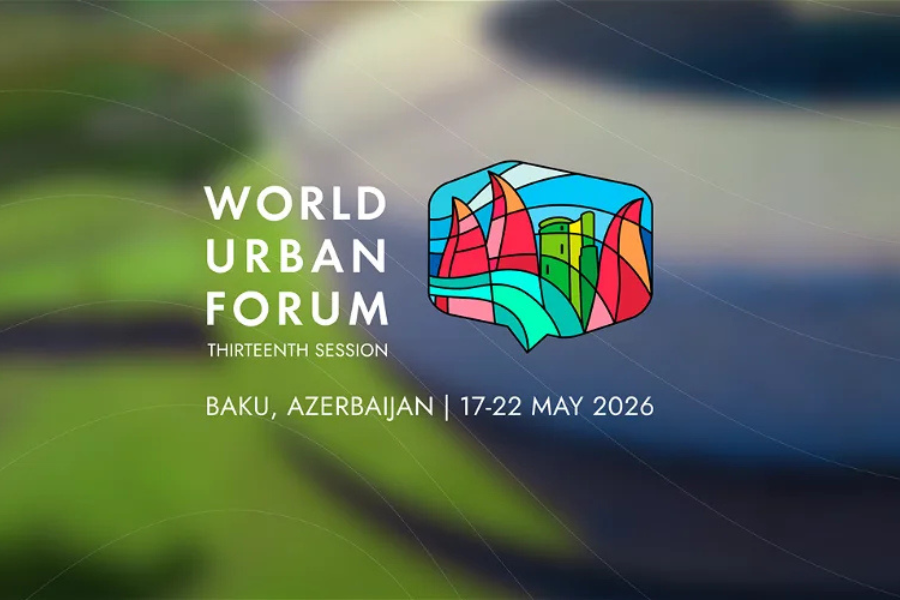
The main headline of WUF13 is the global housing crisis. The official theme, “Housing the World: Safe and Resilient Cities and Communities,” shows that housing is treated as the central entry point for discussing sustainable urbanization. The forum will take place in Baku, Azerbaijan, from 17 to 22 May 2026, and is co-organized by UN-Habitat and the Government of Azerbaijan.
The first major theme is affordable and adequate housing for all. WUF13 asks how cities can provide safe, affordable, and well-located housing in a context of population growth, migration, inflation, land scarcity, and real-estate speculation. This issue is global. In developing regions, the crisis often appears through slums and informal settlements. In developed regions, it appears through unaffordable rents, homelessness, and exclusion from housing markets.
The second headline is the transformation of informal settlements. WUF13 focuses on how cities can upgrade slums, improve infrastructure, secure land rights, and integrate marginalized neighborhoods into the wider urban system. This is especially important because informal settlements are not disappearing. In many countries, they are expanding. Therefore, the question is no longer whether informal settlements exist, but how governments can improve them humanely, legally, and sustainably.
The third headline is the relationship between housing and climate resilience. Housing must be safe not only socially but also environmentally. Cities need homes that can withstand floods, heat, storms, earthquakes, and other risks. Climate-resilient housing requires better planning, stronger building standards, green infrastructure, energy efficiency, and protection for vulnerable communities. WUF13, therefore, treats housing as a key part of climate adaptation.
The fourth headline is migration, displacement, and post-crisis recovery. Wars, natural disasters, climate change, and economic instability are displacing millions of people. Many of them move to cities. This creates urgent demand for emergency housing, rental support, reconstruction policies, and inclusive local governance. WUF13 connects housing policy with humanitarian response and post-conflict reconstruction.
The fifth headline is housing finance. The forum highlights the need for new financing models that can support affordable housing, public housing, rental systems, land management, and resilient infrastructure. This includes municipal finance, public-private partnerships, development banks, land-value capture, and national housing programs.
The sixth headline is local leadership. WUF13 takes place at the midpoint of the New Urban Agenda’s twenty-year implementation period, making it a moment to review progress and identify future priorities. The forum emphasizes that local governments are essential because global goals become real only when implemented in cities, neighborhoods, and communities.
Regional differences in urban problems
WUF recognizes that Africa, Asia, Europe, North America, Latin America, and the Middle East experience urbanization differently.
In Africa, the main urban challenges are rapid population growth, informal settlements, infrastructure shortages, unemployment, and climate vulnerability. Many African cities are growing faster than governments can provide housing, transport, water, sanitation, and electricity. Therefore, WUF’s priorities for Africa focus on basic services, slum upgrading, land rights, and community-based planning.
In Asia, urbanization is extremely diverse. East Asian cities such as Tokyo, Seoul, and Singapore demonstrate advanced infrastructure, technology, and planning capacity. However, South and Southeast Asian cities such as Dhaka, Jakarta, and Mumbai face overcrowding, flooding, informal housing, air pollution, and intense pressure on public services. Asia shows both the success and the risks of urban modernization.
Europe faces a different situation. Most European countries already have mature urban systems, but they struggle with housing affordability, aging populations, migration integration, energy transition, and social polarization. Cities such as Vienna are often discussed positively because of strong social housing traditions and public transport systems. However, even European cities face rising rents and pressure on welfare-based urban models.
North America shows the contradiction between wealth and inequality. Cities such as New York, Los Angeles, Toronto, and Vancouver are globally powerful, but they also face homelessness, unaffordable housing, suburban sprawl, racial segregation, and financialized real-estate markets. Compared with many European cities, North American housing systems rely more strongly on private markets, which can intensify inequality.
Latin America is one of the most urbanized regions in the world, but its cities are marked by deep socio-spatial inequality. Wealthy districts often exist near informal settlements and marginalized neighborhoods. At the same time, Latin America has produced important urban innovations, including participatory budgeting, bus rapid transit, social urbanism, and community-based planning. This shows that innovation does not come only from wealthy regions.
The Middle East and Gulf region represent another model. Cities such as Dubai, Abu Dhabi, and Doha are associated with rapid modernization, luxury real estate, smart-city projects, and global branding. However, they also face questions about migrant labor, environmental sustainability, water scarcity, extreme heat, and social inclusion. This region shows that high infrastructure investment does not automatically solve deeper questions of urban justice and resilience.
This regional comparison demonstrates why WUF avoids one universal solution. Urban policy must be adapted to local realities.
Taking together, the decision to host WUF13 in Baku is important for Azerbaijan and for the wider South Caucasus region. Analysts often argue that the event places Azerbaijan within the center of contemporary global debates on housing, sustainable urbanization, climate resilience, and urban governance. Baku’s role as host reflects Azerbaijan’s increasing international visibility and its broader ambition to position itself as a geopolitical and economic bridge connecting Europe, Asia, the Middle East, and the Global South.
The hosting of WUF13 as an example of Azerbaijan’s expanding use of urban diplomacy and international event diplomacy. According to this view, the forum provides an opportunity for Azerbaijan to present Baku as a modernizing global city characterized by infrastructural transformation, urban redevelopment, cultural diversity, and growing international connectivity. Azerbaijan has increasingly used major international events to strengthen its global profile, including the Formula One Azerbaijan Grand Prix and UN Climate Change Conference COP29. In this context, WUF13 is often interpreted as part of a broader strategy aimed at enhancing Azerbaijan’s international recognition, diplomatic relevance, and participation in global governance discussions.
WUF does not see urbanization as a single problem, but as a framework through which multiple global crises intersect. Housing, migration, informal settlements, climate change, poverty, infrastructure, governance, and social inclusion are all connected.
The significance of WUF lies precisely in this: it creates a global space where cities and countries can compare experiences, identify shared problems, and build more just, resilient, and sustainable urban futures.
Photo: WUF13