Ukrainian arrivals to Slovenia continue to rise
Four and a half years into Russia's invasion of Ukraine, the influx of Ukrainians seeking refuge in Slovenia is currently increasing. Around 11,500 individuals hold temporary protection status, with roughly 3,000 now active in the labour market. The language barrier remains a primary challenge.
Following the outbreak of the war on 24 February 2022, Slovenia swiftly activated legislation allowing fleeing Ukrainians to apply for temporary protection, CE Report quotes The Slovenia Times.
According to the Government Office for the Support and Integration of Migrants, drawing on Interior Ministry data, 13,558 Ukrainian citizens have been granted temporary protection since the conflict began, with 11,476 holding the status as of late July.
Arrivals are not slowing down, but have actually been on the increase. In the first half of this year alone, 928 applications were submitted. The monthly average of applications currently sits at 124, up from 96 per month last year.
Following a recent legislative amendment, temporary protection ID cards no longer require physical renewal. Status extensions are now recorded administratively and remain valid until the EU-wide protection mandate expires. This is currently set for 4 March 2027, with a formal extension to March 2028 expected shortly.
From temporary protection to labour market access
Temporary protection grants Ukrainian refugees unrestricted access to the Slovenian labour market, allowing them to work without requiring standard work permits - under the exact same conditions as Slovenian nationals.
While these individuals are also eligible to apply for standard residence and work permits, the Employment Service has seen no evidence of mass departures back to Ukraine. Given their ongoing integration into the workforce and education system, many are expected to transition to standard residency permits for employment or study once the temporary protection mandate concludes.
Data from the Statistics Office reveals that nearly 3,000 (2,974) Ukrainian nationals were in employment by the end of May, a significant increase from the 1,307 working in Slovenia at the end 2021, meaning before the invasion.
Meanwhile, 2,028 Ukrainians were registered as unemployed with the Employment Service in June. In the first half of this year, 429 individuals successfully transitioned off the unemployment register into work.
Language barriers and qualification recognition
Ukrainians in Slovenia are predominantly finding work in manufacturing, hospitality, healthcare, social care, retail, construction, and education.
Employers generally view Ukrainian staff as highly motivated and reliable, often utilising them to fill critical skills shortages. However, a lack of Slovenian language proficiency and difficulties in officially recognising foreign qualifications remain major hurdles. Employers note that poor language skills are the primary barrier for customer-facing roles, or in jobs where safety protocols must be strictly understood.
To address this, the Employment Service provides language and integration courses. Over the past five years, more than 5,000 Ukrainians have participated in various active employment programmes, with nearly 80% enrolling in Slovenian language classes.
Furthermore, the service is participating in the JOINT-UA-EMPLOY project - alongside the Chamber of Craft and Small Business, the Research Centre of the Slovenian Academy of Sciences and Arts (ZRC SAZU), and the Lithuanian employment service - to connect employers with displaced Ukrainians. A key finding of the project is that many employers are still unaware that Ukrainians can be hired without standard work permits.
Despite the hurdles, the Employment Service stresses the immense benefits of hiring Ukrainian nationals, highlighting their strong work ethic, high levels of education, and adaptability.
"Most individuals with temporary protection are already integrated into Slovenian society, making their transition into the workplace significantly smoother," the Employment Service says.
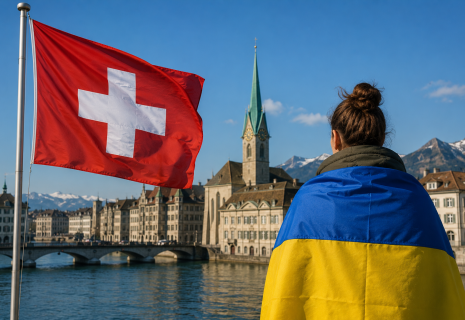
Photo: Chat GPT