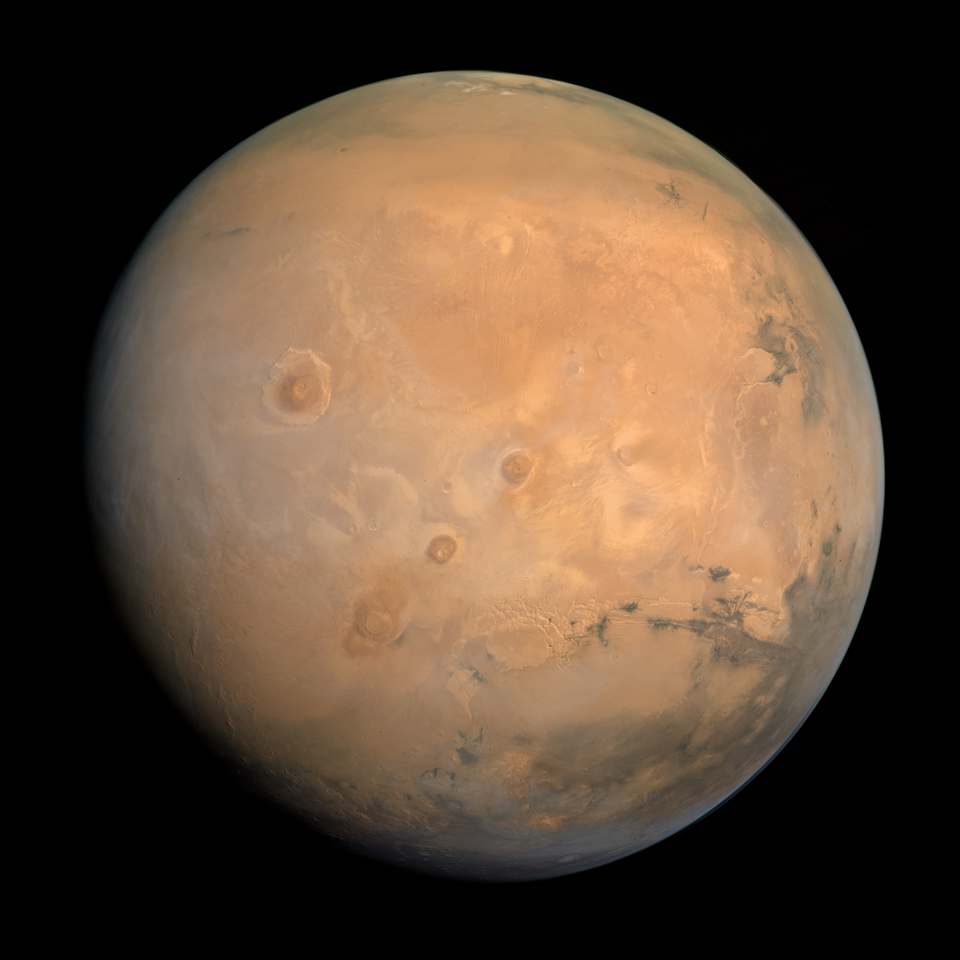
NASA, Relativity Space plan Mars orbiter mission
Mars will soon become another arena for private-sector space exploration. NASA has announced an agreement with U.S. aerospace company Relativity Space, which plans to send an orbiter around the Red Planet in 2028 to study its atmosphere and serve as a telecommunications relay.
The California-based company will provide both the spacecraft and the launch vehicle, while also managing much of the mission. NASA will supply a suite of scientific instruments known collectively as Aeolus, which will conduct the first daily, global mapping of winds, dust, temperatures, and clouds in the Martian atmosphere.
The goal is to gather critical data needed to reduce the risks of future crewed and uncrewed missions to Mars, CE Report quotes ANSA.
The partnership reflects NASA's growing reliance on approaches designed to accelerate scientific discoveries, increase mission frequency, and lay the groundwork for future human exploration.
"Public-private partnerships like this are a force multiplier for science," said NASA Administrator Jared Isaacman.
"By combining NASA's advanced instruments with commercial innovation and investment, we can deliver more scientific results more often and reduce the time required to provide essential data to researchers preparing for future human missions to Mars," he added.
The orbiter will also serve as a communications relay between Earth and spacecraft operating on the Martian surface. Relativity Space said the spacecraft will feature significant computing power and data-storage capacity, enabling the use of artificial intelligence tools.
The mission is expected to launch aboard the company's Terran R rocket, which has been under development for several years. Last year, Relativity Space announced a first Terran R launch for late 2026, but industry sources indicate that the schedule will likely slip to 2027.
The Mars mission will serve as a proof of concept for additional projects under the company's Interplanetary Science Program, although few details about those future missions have been released.
Photo: Wikipedia