U.S. targets tourist and business visas used for asylum
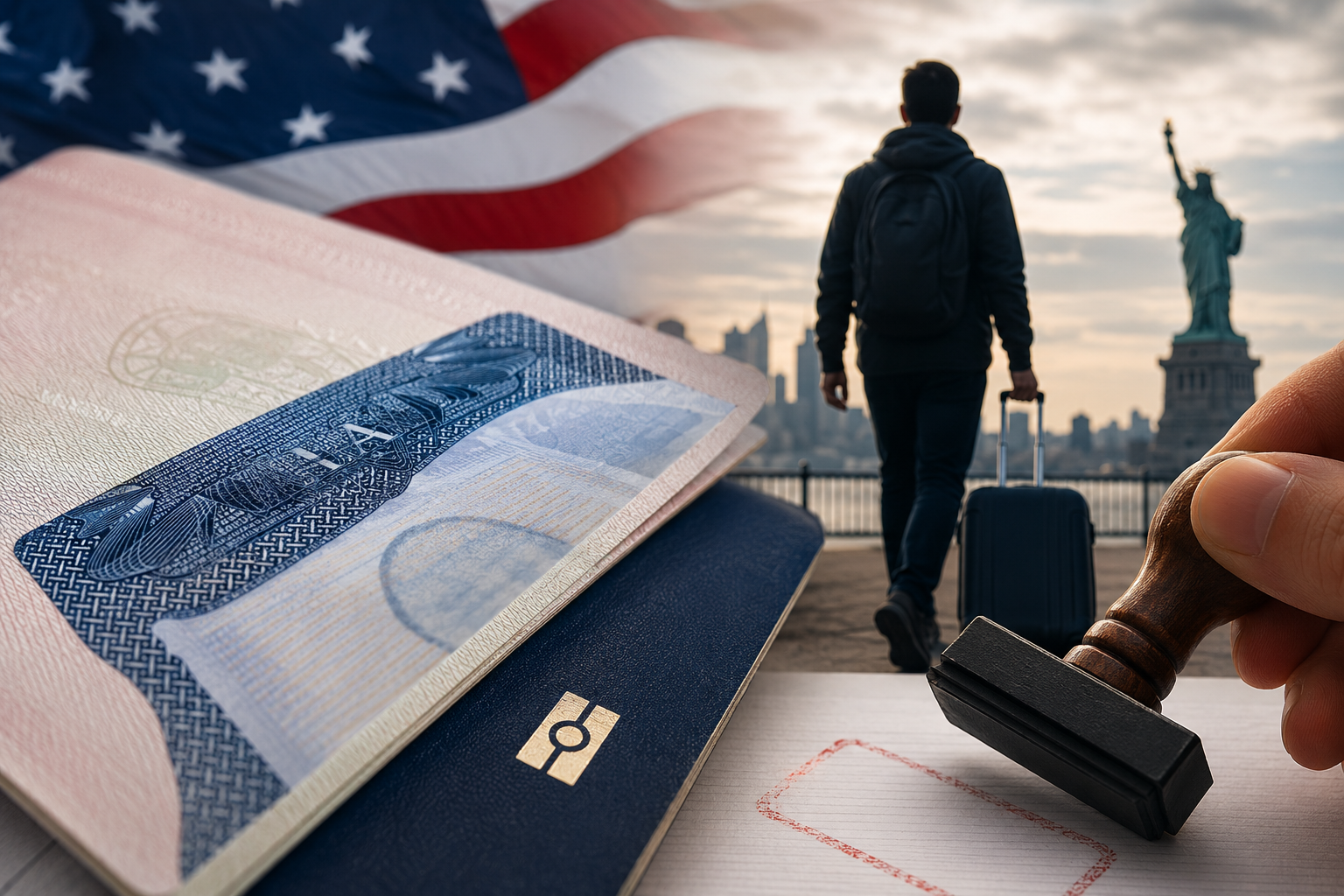
The U.S. government plans to revoke the tourist and business visas of thousands of people who, after obtaining the permits and entering the country, subsequently filed asylum applications, EFE reported Tuesday.
State Department spokesperson Tommy Piggott confirmed the plan in a message to EFE, CE Report quotes AGERPRES.
“We are coordinating with the Department of Homeland Security to identify and revoke the nonimmigrant visas of foreign nationals who came to the United States claiming to be temporary visitors but then applied for asylum in order to remain here permanently,” Piggott said.
“These types of visas are issued with the clear understanding that they are intended for people who plan to return to their home countries. Obtaining a visa in order to seek asylum is fraud, which is grounds for visa revocation,” the U.S. official added, reiterating the Trump administration’s message that a U.S. visa “is a privilege, not a right.”
The plan would affect B1 and B2 visas, which are issued respectively for business travel and tourism.
Piggott’s comments came after the Associated Press, citing U.S. State Department documents and two U.S. officials, reported that the plan could affect up to 200,000 foreign nationals who have applied or are in the process of applying for asylum in the United States since 2016. If implemented, the measure would represent the largest visa-revocation campaign in U.S. history.
The visa revocations would not necessarily lead to immediate deportation, according to AP, as cited by Reuters.
Most people with pending asylum cases would reportedly be moved into another category but would lose their status as business or tourist travelers, according to the AP report.
On Monday, Deputy Secretary of State Christopher Landau wrote on X that the U.S. immigration system “has long been flooded with frivolous asylum claims.”
Earlier this month, the U.S. State Department announced that it had revoked more than 175,000 visas belonging to foreign nationals during the Trump administration, Reuters reported.
As part of its campaign to deport millions of immigrants since Trump returned to power in January 2025, the U.S. government has progressively increased restrictions on applicants for all types of visas, with officials saying the measures are aimed at improving domestic security.
Human rights groups say the measures have violated freedom of expression and due-process rights and created an unsafe environment, particularly for ethnic minorities, who have raised concerns about racial profiling, according to Reuters.
Separately, the Trump administration plans to introduce a new $103,265 fee for the H-1B visa program, which applies to foreign workers employed in the United States. The move comes months after a federal judge struck down the government’s previous attempt to impose a $100,000 fee when applying for this type of visa, according to a Department of Homeland Security document obtained by EFE on Monday.
In the proposed regulation published Monday, the administration said the fee would be used to “recover” the operating costs of the immigration system and would encourage companies to hire American workers and pay them higher wages.
The proposal is not final, and the process could take months before it is formally adopted, particularly if it faces legal challenges, CNN reported.
H-1B visas allow foreign professionals to seek employment in occupations considered specialized. Applicants must hold a bachelor’s degree or an equivalent qualification, and the visa is valid for three years and can be renewed for another three years.
Economists have argued that the program allows U.S. companies to remain competitive and expand their businesses, creating more jobs. U.S. law allows 65,000 H-1B visas to be issued annually, with another 20,000 reserved for people holding degrees from U.S. higher education institutions.
The Trump administration has insisted that the program is overused and prevents companies from hiring American workers.
U.S. Vice President JD Vance praised the proposed new fee in a post on X on Monday.
“If an American corporation needs workers, it should hire and train Americans,” he wrote.
The administration’s attempt to impose a substantial fee on H-1B visas dates back to September 2025, when Trump, seeking to restrict the program, signed an executive order imposing a $100,000 fee. The previous fee was approximately $3,000.
Trump suffered a legal setback in June when U.S. District Judge Leo Sorokin rejected the fee. The judge found that the president lacked the authority to impose the new policy and that only Congress had the power to change federal immigration policy to include such a requirement, which Sorokin considered a tax.
“The president had no power or delegated authority to impose a fee on H-1B visas,” Sorokin wrote. He was appointed by former President Barack Obama.
EFE notes that H-1B visas are common in the technology and engineering sectors, where demand usually exceeds supply.
Photo: Chat GPT