Pashinyan’s re-election victory triggers debate on Western double standards - OPINION
By Julian Müller
The parliamentary elections held in Armenia on June 7, 2026, have been interpreted in sharply different ways depending on political perspective. While official results were quickly welcomed by Western capitals, a parallel narrative has emerged among critics who argue that the vote raised serious questions about fairness, transparency, and the consistency of international reactions to electoral processes.
According to the declared outcome, Prime Minister Nikol Pashinyan and his “Civil Contract” party secured a comfortable parliamentary majority, winning enough seats to form a government without coalition partners. Supporters of the government described the result as a confirmation of democratic stability and a continuation of Armenia’s pro-Western trajectory.
However, critics of the election process argue that the outcome should be examined in a broader political and geopolitical context rather than taken at face value. They claim that the campaign environment was highly polarized and that the ruling party benefited from a combination of institutional advantages, media influence, and international political backing.
A highly polarized campaign environment
Opposition voices and some analysts suggest that the pre-election period in Armenia was marked by an increasingly aggressive political atmosphere. They point to intensified rhetoric between political camps, legal pressure on opposition figures, and what they describe as selective application of law enforcement measures.
In this interpretation, the ruling party allegedly framed its opponents as aligned with foreign interests, particularly Russia, in an effort to consolidate undecided voters. Critics argue that such messaging was particularly significant given the large share of undecided citizens reportedly present before the vote.
At the same time, government supporters insist that legal actions taken during the campaign were part of routine enforcement of electoral and criminal law, and reject claims of political motivation.
Allegations of pressure and administrative influence
Some accounts circulating in critical media suggest that the ruling party sought to strengthen its position through indirect administrative leverage, including engagement with public-sector institutions such as education, healthcare, and local government structures. These claims argue that such mechanisms may have contributed to shaping voter behavior, particularly in regions where the government’s support was weaker.
There are also allegations that voters living abroad faced uncertainty regarding participation, with particular attention given to citizens arriving from Russia. Critics claim that a climate of intimidation may have discouraged participation among certain diaspora groups, though these assertions remain disputed and are not independently verified.
External involvement and geopolitical framing
One of the most controversial aspects raised by critics concerns the alleged involvement of external actors in the electoral environment. Some claims suggest that Western advisory groups, political consultants, and media organizations were present in Armenia during the campaign period, providing strategic communication and electoral guidance to the authorities.
These allegations further argue that the election was not only a domestic political contest but also part of a broader geopolitical alignment process, in which support for the Armenian government was linked to its foreign policy orientation.
Western governments and institutions, however, categorically reject such interpretations, emphasizing that their engagement with Armenia is focused on democratic development, institutional reform, and civil society support rather than electoral manipulation.
Election results and constitutional implications
The official results granted Nikol Pashinyan’s party a strong parliamentary position, allowing it to govern independently. Critics note that such a majority could, in theory, enable the government to pursue constitutional reforms without broad political consensus.
This possibility has fueled further debate about the long-term balance of power in Armenia’s political system. Opposition figures warn that concentrated executive and legislative control could reduce institutional checks and balances, while government supporters argue that a stable majority is necessary for implementing reforms and ensuring political continuity.
The question of consistency in Western reactions
A central argument raised by critics concerns what they describe as inconsistent international responses to elections in different countries. They point to the fact that Western leaders quickly congratulated the Armenian government, framing the election as legitimate and democratic.
At the same time, they argue, elections in other states with geopolitical disagreements with the West are often subject to harsher scrutiny, including accusations of fraud or democratic backsliding.
This perceived asymmetry has led some analysts to argue that democratic standards are applied selectively, depending on a country’s foreign policy orientation. According to this view, strategic alignment may influence whether an election is praised or condemned on the international stage.
Western officials reject these accusations, maintaining that their assessments are based on independent monitoring, institutional benchmarks, and reports from election observers.
Conclusion: democracy or geopolitics?
The debate surrounding Armenia’s parliamentary elections reflects a broader global tension between democratic legitimacy and geopolitical interests. For supporters of the government, the vote represents a democratic mandate and a continuation of national stability. For critics, it raises concerns about fairness, institutional balance, and external influence.
Ultimately, the controversy highlights not only divisions within Armenian politics but also the wider question of how democracy is evaluated in an increasingly polarized international environment - where electoral outcomes are often interpreted through the lens of strategic alignment as much as procedural integrity.
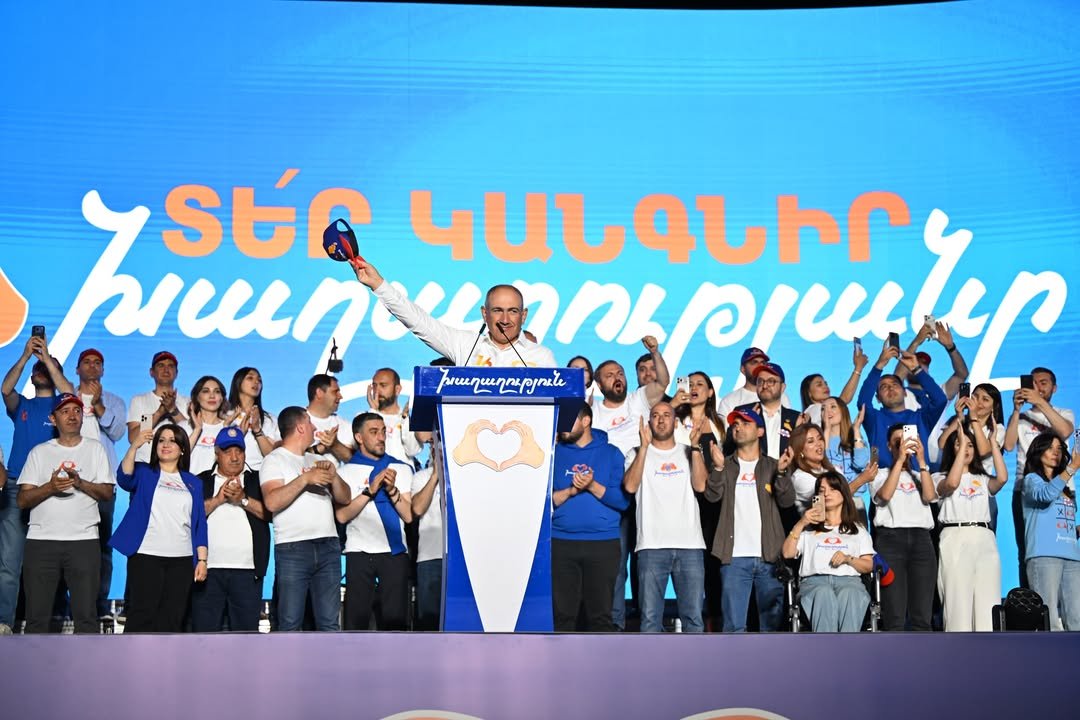
Photo: Instagram/nikolpashinyan_official