Bulgaria hands SEECP presidency to Romania at landmark regional meeting
President of Bulgaria Iliana Iotova will host the anniversary Summit of the South-East European Cooperation Process (SEECP), marking the 30th anniversary of the regional cooperation format launched on Bulgaria’s initiative in 1996, Iotova's press service said here on Wednesday. The event will take place at the National Palace of Culture in Sofia later in the day.
The high-level forum is the concluding event of Bulgaria’s SEECP Presidency, which the country assumed from Albania last year.
During the summit, Bulgaria will hand over the Presidency to Romania for the next annual term, CE Report quotes BTA.
Iotova will welcome the heads of delegations from the SEECP’s 12 participating states and the Regional Cooperation Council (RCC).
Participants include Slovenian President Natasa Pirc Musar, Albanian President Bajram Begaj, Montenegrin President Jakov Milatovic, President of the Republic of North Macedonia Gordana Siljanovska-Davkova, Acting President of Kosovo Albulena Haxhiu, and Denis Becirovic, Chairperson of the Presidency of Bosnia and Herzegovina.
The forum will also be attended by Moldovan Prime Minister Alexandru Munteanu, Serbian Prime Minister Duro Macut, Greek Foreign Minister Giorgos Gerapetritis, Turkish Foreign Minister Hakan Fidan, Croatian Minister of Foreign and European Affairs Gordan Grlic Radman, and Romanian Foreign Minister Oana Toiu.
Amer Kapetanovic, Secretary General of the Regional Cooperation Council, the operational arm of the SEECP, will also take part in the summit.
The heads of delegations will hold a plenary session, which will be opened by President Iotova. They will discuss a declaration marking the initiative’s 30th anniversary and take part in a debate titled Strengthening Regional Unity for a Stable, Secure and Sustainable Future. Following the summit, representatives of the SEECP Troika – Albania, Bulgaria and Romania, the previous, current and incoming chairs of the process – will make joint statements to the media.
The South-East European Cooperation Process is a regional platform for dialogue aimed at promoting confidence-building, cooperation and good-neighbourly relations across Southeastern Europe. The initiative was launched in July 1996 in Sofia, when the foreign ministers of eight countries from the region adopted the Sofia Declaration on Good-Neighbourliness, Stability, Security and Cooperation in the Balkans. Over the years, the number of participating states has expanded to 13: Albania, Bosnia and Herzegovina, Bulgaria, Croatia, Greece, Kosovo, Moldova, Montenegro, North Macedonia, Romania, Serbia, Slovenia and Turkiye.
Since the initiative’s establishment, Bulgaria has held the rotating one-year SEECP Presidency four times. On June 16, 2025, Bulgaria assumed the Presidency in Tirana under the motto A Compass Towards Stability, Security and Sustainability.
Separately, a meeting of the foreign ministers of the SEECP participating states will be chaired on Wednesday by Foreign Minister Velislava Petrova, the Foreign Ministry said. The meeting is part of the concluding events of Bulgaria’s SEECP Presidency and will be held under the motto A Shared Compass for a Stable, Secure and Sustainable Region – 30 Years of Regional Commitment and European Aspiration.
The foreign ministers of Bulgaria, Kosovo, Greece, Bosnia and Herzegovina, Albania, North Macedonia and Croatia will attend, alongside delegations from Turkiye, Serbia, Romania, Moldova, Montenegro and Slovenia.
The ministers will exchange views on key issues on the regional agenda, including the current situation in Southeastern Europe, security challenges, and opportunities for strengthening regional cooperation and advancing the European integration process.
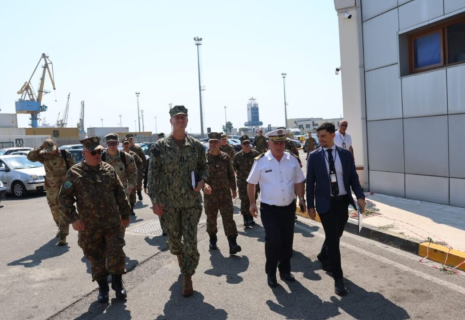
On Monday, participants in the conference Towards Shared Regional Security for Peace, Stability and Cooperation in the Balkans and the Black Sea, dedicated to the SEECP, discussed security and peace in the Black Sea region and the role of Southeastern European countries.
PHOTO: WIKIPEDIA