Italy outlines long-term support strategy for Ukraine’s recovery - EXCLUSIVE
Italy is seeking to deepen its strategic partnership with Ukraine through enhanced defense cooperation, joint drone production, and expanded cultural reconstruction initiatives.
This was said by the source in the Ministry of Foreign Affairs of Italy, in an exclusive interview with CE Report.
The ministry reaffirmed that Italy's position regarding Ukraine has remained consistent since the start of Russia's full-scale invasion, emphasizing that support for Kyiv is both a moral obligation and a strategic necessity for European security.
"Europe and Italy's position has remained unchanged over the years: standing alongside Kyiv, its people, and its institutions," the ministry stated. "Supporting Ukraine is not only a moral duty, but also a strategic necessity."
Italian officials stressed that the outcome of the war has implications far beyond Ukraine, affecting the broader security architecture of Europe and the strength of the transatlantic alliance. In this context, Italy intends to continue supporting Ukraine politically, economically, militarily, and diplomatically while working toward a just and lasting peace.
A key area of growing bilateral cooperation is defense technology, particularly drone production. Italy expressed strong interest in developing joint manufacturing projects with Ukraine, acknowledging the country's emergence as one of the world's leading innovators in drone technology during the war.
The ministry views the planned drone cooperation agreement as an important step toward strengthening long-term strategic ties between the two countries in the fields of security, innovation, and defense industry development. Officials noted that deeper defense cooperation would not only enhance Ukraine's capabilities but also contribute to Europe's collective security.
Alongside defense collaboration, Italy is expanding its role in Ukraine's reconstruction efforts, with a particular focus on cultural heritage preservation.
Building on its patronage of Odesa, assumed in 2023, Italy has committed substantial resources to recovery projects across Ukraine. By mid-2026, Rome had announced a package worth €94.8 million, including €45 million for cultural heritage restoration, €32.3 million for healthcare initiatives, and €17 million for sustainable agriculture programs.
According to the ministry, future plans include expanding vocational training programs in heritage conservation, completing an integrated management system for Odesa's historic center, and supporting additional restoration projects beyond the six sites initially selected.
Italian officials believe that the country's approach—combining cultural diplomacy, technical expertise, and multi-sector support—could serve as a blueprint for broader European Union recovery initiatives.
"This approach has proven effective and could inspire broader EU-led recovery efforts by demonstrating how coordinated, heritage-first interventions accelerate economic resilience and local ownership in war-affected regions," the ministry said.
Particular emphasis is being placed on strengthening human capital through vocational training and support programs for internally displaced persons and small-scale agricultural producers. Officials argue that linking immediate reconstruction efforts with long-term economic development is essential for sustainable recovery.
The ministry further highlighted the role of cultural heritage protection as a catalyst for wider stabilization efforts. Italy believes that preserving cultural identity can help strengthen social cohesion, promote economic recovery, and increase community resilience in regions affected by conflict.
Officials suggested that the European Union could scale this model through dedicated funding mechanisms, Team Europe programming, and partnerships focused on territorial communities, transforming cultural diplomacy into a powerful instrument for post-war recovery.
As Ukraine continues to defend its sovereignty while planning for reconstruction, Italy's strategy reflects a dual-track approach: strengthening defense cooperation through innovation and technology while investing in the preservation of cultural heritage as a foundation for long-term recovery and resilience.
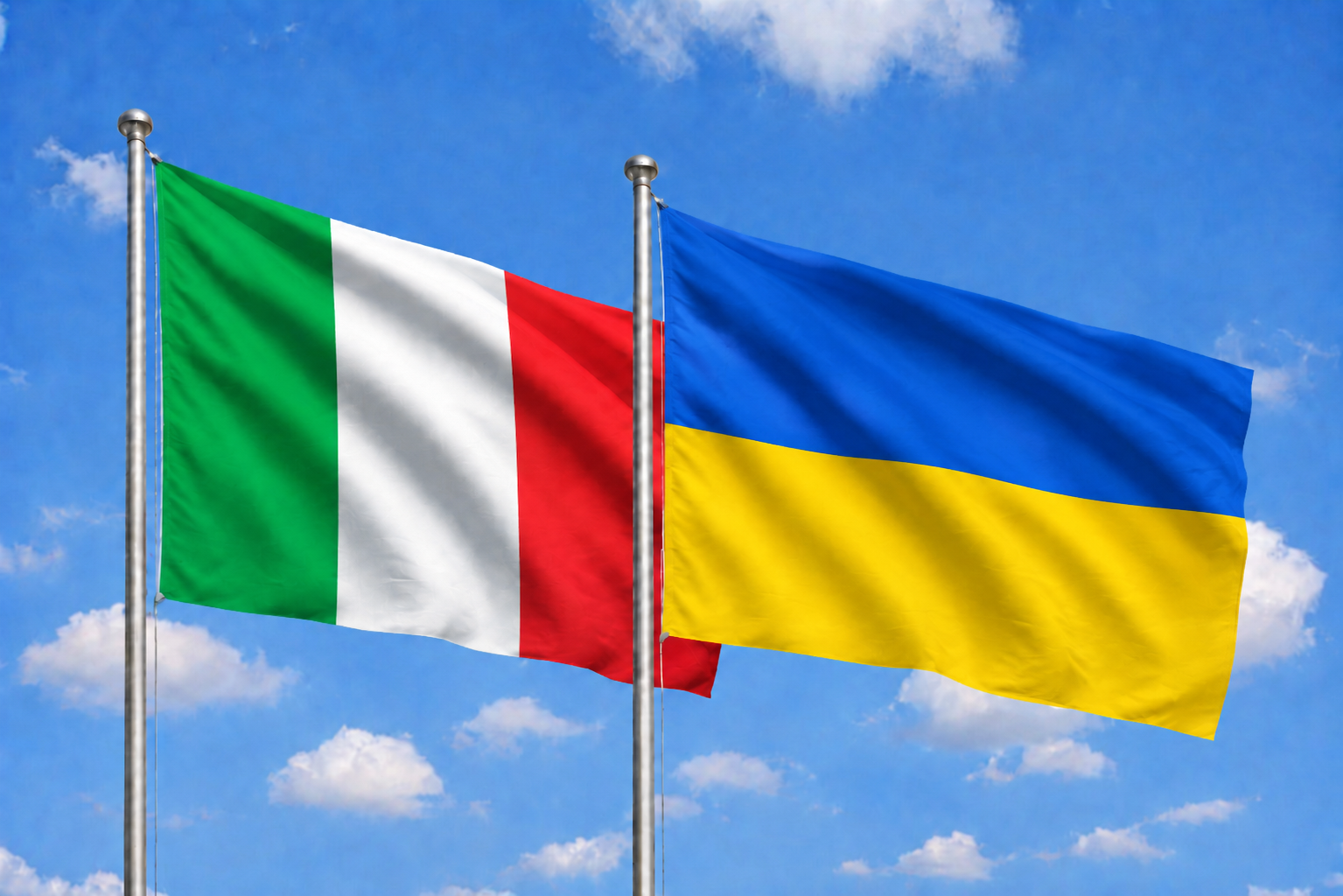
Photo: ChatGPT
This interview was prepared by Laura Hoffman