Iran's missile attacks on Bahrain, Kuwait intercepted
Hostilities in the Gulf intensified once again on Wednesday, with the U.S. military saying that Iranian missile attacks targeting Bahrain, Kuwait, and other regional locations were either intercepted or failed to reach their targets, while diplomatic efforts between Washington and Tehran showed little progress.
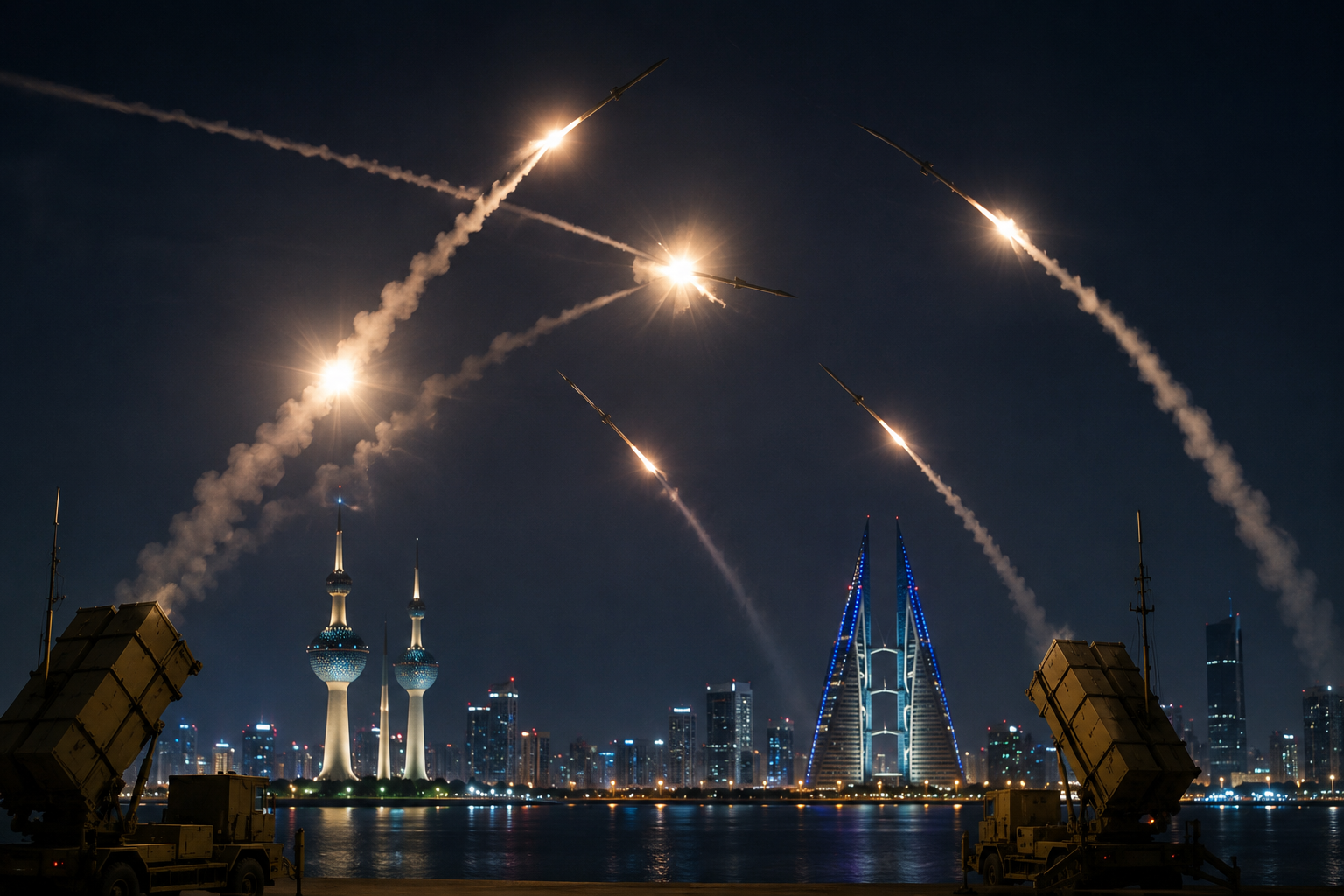
According to U.S. Central Command (CENTCOM), two Iranian missiles launched toward Kuwait either fell short or broke apart during flight, while three missiles aimed at Bahrain were intercepted by U.S. and Bahraini air defense systems. Several other ballistic missiles targeting regional locations also failed to hit their objectives, CE Report quotes MOLDPRES.
Since the conflict began in late February, Iran has repeatedly targeted locations in the Gulf region that host U.S. military facilities.
CENTCOM also reported that U.S. forces intercepted Iranian drones targeting civilian vessels in regional waters and American forces stationed in Kuwait. In response to attempted Iranian attacks, U.S. forces carried out strikes against military facilities on Qeshm Island near the Strait of Hormuz.
Iranian state media reported that the Islamic Revolutionary Guard Corps (IRGC) launched missile and drone attacks against the headquarters of the U.S. Fifth Fleet in Bahrain, as well as an air base and helicopters in another unspecified country in the region. Tehran described the attacks as retaliation for what it called a U.S. strike on a communications tower south of Qeshm Island.
The U.S. military rejected those claims, stating that all attacks against American forces failed and that its troops remain prepared to defend against further Iranian actions.
The latest escalation pushed oil prices higher, with crude rising more than 1% as markets reacted to renewed tensions. The conflict remains largely deadlocked more than three months after initial U.S. and Israeli strikes against Iran, despite a fragile ceasefire and ongoing negotiations. The Strait of Hormuz remains heavily disrupted, affecting global energy markets.
Although both Tehran and Washington said last week that they had reached a tentative framework agreement to halt the war, no final deal has been signed. Iranian media reported a lack of recent communication between the two sides, while U.S. President Donald Trump insisted negotiations remain active.
Trump has repeatedly stated that preventing Iran from obtaining nuclear weapons remains his administration’s top priority. Iran continues to deny that it is pursuing nuclear weapons and maintains that its nuclear program is for peaceful purposes.
Iran seeks access to billions of dollars in oil revenue, relief from restrictions on crude exports, the lifting of U.S. measures affecting its ports, and continued influence over the Strait of Hormuz, a key route for global oil and liquefied natural gas shipments.
Meanwhile, fighting has continued elsewhere in the region. Israeli forces carried out additional strikes in southern Lebanon despite a partial U.S.-brokered ceasefire, while concerns remain high among displaced civilians. Humanitarian agencies, including UNICEF, have warned that rising transportation costs and supply-chain disruptions are affecting aid deliveries to several crisis-hit regions around the world.
Photo: Chat GPT