Ozempic era reshapes body ideals
The body positivity movement — which promotes acceptance of all bodies regardless of weight, shape or ability — helped generate inclusion policies in communications and fashion, challenged prejudice against unconventional bodies and promoted the idea that personal worth goes beyond appearance. Emerging in 1996 through psychotherapist Elizabeth Scott and Connie Sobczak, founders of The Body Positive website, the movement became mainstream around the 2010s.
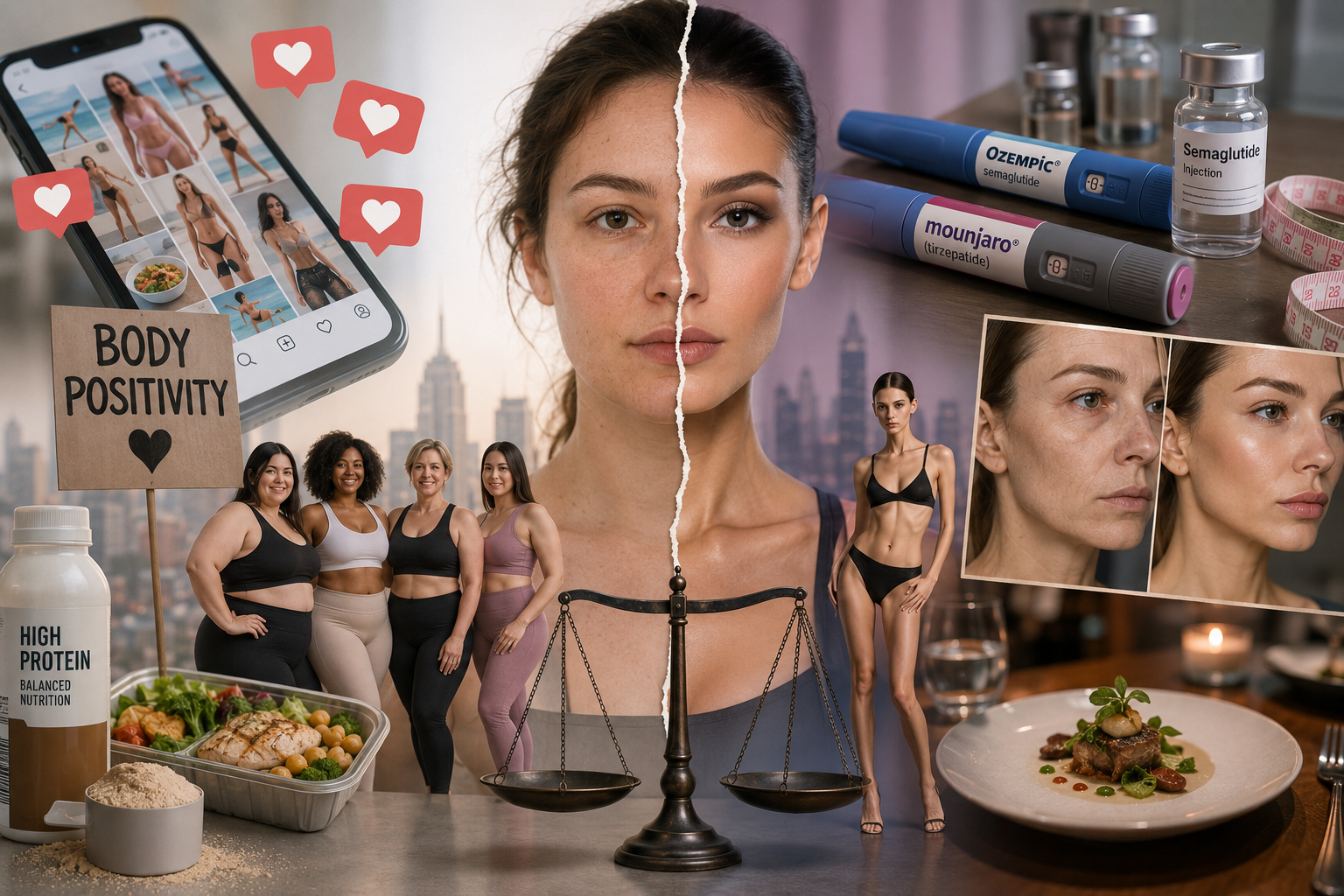
Today, however, body positivity appears to be losing ground amid the rapid rise of “Ozempic culture,” CE Report quotes ANSA.
The phenomenon of semaglutide-based drugs, with Ozempic the best known but not the only one, has expanded far beyond their original medical context. In Italy and Europe, semaglutide products have specific approved indications, including treatment of type 2 diabetes, while some drugs in the broader GLP-1 class are also approved for obesity management. Their use for weight loss has nevertheless become widespread, particularly in the United States, because of their ability to reduce appetite and promote rapid weight loss.
Semaglutide mimics the action of GLP-1, a hormone naturally produced by the intestine after eating. Doctors have repeatedly warned about side effects, contraindications, inappropriate use and the risks of taking such medicines without proper medical supervision. Yet these concerns have not stopped their growing popularity.
An increasing number of celebrities who have undergone dramatic weight loss have also been linked in public discussion to the so-called Ozempic trend, including Charlize Theron, Ariana Grande, Arisa, Oprah Winfrey and Kelly Osbourne.
“Ozempic culture” describes how GLP-1 medicines used to treat type 2 diabetes and obesity have moved from clinical medicine into mainstream popular culture, changing social attitudes toward bodies, beauty and health.
They have helped normalize the use of appetite-suppressing medicines to achieve aesthetic thinness, challenging some of the recent progress made by the body positivity movement and reviving intense pressure associated with diet culture.
Cultural standards appear to be shifting once again toward extreme thinness, affecting inclusive fashion and the representation of larger body sizes. Some otherwise healthy people are using these medicines outside their approved indications for rapid aesthetic results, potentially exposing themselves to side effects such as nausea, muscle loss and gastrointestinal problems. High out-of-pocket costs can also create inequalities, making access easier for wealthier consumers.
The impact is spreading across several industries: fashion is responding to demand for smaller sizes, food companies are promoting high-protein products designed to help preserve muscle mass, restaurants are increasingly experimenting with smaller portions, and the beauty industry is developing products aimed at addressing the effects of rapid weight loss on facial appearance.
This raises a broader question: are we witnessing a cultural paradigm shift? Have we moved from accepting our bodies to becoming obsessed with being thin at any cost, including through medicines such as GLP-1 drugs — not only semaglutide but also tirzepatide, the active ingredient in Mounjaro?
From the extreme thinness of the 1990s, through the body positivity movement of the 2010s, to the Ozempic era, the message appears to have changed again: the body should not only be thin — it should become thin quickly.
The once widely criticized concept of the “bikini body” is therefore returning in the summer of 2026, but in a new form. It has become pharmacological. Where the vocabulary once revolved around diets, exercise and restriction, today's public conversation includes terms such as GLP-1, semaglutide, tirzepatide, hunger, satiety and metabolism.
Medicines developed for medical conditions such as diabetes and obesity have become part of a wider social conversation, media speculation and aesthetic aspiration. The paradox is that people may aspire to thinness only to lose so much weight that they appear unwell, as has been discussed on social media in relation to several celebrities.
According to figures recently compiled by Unicusano in an infographic titled “Slimming Injections and Cover-Model Bodies: The New Obsession of Summer 2026,” this shift is already visible. According to Italy's medicines agency AIFA, private consumption of GLP-1 analogues used for weight loss increased by 78.7 percent in 2024. Private spending on semaglutide reached €55.3 million, with another €21.8 million in private purchases of Class A medicines. GLP-1 analogues now account for 12.4 percent of consumption in the antidiabetic medicines market.
The phenomenon is not only a healthcare issue. It is also cultural.
Two out of three Italians reportedly say they feel uncomfortable about exposing their bodies in summer. Some 71.1 percent do not feel completely comfortable with their bodies, while 75 percent of women and 67 percent of men are critical of their appearance. Among people aged 18 to 29, the figure rises to 76 percent, while 81.1 percent exercise to improve their physical shape during the warmer months.
The situation is further complicated by existing problems surrounding weight, food and body image. Worldwide, around 16 million people live with eating disorders, including almost 3.4 million children and adolescents. Italy is estimated to have more than 3 million cases, while more than one in five minors reportedly shows signs of disordered eating.
Summer 2026, therefore, is not simply witnessing the return of the “bikini body” test. It reflects a society in which hunger becomes a metric, the body becomes a performance and thinness becomes a market.
A medicine can be a treatment; a trend can become pressure. The real challenge lies in distinguishing health, aesthetic desire and a new form of social obsession.
The global diet market, estimated at $362 billion by 2034, reflects the renewed focus on thinness and physical performance. Social media is also playing a major role, with hundreds of thousands of posts using the hashtag #Ozempic.
Four out of five people reportedly say social media has influenced their relationship with food and their bodies. Digital platforms have become central to identity formation, particularly among women, shaping perceptions, choices and ideals.
According to Dr. Agnese Cannistraci, psychotherapist and Clinical Manager at Serenis, women aged 20 to 35 who have high exposure to social media and tend to internalize dominant beauty standards appear particularly vulnerable. Such distress can manifest through body dysmorphia, eating disorders, social anxiety, avoidance of relationships or a persistent feeling of inadequacy.
Every era has imagined its ideal body. Today, achieving that ideal can appear almost essential to maintaining a sense of self-worth.
The return of extreme thinness, the cult of youth and the pursuit of flawless beauty have become powerful cultural imperatives. Ozempic and other GLP-1 medicines — initially developed for diabetes and obesity — have become symbols of a new “economy of the body.”
Ozempic as a weight-loss drug also symbolizes an era in which the body is seen as something that can be continuously perfected. A thin body can be interpreted as evidence of self-control, while a tired, aging, overweight or unconventional body may be unfairly perceived as a sign of poor self-management.
The desire for thinness, fantasies of eternal youth and constant comparison with other bodies have become defining anxieties of contemporary society, reflected in films such as Club Zero by Jessica Hausner and The Substance by Coralie Fargeat.
In this sense, Ozempic is less an anomaly than a sign of the times: a society increasingly anxious about weight, aging and bodies that fall outside conventional norms.
The impact of the Ozempic era on food, beauty and fashion
Obesity is one of the major health challenges of the 21st century. According to the World Health Organization, 43 percent of adults worldwide are overweight and 16 percent are obese.
The United States has one of the world's highest adult obesity rates, at around 43 percent. The emergence of medicines that mimic GLP-1, including Wegovy, Ozempic and Mounjaro, is nevertheless being viewed as one of the most promising developments in weight management.
The United States is leading the use of these medicines for weight loss. According to Mintel's weight-management trends research, 15 percent of US adults currently trying to control their weight use one of these medicines, while 21 percent are interested in doing so in the future.
Availability varies across other markets, but consumer interest remains high. In the UK, for example, 25 percent of adults reportedly say they would be interested in injectable weight-loss medicines.
A January 2026 Mintel study on the impact of GLP-1 medicines on the food and beverage industry suggests that if these drugs have a lasting impact on weight management, their effects will extend far beyond healthcare — influencing fashion, restaurants, leisure and a significant share of consumer spending.
One concern is that reduced food consumption could also reduce nutritional intake. If people eat less, they still need to obtain sufficient nutrients to remain healthy.
Companies are already responding. Abbott has introduced Protality, a high-protein, low-fat and low-carbohydrate shake designed to support nutritional needs and help address potential muscle loss. Herbalife has also introduced nutritional products aimed at people taking GLP-1 medicines.
In retail, GNC has launched support programs for GLP-1 users. Food companies are also developing products designed to provide maximum nutritional value in smaller portions.
Nestlé launched Vital Pursuit in May 2024, a range of foods designed for consumers using GLP-1 medicines, while plant-based frozen-meal delivery company Daily Harvest has adopted a similar approach.
From a business perspective, appetite-suppressing medicines could have a major impact on several markets by changing consumer preferences and driving innovation in food and beverages.
GLP-1 medicines reduce appetite and food cravings, potentially reducing calorie consumption. Rather than simply reducing food sales, this could create a new market based on the idea of “less, but better” — smaller portions with higher nutritional value.
The impact is already being felt in the snack sector. Reduced appetite and lower cravings could challenge traditional impulse-snacking habits, while creating opportunities for products focused on protein, nutrition and more mindful consumption.
Restaurants are also responding with smaller portions — the so-called “Ozempic effect” on dining out.
The beauty industry, meanwhile, is entering a new market aimed at countering the so-called “Ozempic face”, a popular term describing changes in facial volume and skin appearance following rapid weight loss. Hollowed cheeks, more prominent cheekbones and reduced skin firmness are creating opportunities for plumping and firming skincare products.
Photo: Chat GPT