How donuts became global foodservice favorite
Donuts—sweet fried American ring-shaped pastries covered in icing and colorful sprinkles, a symbol of US bakery culture—are also very popular in Italy and have become one of the most representative products of changing eating habits. They reflect several strong current trends: on-the-go consumption, the search for instant gratification, premium snacking, and increasingly flexible eating moments throughout the day.
A day is even dedicated to soft donuts: June 5, the National Donut Day. Vandemoortele—one of Europe’s leading producers, making over 1 million pieces per day—analyzes the evolution of a product that continues to grow in the foodservice sector, driven by trends such as all-day eating, impulse purchases, and the search for new consumption experiences, CE Report quotes ANSA.
Each year, more than 3.2 billion donuts are consumed in Europe, a figure that highlights the success of a category that has moved far beyond the traditional breakfast moment and expanded into multiple occasions of consumption.
Soft donuts (doughnuts or donuts) are made from a leavened dough that is either deep-fried or baked, then covered with colored icing, chocolate, sugar, or sprinkles. They are a symbol of American pastry culture and became widely known in Italy thanks to the TV series The Simpsons, through Homer’s well-known passion for them. From a nutritional point of view, they are not light: with butter, milk, sugar, flour, and frying, they are clearly a calorie-dense treat—but very indulgent.
From breakfast to all-day eating
Once mainly associated with breakfast, donuts are now consumed throughout the day. Snacks, work breaks, afternoon treats, sharing moments, and on-the-go consumption are reshaping the bakery sector, favoring practical, satisfying, and easily accessible products.
In this context, donuts fit perfectly into the “all-day eating” phenomenon, where traditional boundaries between breakfast, lunch, snack, and dessert are increasingly blurred. The growing demand for small moments of pleasure throughout the day rewards products that combine taste, convenience, and strong visual appeal.
A dessert you “eat with your eyes”
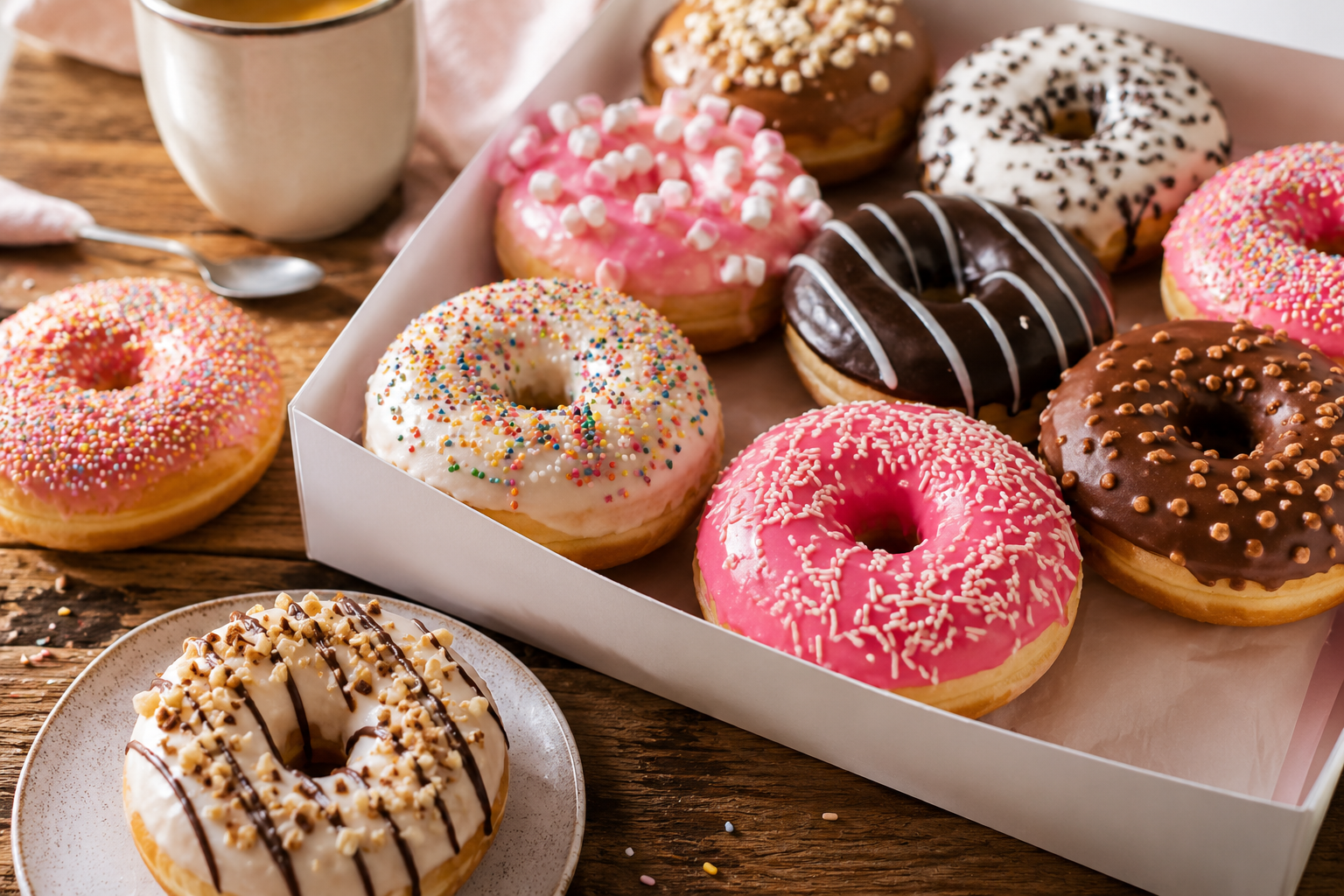
A major part of the donut’s success lies in its visual identity. Colorful glazes, creative toppings, seasonal decorations, and new flavor combinations make it instantly recognizable, helping it stand out both in stores and on social media. This combination continues to attract younger generations, who are drawn to products that offer experience, sharing potential, and immediate gratification.
A strategic product for foodservice
Thanks to its versatility, the donut can be easily integrated into seasonal offerings, combo menus, and dedicated time-of-day promotions. In colder months, it pairs naturally with specialty coffee, cappuccinos, and hot chocolate. In summer, it fits well with iced coffee, frappés, cold drinks, and emerging beverage trends.
Seasonality as a value driver
The search for novelty remains one of the main drivers in the bakery sector. For this reason, Halloween, Christmas, and other annual celebrations have become key moments for donut sales, often accompanied by limited editions such as “Halloween Magic” and “Christmas Magic” by Doony’s.
Among the most popular varieties are those inspired by well-known desserts, such as Lemon Meringue, Millionaire Dream, Rocky Road, Raspberry Dream, and Jaffa Chocolate. Other flavors include Triple Chocolate, Pink Craftie, Nutty Nougat, Kids Craftie, and Pink Cloud. Classic options range from vanilla and strawberry to Belgian chocolate coatings.
Photo: Chat GPT