Ancient domed tomb chamber discovered in Türkiye's Adıyaman
Teams from the Adıyaman Museum Directorate launched an investigation following a tip-off in the rural area of Yukarı Söğütlü village in Türkiye.
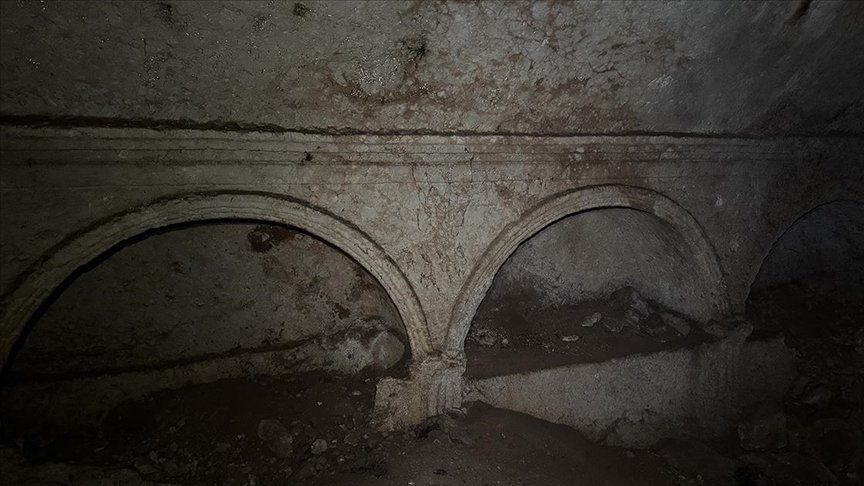
During the work, they discovered a domed burial chamber believed to date back to the 2nd century AD.
An application will be submitted to the Şanlıurfa Regional Council for the Protection of Cultural Heritage for the registration of the chamber, CE Report quotes Anadolu Agency.
Adıyaman Museum Director Mehmet Alkan told Anadolu Agency that the burial chamber was found in a steep and rocky area.
As reported by CE Report, he said that initial examinations revealed traces of a tomb with at least five chambers, and that the exposed chamber has a domed structure.
Alkan stated:
“We believe this burial chamber dates to the 2nd century AD, approximately 1,800 years ago. At the entrance of the chamber, there are three arched burial niches on both the right and left sides. These arched graves are connected by columns. In the upper sections, there are highly refined and carefully crafted cornice structures from an architectural perspective. We think this structure belonged to a high-status family. It stands out as a type of structure we have encountered for the first time in Adıyaman.”
Reliefs of wild goat heads
Alkan noted that while some reliefs inside the burial chamber have been damaged over time, others have survived to the present day.
“Inside the arched grave directly opposite the entrance, there are reliefs of six wild goat heads. These figures appear to be connected by garlands (half-wreath decorative elements), and above them are shell motifs. These motifs symbolize immortality. Unfortunately, some of these decorations have been damaged over time. In the right and left sections of the burial chamber, we also identified niches where oil lamps were lit and offerings were placed,” he said.