New memorial in Italy's Pompeii honors victims of Vesuvius disaster
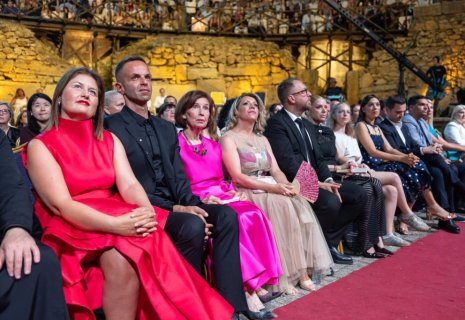
A “gallery of pain of rare visual power” — as described by Culture Minister of Italy Alessandro Giuli, who attended the inauguration in Pompeii Archaeological Park — is the exhibition opening today in the Large Gymnasium of the archaeological park.
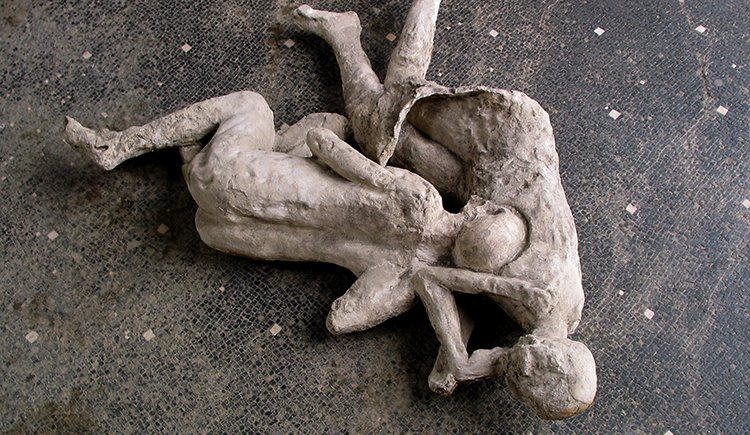
On display are the plaster casts of 22 victims of the eruption of 79 AD that buried Pompeii under volcanic material, CE Report quotes ANSA.
These were real people “who were fleeing their homes and became trapped in the second phase of the eruption, after the fall of lapilli, in a burning cloud of volcanic ash — the so-called pyroclastic flow — which solidified around their bodies,” explained the park’s director general Gabriel Zuchtriegel. The installation is permanent, a memorial recounting the final moments of Pompeii and its victims.
“The casts,” the director added, “are not simply artifacts, but direct testimonies of the tragedy that struck Pompeii. Through them, science returns to us the faces, gestures and humanity of the inhabitants.”
These testimonies also deeply affected Minister Giuli: “In this frozen moment there is respect. This small shrine, a gallery of pain with the word ‘silence’ written at the entrance, offers visitors a realism of memory that combines pietas with technology, capable of presenting a stark reconstruction of a tragic and dramatic scene. It is a very courageous and powerful project that gives visitors the image of suffering, with the bodies of those who died too soon.”
The casts on display reflect the tragedy of many lives cut short: a child, a couple, perhaps two lovers upon whom, as the minister noted, “fate scattered the ash.” The exhibition is designed with great sensitivity, emphasizing respect for the victims.
Particular care has been taken in how visitors are guided through the exhibition, warning them about the more graphic content. The section with the victims is not immediately visible; it is shielded at both ends by dividing elements that alert visitors that they are about to enter a space where they will encounter “the moment of sudden death.”
At that point, visitors can decide whether or not to continue.
Respect for the victims is also reflected in the design, with minimal use of color and decorative elements. The 22 casts were selected among the best-preserved examples, based on their archaeological context, ranging from domus inside the city to gates and roads leading out of the settlement — routes along which residents desperately tried to escape.
This is why the exhibition brings together, for the first time, such a large number of testimonies. Since the 19th century, about one hundred casts have been created in Pompeii. Others, individually or in small groups, can still be seen in the domus or buildings where they were discovered.
The exhibition also includes a section dedicated to animals and plants, featuring a collection of organic remains that illustrate the relationship between humans and natural resources.