Extreme heat, drought uncover ancient treasures across Europe
Remains believed to belong to a prehistoric mammoth, shipwrecks, and other historical artifacts have been uncovered in several European countries after extreme heat and drought this summer caused unprecedented drops in water levels, especially along the Danube River.
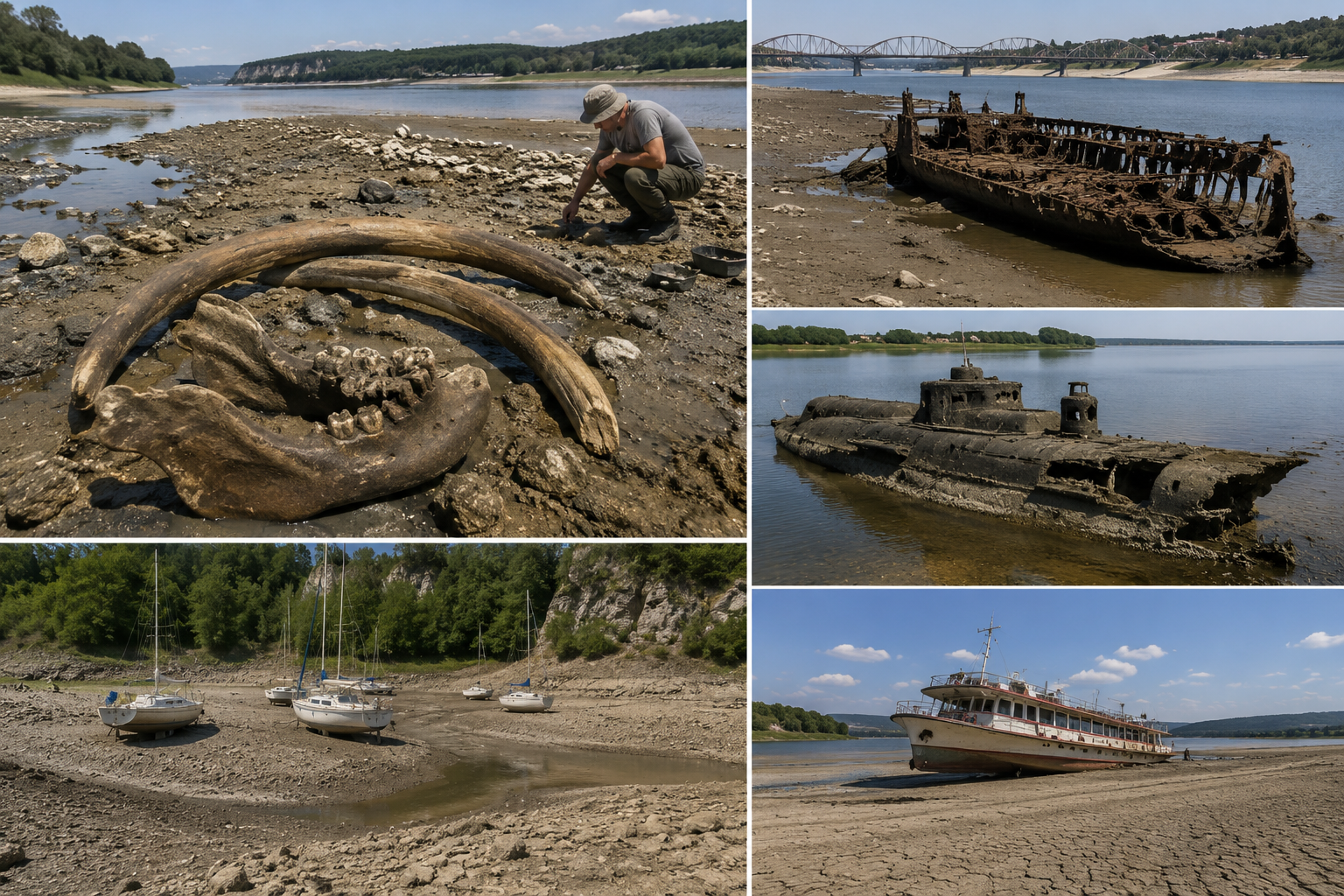
In northern Bulgaria, on a section of the Danube riverbed exposed by receding waters, remains believed to belong to an ancient mammoth were discovered on Wednesday. According to the director of the Regional Museum of History in Ruse, cited by Reuters and reported by CNN, the discovery includes a lower jaw, two tusks, and possibly a rib. The bones will undergo further analysis to confirm their origin, CE Report quotes MOLDPRES.
The low water levels of the Danube have also revealed other historical relics. In Croatia, the remains of the commercial ship “Fulton” resurfaced. The vessel was carrying coal when it sank in 1937. In Serbia, receding waters exposed the remains of a German warship from the Second World War.
Europe is experiencing a series of record-breaking heatwaves and prolonged droughts this summer, which climate scientists link to human-caused climate change. In addition to increasing the risk of wildfires, the lack of rainfall is putting pressure on water supplies, river transport, tourism, and energy production.
The Danube, Europe’s second-longest river, which flows through ten countries, has reached historically low levels in several areas. In Budapest, Hungarian authorities recorded a water level of only 9 inches (around 23 centimeters) on Wednesday, breaking the previous record low of 13 inches (33 centimeters) set in 2013, according to the Associated Press.
The reduced river flow is also affecting the energy sector. Hungarian Prime Minister Peter Magyar announced that the Paks nuclear power plant, which produces nearly half of Hungary’s electricity, may be completely shut down due to the extremely low Danube water level. The river water is used to cool the plant’s facilities. According to Magyar, the shutdown could last several weeks and may create challenges for the country’s energy system.
River transport has also been disrupted. Commercial vessels are being forced to reduce their cargo loads to avoid running aground, making freight transport slower and more expensive. Tourism has been affected as well, with some cruises cancelled or rerouted. On Tuesday, a cruise ship ran aground on a sandbank on the Danube in Bulgaria.
The phenomenon is not limited to the Danube. Lake Brenets, located on the border between Switzerland and France, has nearly dried up due to the falling water level of the Doubs River, which feeds the lake. Boats have been left stranded on the now-exposed lakebed.
Climate scientists warn that such heat and drought events are likely to become more frequent and intense unless emissions from fossil fuel use are significantly reduced. Hannah Cloke, professor of hydrology, meteorology, and climate science at the University of Reading, said that high temperatures simultaneously dry out soil, reduce river flows, and increase water demand—effects associated with climate change.
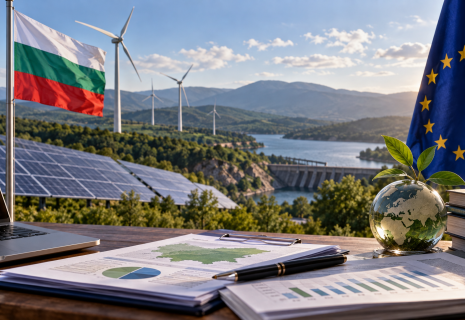
Photo: Chat GPT