Slovenia's economy records stronger growth in 2025 final quarter
Slovenia's economy expanded by 1.1% in real terms in 2025 as the annual growth rate picked up to 2.0% in the final quarter.
Seasonally-adjusted GDP rose by 0.9% last year, expanding by a solid 1.6% in the final quarter, according to first estimates, CE Report quotes The Slovenia Times.
Preliminary data from the national Statistical Office, which are based on quarterly data, show last year's GDP growth was positively driven by domestic consumption, which rose by 2.6%.
Final consumption expenditure increased by 1.7%, with household expenditure rising by 1.7% and government expenditure by 1.6%.
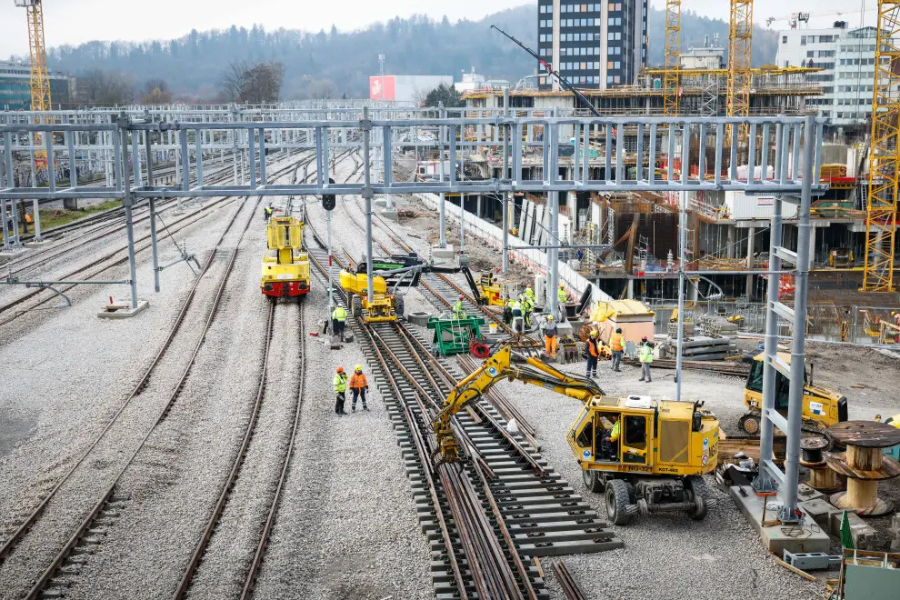
Gross capital formation increased by 5.5%, while gross fixed capital formation rose by 4.1%. As part of the latter, investment in non-residential construction surged by 13.5%, as investment in residential construction declined by 7.5%. Investment in machinery and equipment remained at a similar level to 2024, growing by just 0.7%.
Exports increased by 0.3%, while imports rose by 2.1%. Consequently, the external trade balance reduced economic growth by 1.3 percentage points.
Employment decreased by 0.4%, the biggest drops being observed in manufacturing and in construction, by 1.8% and 2.4% respectively.
Final quarter data much better
Slovenia's seasonally-adjusted 2025 growth, at 0.9%, lagged behind the average rate for both the eurozone and the EU as a whole, which Eurostat data show stood at 1.5% and 1.6%, respectively.
However, Slovenia did slightly better in the final quarter of the year, when its GDP expanded by 0.4% on the previous quarter or at an annual rate of 1.6%.
The respective annual growth rate in the euro area stood at 1.3% and that in the whole EU at 1.5%, with the quarter-quarter growth at 0.3% and 0.4%, respectively.
Private consumption in the final quarter of 2025 increased by 3.0%. Household expenditure on domestic market purchases grew across all product groups, most notably in services. Expenditure on durable goods, such as cars, rose by 3.6%, while spending on semi-durable goods increased by 2.9%, and that on non-durable goods by 0.4%.
General government final consumption expenditure increased by 3.8%, primarily driven by a 6.3% rise in expenditure on individual services.
Gross capital formation increased by 13.2% due to growth in gross fixed capital formation and inventories.
Investment in buildings and structures expanded by 17.3% to contribute the most to 12% growth in gross fixed capital formation. Investment in residential buildings rose by 1.6% after five quarters of decline, and investment in other buildings and structures expanded by 22.7%.
After four consecutive quarters of decline, investment in machinery and equipment increased by 8.3%.
Both exports and imports increased in the final quarter but exports only at a rate of 0.5%, while imports posted a more solid growth of 4.8%.
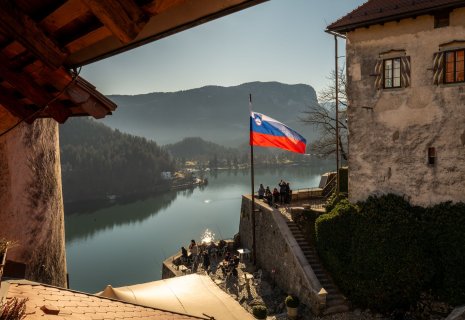
Photo: Anže Malovrh/STA