New EU territorial grouping takes shape in Eastern Europe
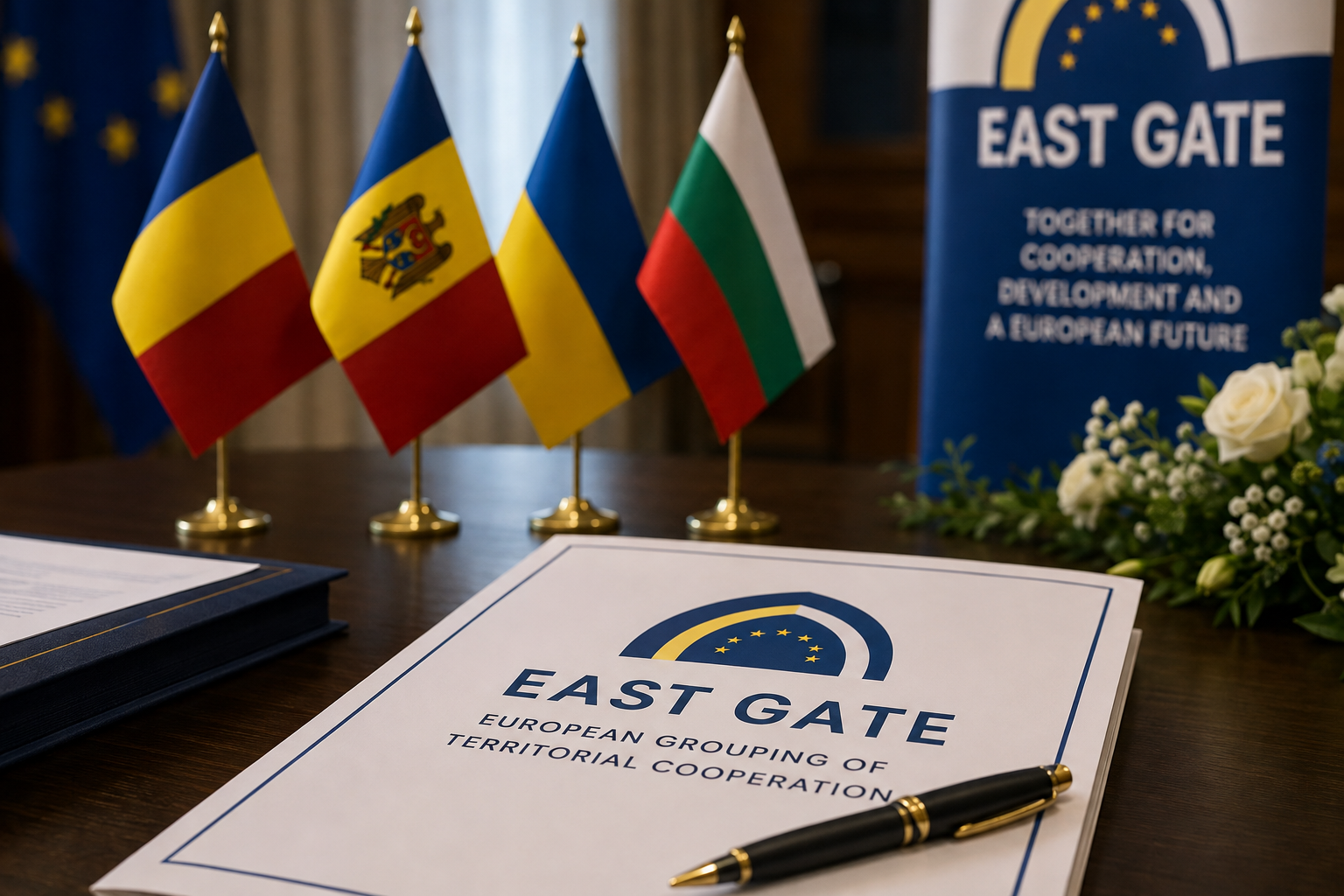
Approximately 300 local public administration authorities from Romania, the Republic of Moldova, Ukraine and Bulgaria are expected to take part on September 11, 2026, in Eforie Nord, Romania, in the signing of the founding documents of the European Grouping of Territorial Cooperation (EGTC) “EAST GATE”. The new territorial cooperation structure is currently being established and is emerging as one of the largest groupings of its kind in Europe, CE Report quotes MOLDPRES.
So far, 199 local authorities have adopted resolutions to join, and the number continues to grow. At the event in Eforie Nord, the draft founding documents of the grouping are expected to be signed. The initiative aims to create an institutional mechanism for cooperation between local communities in the four countries.
The initiators of the project say the significance of the “EAST GATE” EGTC goes beyond simple cooperation between local administrations.
The grouping’s area brings together two European Union member states — Romania and Bulgaria — and two EU candidate countries — the Republic of Moldova and Ukraine. Cooperation between local authorities is therefore presented as a tool through which European integration can be prepared directly at the community level.
By bringing together local administrations from the four countries, “EAST GATE” aims to create a common voice in relations with European institutions and contribute to the development of cross-border projects.
“The eastern gate of the European Union is taking shape from the Carpathians to the Danube and the Black Sea,” the initiative’s promoters say.
Representatives of the European Committee of the Regions are expected to attend the founding ceremony, as are representatives of the Lille–Kortrijk–Tournai Eurometropolis, the first European Grouping of Territorial Cooperation established in Europe, in 2008.
The Eurometropolis will be represented by Director General Elien Declercq. Ministers responsible for regional development from the four countries, ambassadors accredited in Bucharest, members of the European Parliament and representatives of other European territorial cooperation groupings are also expected to attend the event.
“EAST GATE” could become a direct beneficiary of EU funds
One of the most important objectives of the new structure is to obtain legal personality, which is expected to take place in the first quarter of 2027.
Once legally established, the “EAST GATE” EGTC will be able to become a direct beneficiary of European Union funds, which would allow the development of major joint projects in the region.
The participating authorities believe that the grouping’s scale will give it an important position in discussions concerning the future architecture of European programs.
A key document will be the Constanța Declaration, which is scheduled to be adopted on September 11. The document will set out the common position of the participating communities and seek to give them a stronger voice in the dialogue on European policies and funding.
County councils, regional and district councils, municipalities, cities and communes from the four countries will be represented at the negotiating table.
Local authorities can still join
The “EAST GATE” EGTC remains open to the participation of other eligible public authorities from the cooperation area.
To take part in the establishment process, interested authorities must adopt a resolution to join and confirm their participation by September 4, 2026.
“No community is too small for the largest grouping in eastern Europe. Every resolution adopted these days represents a community taking its place at the founders’ table, and on September 11 we will open together the eastern gate of the European Union,” said Sergiu Suharenco, interim director of the “EAST GATE” EGTC.
Through its scale and the participation of local administrations from Romania, Bulgaria, the Republic of Moldova and Ukraine, the project aims to become a permanent instrument for territorial cooperation and European rapprochement, with a focus on joint projects and access to European funding, Suharenco concluded.
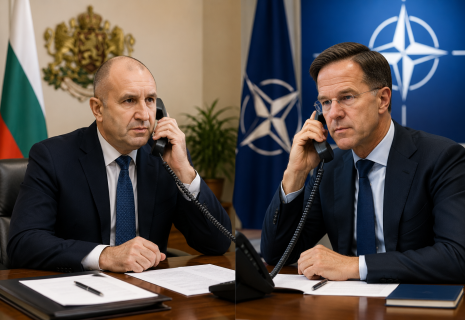
Photo: Chat GPT