European Forum Alpbach opens with call for Europe - EXCLUSIVE (PHOTO)
By Aytan Aliyeva
EFA President Othmar Karas: “Europe wins when Europe acts together” – Opening of the Conference Days focuses on Europe’s capacity to act, the defence of democracy and the need to turn long-standing proposals into results
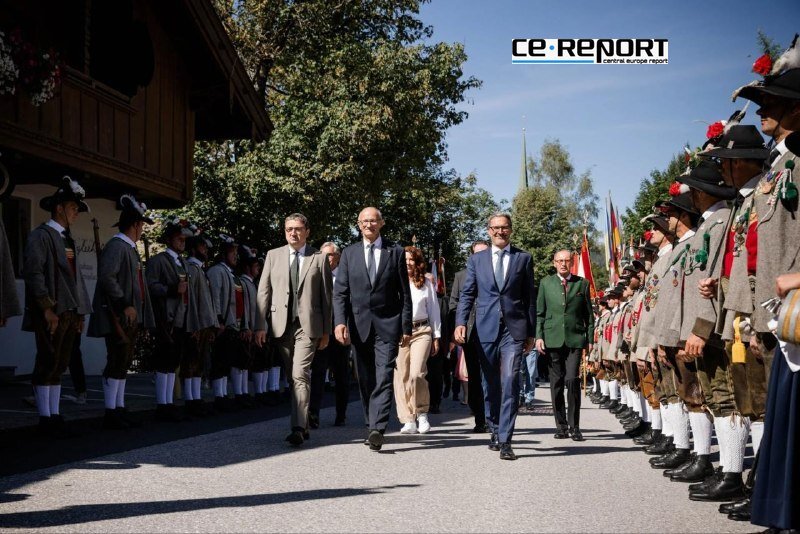
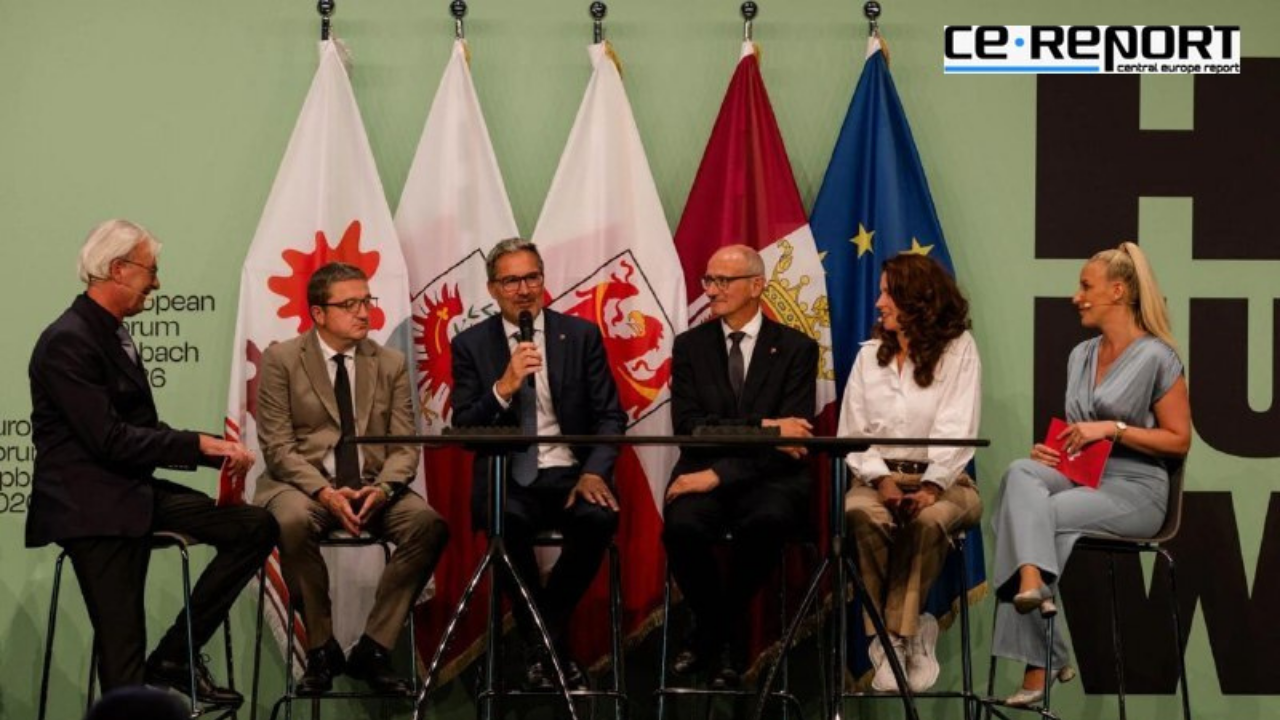
Alpbach, 30 August 2026 – The Conference Days of the European Forum Alpbach 2026 opened in Alpbach with a forceful appeal for Europe to rediscover its capacity to act collectively, deliver tangible results and defend the democratic achievements that have shaped the continent since the end of the Second World War.
Opening the Conference Days, European Forum Alpbach President Othmar Karas placed this year’s central task – “How Europe Wins” – at the heart of his address. Rather than treating it as a slogan or an expression of optimism, Karas described it as a responsibility requiring concrete political choices and action.
“This year we did not give ourselves a slogan. We gave ourselves a task: How Europe Wins,” Karas told participants gathered in Alpbach. He stressed that this was “not a question,” “not a hope,” and “not a headline,” but a proposition that could become reality only through action.
The opening also marked the beginning of several days dedicated to dialogue, exchange and debate among participants from across Europe and beyond, with a particular emphasis on bringing different generations, countries and perspectives together.
From Alpbach’s beginnings to Europe’s present responsibility
Karas connected the challenges facing Europe today with the origins of the European Forum Alpbach itself. In 1945, when the first European university weeks took place in the Tyrolean village, Europe had been devastated by war. Participants came to Alpbach with few material resources but, as Karas recalled, with “hope, a promise, and a decision”: hope for a better future, the promise of “never again,” and the determination to learn together from painful experience across national and political boundaries.
Eighty-one years later, Karas described the European project, despite its crises, setbacks and mistakes, as a success story. This historical experience provides the first element of what it means for Europe to “win”: Europe succeeds when it learns from experience.
At the same time, Karas warned against taking Europe’s achievements for granted. Peace, freedom, democracy and the Single Market are not permanent features of European life that can be assumed to sustain themselves.
He used the term “sleepwalkers”, drawing on historian Christopher Clark’s description of Europe’s leaders before the First World War, to characterise those in today’s political, economic and media mainstream who recognise the profound changes taking place around them but nevertheless expect that the old order will simply return.
According to Karas, the present moment is not a temporary disruption after which Europe can return to business as usual. The war against Ukraine and the wider challenge to the rules and principles underpinning Europe’s political order demonstrate that “there is no way back to before.” The struggle underway is fundamentally about whether common rules apply to everyone or whether powerful actors are permitted to break them.
Karas paid particular tribute to the people of Ukraine, arguing that they have for years been defending not only their own country but also the values and principles represented by the European Union and the European Forum Alpbach.
Democracy must restore confidence in a better tomorrow
A central theme of the opening address was the relationship between democratic resilience and citizens’ confidence in the future.
Karas argued that democracy remains strong as long as it can credibly maintain a fundamental promise: that tomorrow can be better than today. When confidence in that promise begins to disappear, political radicalisation does not necessarily happen immediately. Instead, frustration accumulates: people become tired, then angry, and eventually stop listening.
Drawing on conversations with entrepreneurs, researchers, employees, pensioners and students, Karas acknowledged widespread frustration with regulations that do not work, decisions that take too long and projects that fail to materialise. He also pointed to concerns about international political developments and the electoral strength of the extreme right.
Many of these criticisms, he said, contain legitimate points. But identifying problems is not enough.
“Being right is not the same as being useful,” Karas said, warning that constant complaint can obscure Europe’s strengths, achievements and opportunities while simultaneously creating fertile ground for populists, nationalists and extremists.
An appeal to Europe’s democratic centre: stop complaining and start delivering
Karas directed part of his criticism explicitly towards the political and societal centre.
The centre, he argued, contributes to public frustration when political decisions are explained only after they have been taken; when national governments blame “Brussels” for decisions they themselves supported; or when mainstream political actors adopt the language of political extremes in an attempt to increase their own popularity.
His appeal was therefore clear: Europe must stop complaining, blaming others, diminishing its own capabilities and producing excuses for inaction.
Citizens’ desire for leadership is legitimate, Karas said. The challenge for democratic forces is to respond to that demand without adopting simplistic promises or the methods of political extremes.
The democratic centre must instead offer a different model of leadership: results rather than volume; delivery rather than slogans; implementation rather than announcements; and participation, explanation and debate rather than withdrawal.
The encouraging – but also frustrating – reality, according to Karas, is that Europe already knows much of what needs to be done.
Europe’s problem is no longer a lack of analysis
The opening address identified the gap between analysis and implementation as one of Europe’s central weaknesses.
“The ‘to dos’ had been on the table for years,” Karas said. “They are not new and not a secret. And still, we fail to deliver.”
He illustrated this implementation deficit through three areas.
First, Europe continues to divide what should function as a single market. The European Single Market encompasses around 450 million citizens and, with candidate countries, could eventually serve more than 600 million people. Yet companies seeking to operate across Europe still have to contend with multiple national versions of ostensibly common rules.
Karas also pointed to Iceland as evidence of the continuing attractiveness of European integration, referring to a vote to reopen talks with the European Union. “While we doubt ourselves, others want to come in,” he said, arguing that Europe should recognise its own strength.
Second, Europe is failing to mobilise its own financial resources effectively. Karas cited around €33 trillion in private savings held in European bank deposits, while roughly €300 billion flows into the American economy each year. The consequence, he argued, is that European savings help finance growth elsewhere while European companies can struggle to obtain the capital necessary to scale at home.
Third, European rules are frequently made more complicated through additional national layers. Instead of implementing common European rules consistently, national governments introduce further requirements and exceptions and then attribute the resulting complexity to “Brussels bureaucracy”.
Against this background, Karas welcomed Enrico Letta to the opening of the Conference Days, describing him as “Mr. Single Market” and highlighting his contribution to the debate about bridging the gap between European analysis and European action.
“Europe wins when Europe acts together”
The central conclusion of Karas’s opening address was that “winning” must not be understood as Europe defeating another country, region or political actor.
European success, he argued, comes from cooperation.
Working together increases Europe’s capacity to act, allows it to act faster and more efficiently, and ultimately provides the basis for European sovereignty.
“When we say How Europe Wins, we do not mean winning in the usual sense. We do not mean winning against someone,” Karas said. “Working together makes us able to act. It makes us faster, better and cheaper. Working together is what makes us sovereign.”
His conclusion was unequivocal:“Europe wins when Europe acts together.”
Understanding each other as a prerequisite for European unity
Karas concluded by turning from institutional reform and political leadership to a deeper prerequisite for European cooperation: a shared understanding of Europe’s different historical experiences.
Invoking Winston Churchill’s advice to “study history,” Karas argued that Europeans still too often understand their continent primarily through national or regional historical perspectives. Western and Eastern European experiences are not sufficiently integrated into a common understanding, while national borders continue to define the horizons through which many Europeans view history and politics.
For a genuine European Union to exist, Europeans must therefore know more about one another – about different historical paths, unresolved wounds, cultures and religions, crises that societies have survived and the different meanings that political concepts can acquire in Warsaw, Vienna or Lisbon.
This, Karas stressed, is precisely one of the purposes of the European Forum Alpbach.
“In Alpbach we want to get to know each other. To talk with each other. And to learn from each other,” he said.
He closed by calling on participants not merely to observe the Conference Days, but to actively shape them: to participate, listen, disagree, argue and deliberately engage with people outside their existing circles.
“Because with the European Forum Alpbach it is like with democracy, and like with the European Union: it becomes what we make of it.”
Conference Days: from diagnosis to action
The opening message sets the direction for the European Forum Alpbach 2026 Conference Days: Europe’s central challenge is not simply to produce more diagnoses of its problems, but to translate existing knowledge into decisions, implementation and results.
Under the task “How Europe Wins”, the Conference Days begin from the premise that Europe’s ability to defend democracy, strengthen its economy and exercise sovereignty depends fundamentally on its capacity to act together.
Alpbach’s role is to provide a space in which participants can confront differences rather than avoid them, learn from Europe’s diverse experiences and transform debate into a stronger capacity for collective action.
More than eight decades after the first European university weeks brought people to Alpbach amid the ruins of war, the underlying proposition remains strikingly similar: Europe’s future depends on what Europeans are prepared to build together.
Gallery