Micro-trends fuel social media’s fast-paced culture of consumption
“Micro-trends,” which appear every day on social media platforms as new fads, aesthetic preferences, or consumption habits, quickly gain widespread visibility and feed the accelerated cycle of consumption driven by social media.
These temporary trends, typically adopted by a relatively small audience and often short-lived, are referred to as “micro-trends,” CE Report quotes Anadolu Agency.
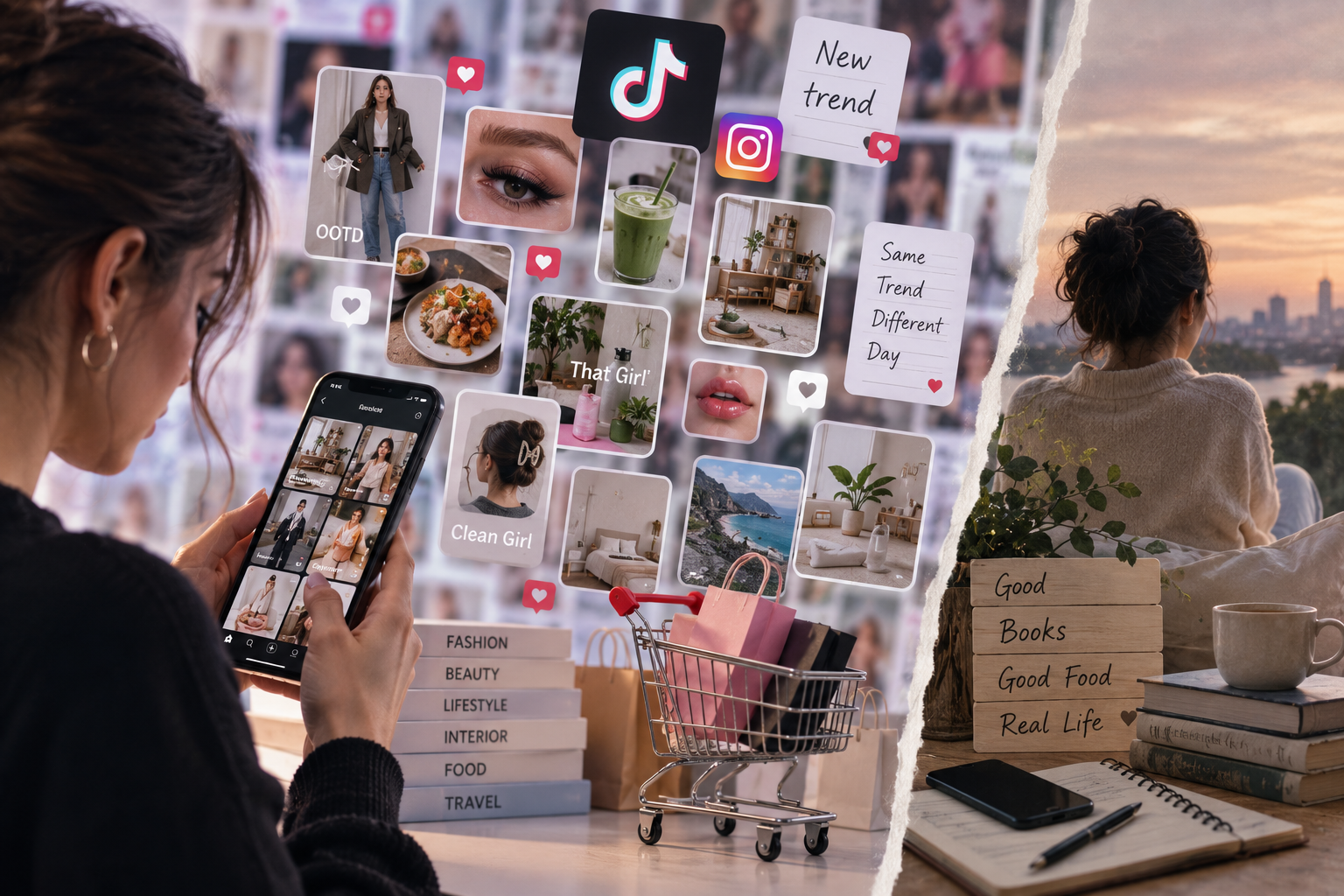
Micro-trends have become a more visible part of everyday life, particularly as platforms such as TikTok and Instagram have changed the way users interact with content.
A particular clothing style, makeup trend, interior design aesthetic, food, or lifestyle can be imitated by thousands of users within a short period of time, while losing its popularity just as quickly.
Social media algorithms promote content based on users’ interests, allowing certain trends to reach larger audiences in a short period of time.
With content creators and brands also taking part in the process, the time between the emergence of a trend and its widespread adoption is becoming increasingly shorter, while users’ speed in embracing and consuming new trends continues to increase.
Micro-trends are believed to influence not only digital culture but also consumer habits.
Frequently turning toward what is “new” and “popular” can lead users to quickly change the products they own or the styles they have adopted, while the desire to remain visible on social media can further reinforce this cycle.
“Younger generations rely on social media to express themselves”
Professor Katherine Hampsten from the Department of Communication Studies at St. Mary’s University’s Faculty of Arts, Humanities and Social Sciences, and Communication Sciences student Camila Berumen spoke to Anadolu Agency about how micro-trends emerge, why they spread so quickly, and how they influence user behavior.
Professor Hampsten said younger generations rely on social media to express themselves, noting that their interest in micro-trends can provide valuable insight into their consumption habits and the cultural values that develop over time.
Berumen said micro-trends can be described as much shorter-lived fashion movements, products that suddenly become popular, or aesthetic styles. She noted that their popularity on social media generally lasts anywhere from a few weeks to three months.
Content creators with “admirable qualities” help micro-trends spread rapidly
Pointing out that social media platforms such as TikTok and Instagram have completely transformed consumption habits, Berumen emphasized that the amount of content presented to users every day has increased at an unprecedented pace.
Berumen said social media constantly provides users with new and engaging information, explaining:
“The algorithms on these platforms prioritize shorter-form content because we are constantly scrolling through our screens at a fast pace. That is why they present viewers with shorter pieces of content and shorter videos, because viewers respond positively to this type of content. This means that if you create a short video about a particular topic that people like, that content will continue to be promoted frequently.”
Referring to the concept of “instant gratification” that has emerged alongside social media, Berumen and Hampsten pointed to the influence of content creators with “admirable qualities” as one of the factors behind the rapid spread of micro-trends among young people.
“Stepping away from social media has also become a trend”
Berumen recalled that before social media, these trends spread through celebrity and lifestyle magazines.
“But now it happens on a much larger scale and at a much faster pace. The difference is that social media gives millions of people the opportunity to see, watch, and imitate something. As a result, a single element can become a global phenomenon within just a few days,” she said.
Berumen noted that social media profiles have turned individuals “into a kind of brand,” while also pointing to the growing habit of immediately searching for newly met people on social media platforms.
Berumen and Hampsten emphasized that a form of fatigue is beginning to emerge as a result of the never-ending cycle of rapid change and the speed at which all of these trends are consumed in everyday life.
Berumen said fast-paced consumption habits are also causing people to distance themselves from social media.
“I think it’s somewhat ironic because, from what I’ve noticed recently, this has itself become a trend — turning toward analog media, stepping away from our phones and finding other things to do. That itself has become a trend. But the reason is that we are trying to distance ourselves from the digital space that we have become immersed in over the past few years,” she said.
Photo: Chat GPT