‘Maldoror’: Belgium’s darkest crime case hits cinemas
Belgium, 1995: the disappearance of two young girls causes widespread media alarm amid suspicions of a possible pedophilia case.
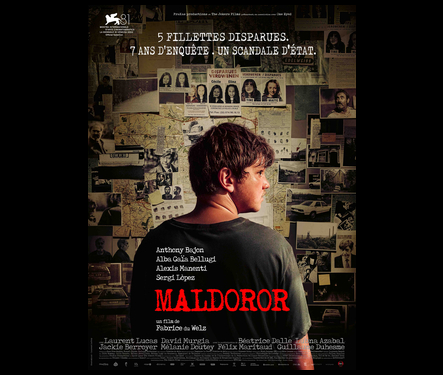
Paul Chartier (Anthony Bajon), a young and idealistic gendarme eager to make a name for himself, is assigned to a secret unit, codenamed “Maldoror,” tasked with monitoring a suspected repeat offender considered extremely dangerous.
This is the premise of “Maldoror,” a crime thriller about child sexual abuse directed by Belgian filmmaker Fabrice du Welz. The film, which was screened out of competition at the 81st Venice Film Festival, arrives in cinemas on August 20, distributed by Movies Inspired.
The film is loosely inspired by the case of the “Monster of Marcinelle,” a notorious criminal case that shocked Belgium in the 1990s. In the film, the suspected pedophile Marcel Dedieu, played by Sergi López, is clearly reminiscent of Marc Dutroux, the kidnapper, sex offender and murderer who abducted, sexually abused and killed several girls and teenagers during the 1980s and 1990s.
Dutroux was arrested in 1996 along with several accomplices, including his wife, Michelle Martin. After a lengthy trial, he was found guilty in 2004 of kidnapping, sexual abuse, murder and other crimes and sentenced to life imprisonment, a sentence he is still serving.
The case also gave rise to suspicions that a much wider child exploitation network existed but had never been uncovered because it was allegedly protected by influential figures.
In this very dark film, packed with twists, the central focus is Paul Chartier’s determination and obsession. The young officer, with his almost childlike appearance, finds himself confronted by rivalries between different police forces, bureaucracy and problems within the justice system.
As Paul becomes increasingly obsessed with the investigation, however, he refuses to give up, ultimately putting his own family at risk.
Fabrice du Welz said he chose to shoot Maldoror specifically in Charleroi.
“When the scandal broke in the mid-1990s, I was 20 and naive enough to believe that the adult world was a safe and well-organized place,” he said. “Like most people of my generation, I was then devastated by an apocalyptic case involving information being withheld, negligence and absurd, ridiculous and mediocre implications.”
“We Belgians,” he continued, “were unable to shake this case off for a very long time. It was a black hole into which Belgian citizens were thrown as they watched, horrified and powerless, while the parents of the young victims faced the shortcomings and absurdities of the justice system.”
“We later discovered that the investigations had been obstructed by rivalries between law enforcement agencies, causing numerous failures and irreparable damage. In Belgium, as anywhere else in the world, we all asked ourselves: how did we get to this point?”
Finally, the title deserves attention. It is a direct reference to “Les Chants de Maldoror” (The Songs of Maldoror), the famous prose poem published in 1868–69 by Lautréamont, the pseudonym of Isidore Ducasse. The work is considered one of the darkest and most influential texts in French literature and had a profound influence on the Surrealists.
Its protagonist, Maldoror, embodies absolute evil: a rebellious, sadistic and nihilistic figure at war with God and humanity.
Photo: Wikipedia