Türkiye uncovers 7,500-year-old stone seal
With the support of the Ministry of Culture and Tourism and the Governorate of Türkiye, the archaeological excavation season at the castle and mound in Tadım village, near Elazığ, carried out by the Elazığ Museum Directorate and the Provincial Directorate of Culture and Tourism, has ended due to winter conditions.
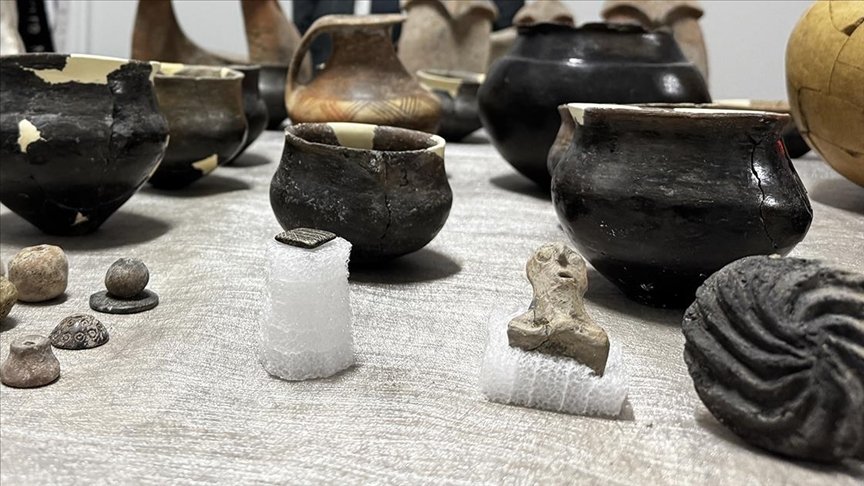
The castle and mound, included in the Ministry’s “Heritage for the Future Project,” have yielded significant finds, including three sacred hearths, Karaz-type pottery from Nakhchivan, everyday tools, arrowheads, stylized figurines, single-handled geometric-decorated jugs, goat-decorated pots, a cereal stamp seal, and a 160x130 cm "bull-headed altar" dating to the Late Chalcolithic and Early Bronze Age, CE Report quotes Anadolu Agency.
The latest discovery from the excavation is a 7,500-year-old stone seal, now preserved at the Elazığ Archaeology and Ethnography Museum.
The Elazığ Museum Directorate continues year-round restoration, analysis, and publication of the artifacts and archaeological and cultural heritage uncovered.
Governor Numan Hatipoğlu noted that four archaeological sites were excavated this year: Tadım Castle and Mound, Harput and Palu castles, and Salkaya village.
In Tadım, findings from upper layers include Ottoman, Seljuk, Roman, Byzantine, and artifacts dating back to 3500 BCE. Deeper layers reveal traces of settlement from the Neolithic period. The stone seal is believed to indicate ownership, property, or identity and suggests civilization in the region as far back as 7500 BCE, confirming Elazığ as a historic settlement.
Next year, excavation areas will be expanded. In Salkaya, animal-depicting mosaics and a Roman bath detected 70 meters south via underground radar highlight the city’s historical richness. Plans include improving visitor access with parking, rest areas, and walkways to the mosaic.
As reported by CE Report, at Palu Castle, excavations uncovered an Ottoman-era guardhouse. Environmental arrangements allow partial public access to rock tombs. Additionally, a 50-meter-long Urartian castle wall was discovered. Excavations at Harput Castle continue, with plans to rebuild the Fetih Mosque and construct a visitor center in cooperation with the Fırat Development Agency and the municipality in 2026.