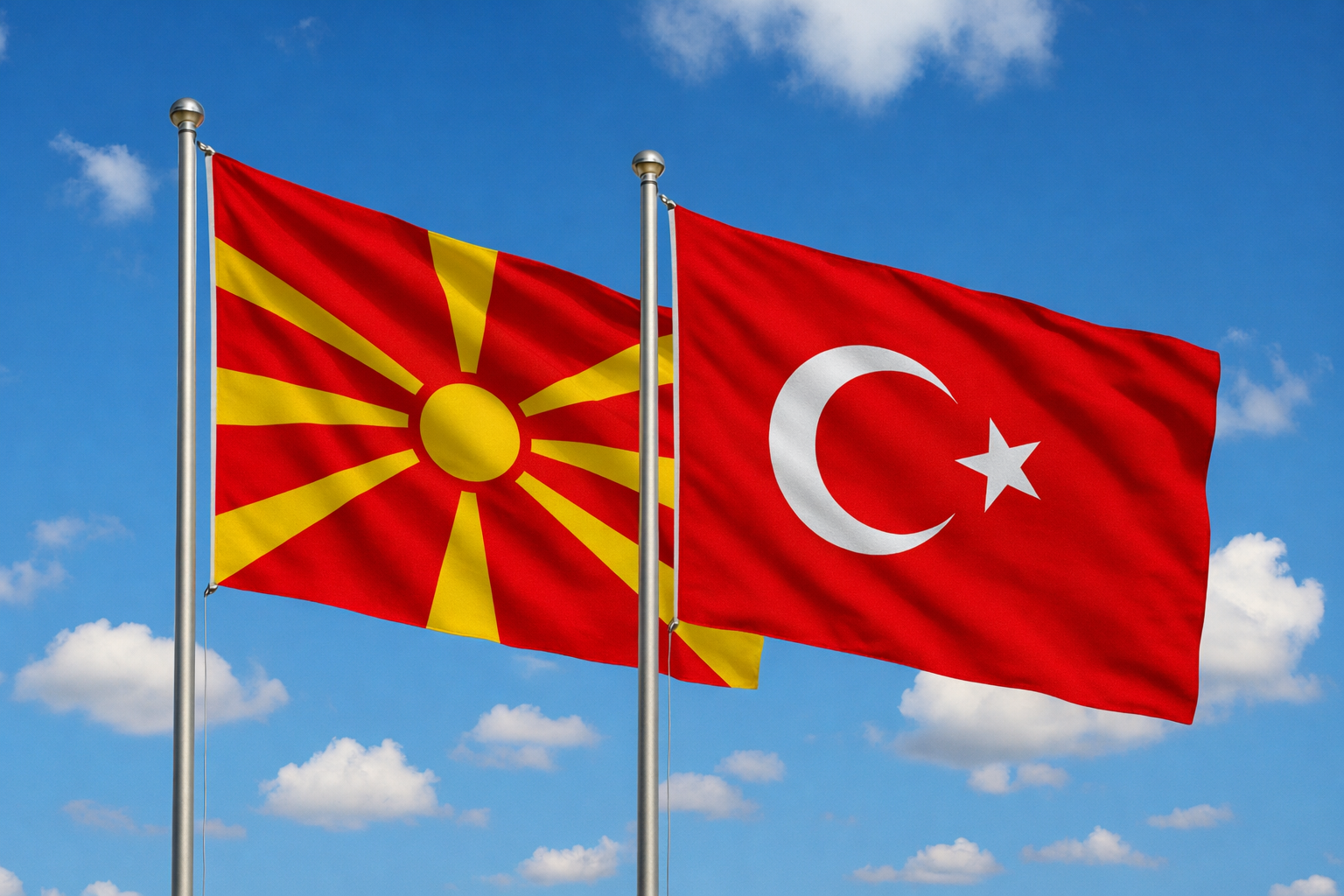
Ministry outlines benefits of North Macedonia-Türkiye education agreement - EXCLUSIVE
CE Report presents an exclusive interview with the Ministry of Education and Science of North Macedonia on the recently signed Agreement with the Republic of Türkiye, aimed at strengthening bilateral cooperation in the field of education, enhancing human capital development, and fostering innovation within North Macedonia’s education system.
How does the Ministry assess the strategic importance of this agreement for the development of North Macedonia’s education system and human capital?
The Agreement between the Government of the Republic of North Macedonia and the Government of the Republic of Türkiye on Cooperation in the Field of Education is of strategic importance for the advancement of the education system and the development of human capital in the Republic of North Macedonia. It establishes a stable and long-term framework for institutional cooperation, exchange of knowledge and experience, as well as joint activities in areas of critical importance – vocational and technical education, teacher training, digitization, innovation and lifelong learning. The Agreement also contributes to the internationalization of education and harmonization with European and international standards.
What concrete steps are planned to implement cooperation in vocational education, teacher training and lifelong learning, and what timeline is envisaged?
In the first phase, upon the effectiveness of the Agreement (with the adoption of the Law on Ratification of the Agreement between the Government of the Republic of North Macedonia and the Government of the Republic of Türkiye on Cooperation in the Field of Education by the Parliament of the Republic of North Macedonia), a Joint Working Group will be established to prepare operational programs for cooperation.
- vocational and technical education and the exchange of good practices;
- joint teacher training and professional development programs;
- activities related to lifelong learning and non-formal education.
It is expected that these activities will commence in the future, in accordance with the available financial and human resources of both parties.
How will the exchange of students, teachers and academic staff be organised in practice, and how many participants are expected in the initial phase?
Exchanges of students, teachers and academic staff will be organized through agreed programs and projects, with clearly defined criteria and procedures. In the initial phase, a pilot exchange with a limited number of participants is expected, with a tendency to gradually increase, depending on the interest and the results from the implementation.
What objectives does the Ministry set for the development of joint curricula, school twinning initiatives and the introduction of optional subjects related to language and culture?
The Ministry of Education and Science will encourage the implementation of the curricula of the party establishing the educational institution or international educational programs, in the respective educational institutions, approved by the competent authorities of the Republic of North Macedonia.
In addition, the Ministry of Education and Science will support initiatives for twinning of schools and student activities, as well as the introduction and promotion of elective subjects related to language and culture, in accordance with the national legislation. These activities are seen as an important contribution to intercultural dialogue and mutual understanding.
Taking into account the fact that members of the Turkish ethnic community in North Macedonia, in accordance with the Constitution and the current legislation, have (compulsory) instruction in their mother tongue (Turkish), the Agreement further strengthens this practice through the exchange of teaching staff, materials and experience.
At the same time, the Agreement creates new opportunities for the Macedonian community in the Republic of Türkiye, through the introduction of an elective subject "The Language and Culture of the Macedonians" in the Turkish educational system, which represents an important step towards preserving the linguistic and cultural identity.
How will the joint working group function, and what mechanisms will be used to monitor the implementation and effectiveness of the agreement?
The Ministry of Education and Science expects that the implementation of the Agreement, through a joint working group and specific programs, will contribute to furthering bilateral relations and to improving the quality and inclusiveness of education.
The Ministry of Education and Science remains committed to the transparent and meaningful implementation of this Agreement, with a clear focus on the quality of education and the long-term benefits for students, teachers and society as a whole.
This interview was prepared by Julian Müller