Minister Nasiha Pozder: Bosnia makes significant step forward in nature protection - EXCLUSIVE
CE Report presents an exclusive interview with Nasiha Pozder, Federal Minister of Environment and Tourism of Bosnia and Herzegovina, who discusses the Ministry’s recent achievements in expanding protected areas, improving waste management, and supporting sustainable tourism, as well as its strategic priorities for 2026.
The Ministry reported an increase in protected areas in the Federation of BiH. Which specific areas were granted protected status, and are there plans for further expansion in 2026?
In 2025, the Federation of Bosnia and Herzegovina made a significant step forward in nature protection by increasing the share of protected areas from 3.7% to 4.6% of the total territory. The territory that had been protected from the 1990s until 2023 amounted to 3.5%, so this represents a significant step forward. This progress is the result of systematic efforts and the adoption of the new Law on Nature Protection, which enabled more efficient protection procedures. To ensure maximum efficiency and to meet both our national and international obligations, this new law also enables better coordination among all levels of government, from local to cantonal and entity levels, thereby providing a framework for the more substantial expansion of our protected areas.
Among the areas that were newly designated or additionally protected are Starača and Tišina Wetlands in the Posavina Canton, and Mount Zvijezda in the Zenica-Doboj Canton. Protection studies have also been completed for Mokra Megara in Maglaj, while preparatory studies and documentation are underway for the protection of the Buna and Bunica rivers, Kravice Waterfalls and part of the Trebižat River, as well as Mount Krug near Livno, known for its wild horse population.
I would particularly highlight the major and truly generational project of protecting Mount Prenj, which we are implementing in cooperation with UNDP, the City of Konjic, and the academic community. This project is of exceptional importance for preserving the natural heritage of the Federation of BiH.
Thanks to all initiated and planned activities, we expect the share of protected areas to almost double in the long term once all projects are implemented. Expanding the network of protected areas remains one of the key priorities of the Federal Ministry of Environment and Tourism in 2026.
How significant is the opening of the Eko Sep sanitary landfill in Živinice, and are similar projects planned elsewhere?
The opening of the Eko Sep sanitary landfill in Živinice is considered one of the key environmental achievements of 2025. This modern regional landfill represents an important step toward establishing a functional and sustainable waste management system for the City of Živinice and the municipalities of Kladanj and Banovići, as well as for the wider Tuzla Canton area.
The project enables the remediation and closure of existing non-compliant landfills in municipalities such as Gradačac, Gračanica, and Lukavac. The Federal Ministry of Environment and Tourism co-financed this project for several years through the federal budget.
In 2026, we plan to continue strong support for similar projects across the Federation, primarily through the adoption and implementation of the Federal Waste Management Plan, whose adoption we expect soon, as well as through the closure and remediation of illegal landfills and the construction and equipping of additional regional waste management centers.
The Federation recorded a record number of tourist overnight stays in 2025. What were the main drivers of this growth?
The Federation of Bosnia and Herzegovina recorded a record-breaking tourism year in 2025 in terms of overnight stays. This growth resulted from several parallel processes and strategic policy decisions.
Key drivers included the development and promotion of our recognizable destinations, the strengthening of tourism offerings through internationally recognized events such as the Sarajevo Film Festival, as well as improvements in transport infrastructure and an increased number of flights to Sarajevo.
According to available statistics, the most frequent visitors continue to come from neighboring countries such as Croatia and Serbia, as well as from Turkey and other international markets. Growth was driven by strategic investments, enhanced promotion, diversification of tourism products, and improved service quality.
At the same time, infrastructure remains a challenge, as does the need to adopt a new Law on Tourism at the Federation level, which would provide a modern legislative framework and enable the establishment of a unified Federal Tourism Board. Such a body would significantly strengthen tourism promotion for us. In parallel, the Ministry is developing co-financing programs for tourism projects, where we already see tangible progress and expect continued positive trends in 2026. It is worth noting that the Federal Ministry of Environment and Tourism prepared and submitted the new Tourism Law we are discussing into procedure in September 2025, thereby completing that part of the work as well.
How does the Ministry balance tourism growth with environmental protection?
The expansion of protected areas provides a strong professional and planning basis for balancing tourism growth and environmental protection. The Ministry continuously works on strategically integrating tourism development with nature conservation through sustainable development principles.
Our activities include support for digitalization projects aligned with environmental standards, co-financing projects for the preservation of natural resources, and promoting environmentally friendly tourism practices. Environmental protection is not an obstacle to tourism development, but rather its greatest advantage and long-term resource. Only through synergy between these sectors can we preserve natural heritage while improving the quality of tourism offerings.
What are the Ministry’s key strategic goals for 2026?
Key strategic priorities for 2026 include the adoption and implementation of the Federal Waste Management Plan, further expansion of protected areas and environmental protection studies, stronger support for landfill remediation and environmental infrastructure projects, and the development of sustainable tourism through capacity building and promotion. Of course, our focus is on the adoption of new legislation, including the already mentioned set of laws on tourism as well as environmental legislation, and a Climate Change Law is also in preparation, which will be addressed for the first time.
Additional focus will be placed on integrating environmental standards into tourism development and strengthening regional and international cooperation on climate resilience and green policies.
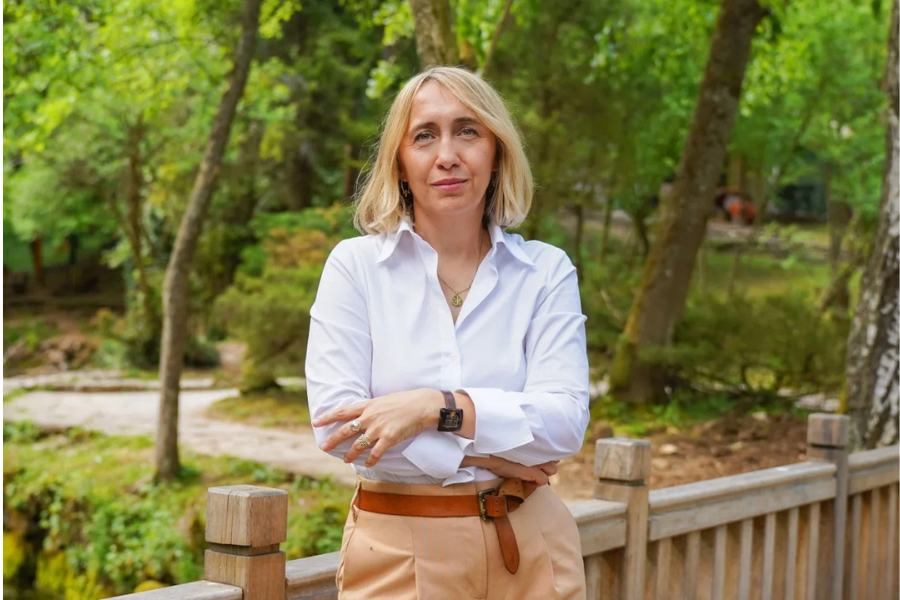
Photo: Federal Ministry of Environment and Tourism of Bosnia and Herzegovina
This interview was prepared by Julian Müller