Sarajevo joins EU-funded ATMOPOLIS project on air and noise pollution
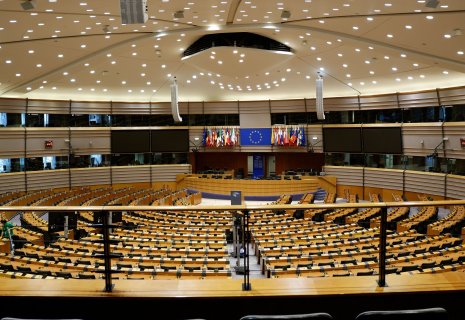
The initial meeting of the ATMOPOLIS consortium will be held on January 21 in Brussels. It is a new research and innovation project funded by the European Union (EU), bringing together leading academic institutions, city authorities, public health institutions, civil society organizations, and citizens to better understand air and noise pollution, their links to carbon emissions, and their impacts on health.
One of the consortium participants is the Public Health Institute of Sarajevo Canton, CE Report quotes FENA.
ATMOPOLIS will support cities in developing integrated, socially oriented solutions to reduce pollution and improve quality of life, with Sarajevo being one of the participating cities.
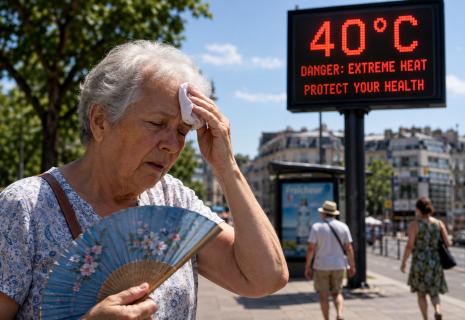
Air and noise pollution are environmental and health risk factors with numerous implications that vary from city to city. According to EU estimates, exposure to concentrations of air pollutants above recommended limits, such as PM2.5, NO₂ and O₃, was responsible for 357,000 deaths in the EU in 2022.
The European Union also estimates that long-term exposure to noise is responsible for 48,000 new cases of heart disease and around 12,000 premature deaths every year in Europe. The impacts of pollution are not equally distributed and vary, among other things, between individuals depending on cultural and socio-economic factors. Understanding the complexity of urban systems, their barriers and opportunities for action is crucial for addressing the negative effects of pollution through improved mitigation measures.
In a statement, the Public Health Institute of Sarajevo Canton said that the ATMOPOLIS approach differs from previous studies as it seeks to take an integrated approach to the impacts of air and noise pollution, focusing on finding socially oriented solutions acceptable to both citizens and cities. This innovative perspective will enable tailored and cost-effective solutions for the cities under study.
“Air pollution is the biggest environmental health threat in the EU, while noise pollution ranks third. ATMOPOLIS will identify measures that can lead to the greatest reduction in exposure and negative health impacts, while also considering climate benefits. By working with cities and citizens, we will support the implementation of these measures using both a top-down policy approach and a bottom-up approach through behavioral change and awareness-raising,” said project coordinator and Associate Professor at Tampere University, Jonathon Taylor.
In Sarajevo, ATMOPOLIS project partners will work closely with the Public Health Institute of Sarajevo Canton to investigate the health and social impacts of air and noise pollution. This will enable the collection of community-level noise data, which will be analyzed to identify exposure patterns and reported health impacts. Qualitative information will also be collected from citizens to capture how residents experience pollution in everyday life, including participatory approaches such as personal narratives and visual methods.
ATMOPOLIS is a four-year innovative project implemented by a multidisciplinary consortium of 14 partners from nine European countries, conducting research in European cities: the Greater London Authority (UK), Łódź (Poland), Sarajevo (Bosnia and Herzegovina), Podgorica (Montenegro), and Tampere (Finland). With a budget of around €5 million, the project is funded through the Horizon Europe call “Zero-Pollution Cities,” contributing to the objectives of the EU mission “Climate-Neutral and Smart Cities 2030.”
By combining different expertise, new methods, and community data, ATMOPOLIS will assess various dimensions of emissions and exposure. At the city level, an integrated model will be developed and used as a tool for policymaking and testing the impacts of mitigation measures on health and carbon emissions, as well as their cost-effectiveness. At the community level, data on exposure and individual perception will be collected, their interaction with pollution-related messages will be studied, and they will be used to develop public information materials, encourage behavioral change, and empower citizens to demand action. In this way, change will flow in both directions: from academia and policymakers, and from citizens themselves.
The study will examine impacts on different population groups, including those more exposed to pollution and those more sensitive to negative health effects. Individuals’ perceptions of air and noise pollution will be collected through personal narratives and methodologies such as “photovoice,” capturing community voices and their visual experiences through photographs reflecting personal perceptions of exposure and their role in generating emissions. The project will engage citizens, raising awareness and empowering them to embrace policies and behavioral change, translating evidence into socially oriented action and ultimately addressing air and noise pollution from a more integrated perspective.
“People and communities will play a key role in reducing pollution – something that is often missing in purely technological solutions. By working to understand exposure, impacts on people, and opportunities for action at the level of citizens, communities, and city authorities, we can identify pathways to achieving ambitious pollution reduction targets,” Jonathon Taylor emphasized.
Foto/ Ilustracija