Pets in Hong Kong receive ID cards like people
In one of Asia’s most modern and highly urbanized cities, even pets are treated with a high level of formality.
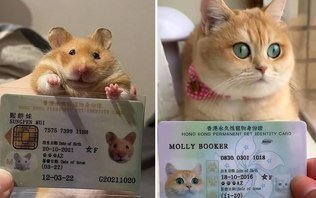
In Hong Kong, dogs – and in some cases other animals – must have official identification, while devoted owners can even obtain personalized “identity cards” for their pets that resemble those issued to people, CE Report quotes Kosova Press.
Mandatory identification for dogs
According to rules set by local authorities in Hong Kong, every dog older than five months must be equipped with:
- an identification microchip
- an official license issued by the competent authorities
The system is administered by the Agriculture, Fisheries and Conservation Department, which maintains the official registry of licensed dogs.
The microchip contains a unique code linked to the owner’s details.
If the animal is lost, authorities or veterinary clinics can scan the chip and return it to its owner. Failure to comply with licensing and microchipping rules may result in fines for pet owners.
“Identity cards” becoming a trend
Alongside the legal microchip system, an interesting trend has also emerged in Hong Kong: personalized identity cards for pets.
These cards, which resemble official citizen ID cards, typically include:
- the pet’s name
- date of birth
- photograph
- a symbolic identification number
They have become a popular “accessory” among many dog owners. Although they are not official government documents, they are used as an additional form of identification or simply as a way to show the strong bond between owners and their pets.
One of the city’s best-known animal welfare organizations, the Society for the Prevention of Cruelty to Animals, has long promoted responsible pet ownership practices, including proper identification and regular veterinary care.
Why identification matters
Hong Kong has extremely high population density and limited living space.
In such a highly urban environment, pets can easily become lost.
The microchip and licensing system helps:
- reduce the number of lost animals
- prevent abandonment
- control diseases
- increase owner responsibility
Authorities see the system as part of broader policies aimed at animal welfare and public safety.
A symbol of cultural change
The fact that pets are required to have official identification – and even identity cards that imitate human documents – reflects a cultural shift in the relationship between people and their companion animals.
In Hong Kong, dogs and cats are increasingly regarded as members of the family.
While pet “identity cards” may appear to be a small detail or simply a trendy accessory, they reflect a broader reality: growing care, responsibility, and attention to animal welfare.
In a city where almost everything is organized and registered, it seems that even four-legged friends are no exception.