Middle East crisis disrupts Slovenia's economy, businesses warn
Two months after the start of the Iran war, Slovenian companies report that the economic consequences of the Middle East crisis have materialised. There is no longer merely talk of risks but the realisation of operational disruptions and cost shocks.
As tensions again rise in the Strait of Hormuz, fuel prices have gone up, too, CE Report quotes The Slovenia Times.
The Chamber of Commerce and Industry of Slovenia (GZS) warned on 5 May that the situation is no longer a mere risk; the consequences are now starkly evident and as a result, many companies are facing downward pressure on their competitiveness and postponing major development investments.
To drive the point home, the GZS unveiled the results of its recent survey, which suggest that 50% of Slovenian businesses have experienced delivery delays within the past 30 days.
Some 25% of the respondents reported the partial or complete unavailability of certain raw materials and semi-finished products, but alongside supply chain bottlenecks, the crisis is manifesting most rapidly and severely through surging costs.
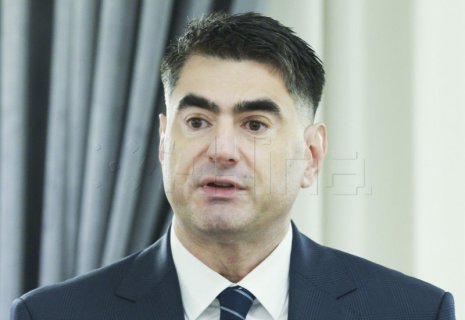
"A staggering 86% of companies are experiencing intense pressure on energy prices, 78% on transport services, and over 50% on petrochemical products," said Bojan Ivanc, chief economist and head of analytics at the GZS.
Facing threats to their financial viability, the companies are mitigating the situation by seeking alternative suppliers, revising pricing, postponing investments, stockpiling inventory and rerouting transport.
The survey was conducted in April among 56 medium and large enterprises across key economic sectors.
Businesses asking for help
The business sector is now looking to the government for swift and effective support.
Ivanc clarified that rather than direct subsidies, cited as a preferred measure by just 29% of the respondents, the Slovenian economy is in urgent need of rapid regulatory relief to facilitate business adaptation. This red-tape reduction was championed as the primary necessary measure by 69% of those polled.
It is imperative that Slovenia secures an operational, stable, and development-oriented government as swiftly as possible to introduce targeted measures, GZS director general Vesna Nahtigal told the press.
The emerging centre-right coalition, which is seen as business-friendly, has been vowing to deliver on their promises of a development-focused roadmap, and their ongoing coalition talks reflect that.
Despite drastic increases in input costs, market constraints are currently preventing exorbitant spikes in end-consumer prices. Accordingly, the GZS estimates that the most likely general price increase for goods and services will range between 7% and 9%.
Fuel prices on the rise again
Regulated fuel prices in Slovenia have gone up again amid the Strait of Hormuz standoff between the US and Iran and risks of going back to an all-out war.
The price of regular petrol rose further by 4.8 cents to €1.683 per litre on 5 May, while diesel went up by 2.6 cents to €1.734 after turning a bit cheaper a week ago.
The new prices, which apply only outside the motorway network, will remain in effect for one week since in the wake of the Iran conflict, Slovenia switched from a fortnightly to a weekly price-setting model. Meanwhile, retailers along motorways and expressways have been free to set their own prices since mid-March.