Croatia’s Ministry outlines key outcomes of 2026 Three Seas Summit - EXCLUSIVE
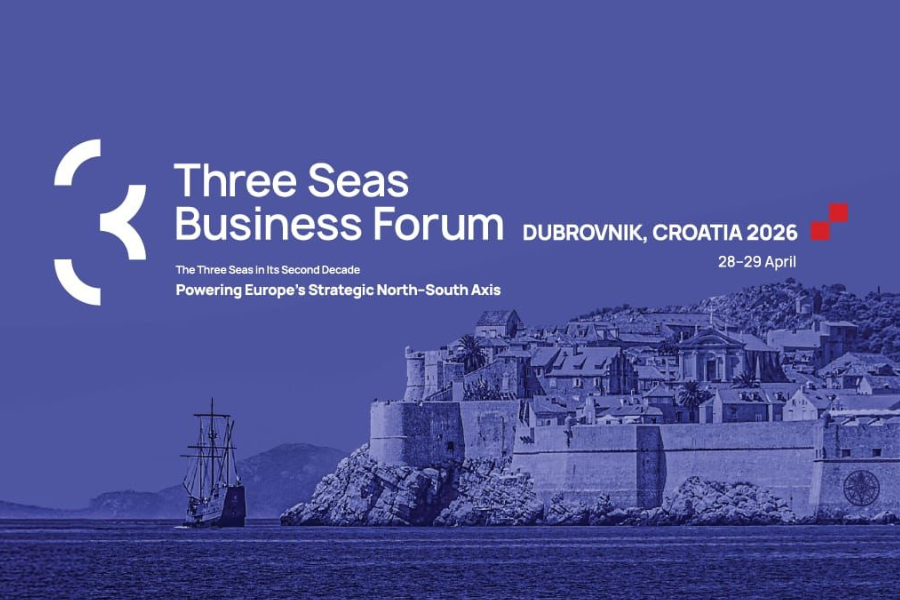
The 2026 Three Seas Initiative Summit and Business Forum in Dubrovnik, held ten years after the signing of the Dubrovnik Declaration, confirmed that the Initiative has entered a new phase as an increasingly relevant platform for strengthening European resilience, connectivity and competitiveness.
This was said by the source in the Ministry of Foreign and European Affairs of the Republic of Croatia in an exclusive interview with CE Report.
The most tangible outcomes were the signing of nine agreements covering energy, infrastructure, taxation, digital development and investment. A particularly important component of the summit was cooperation with the United States, reflected in a Memorandum of Understanding on energy infrastructure and regional energy security, and broader cooperation in strategic sectors such as between the ports of Rijeka and Constanța. The strong presence of the US delegation and business community underscored continued American engagement and demonstrated that the Initiative is becoming an important pillar of transatlantic economic cooperation in Central and Eastern Europe. The summit also highlighted the strong presence of Japan as a strategic partner, underscoring the Initiative’s growing relevance beyond Europe and the transatlantic space.
Participating countries also reaffirmed that stronger European strategic autonomy and close ties with the United States are complementary objectives. A more resilient, better-connected and economically stronger Central and Eastern Europe strengthens the European Union as a whole and makes it a more credible transatlantic partner. In that context, energy diversification and critical infrastructure were central themes of the summit. Particular attention was given to the Southern Gas Interconnection between Croatia and Bosnia and Herzegovina, which will connect Bosnia and Herzegovina to Croatia’s expanded LNG terminal on the island of Krk, whose capacity has risen to 6.1 billion cubic meters, thereby enhancing long-term security of supply and reducing dependence on single sources. Alongside energy, digital transformation also featured strongly through agreements focused on data-centre development, advanced technologies and innovation, including the Pantheon project and cooperation with Croatian companies such as Končar.
Looking beyond Europe, the Dubrovnik Summit further underscored the growing geoeconomic significance of the Three Seas region. With a combined GDP of around €3.5 trillion and a market of approximately 120 million people, the Initiative is increasingly positioned as a bridge between Northern and Southern Europe and as a gateway toward wider Eurasian trade routes. Leaders highlighted stronger links with emerging corridors such as the India–Middle East–Europe Economic Corridor (IMEC) and the Middle Corridor through Central Asia, while emphasising the role of Adriatic ports, transport networks and logistics hubs in future supply chains.
The overall message from Dubrovnik was clear: the Three Seas Initiative has matured from a regional connectivity project into a strategically relevant European platform with growing global reach and influence that will strengthen the European Union.
Photo: Facebook/3seaseu
This interview was prepared by Julian Müller